Math E-320: Fall 2016
Teaching Math with a Historical Perspective
Mathematics E-320: Fall 2016
Instructor: Oliver Knill
Office: SciCtr 432
Email: knill@math.harvard.edu


t1=StringJoin[FromCharacterCode[ToCharacterCode[t]-1]]Here is the decrypted article.
 [December 14 added]: We have looked at the Sitnikov problem, a restricted 3 body problem,
where the calendar is chaotic. The idea has been taken off in the novel
The three body problem
by the Chinese author Liu Cixin.
[December 14 added]: We have looked at the Sitnikov problem, a restricted 3 body problem,
where the calendar is chaotic. The idea has been taken off in the novel
The three body problem
by the Chinese author Liu Cixin. y2 = x3 + a x2 + xwhere a=486662 and the arithmetic is done in the field Zp with prime
p=2255-19 = 57896044618658097711785492504343953926634992332820282019728792003956564819949.It turns out that one can do arithmetic on such curves in the same way as on integers.
|
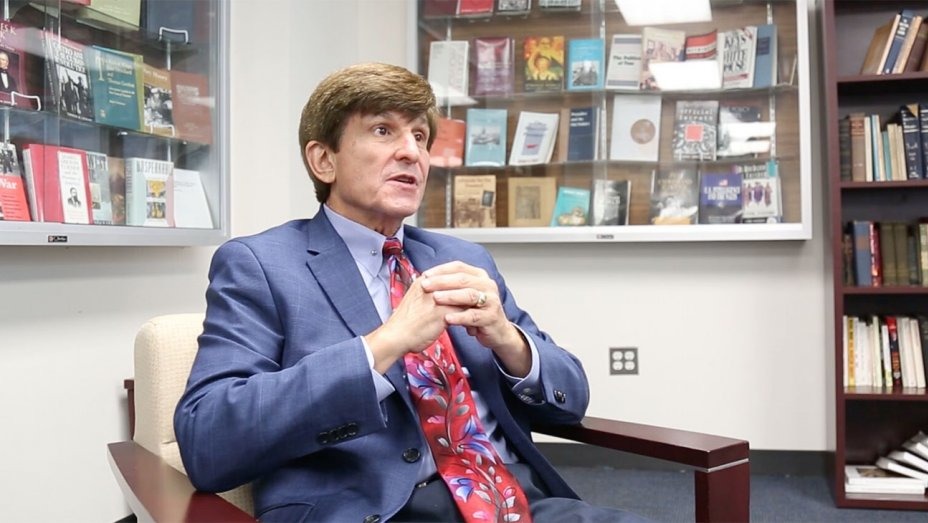
Direct Media Links: Webm, Ogg Ipod, Quicktime. About the movie. Best Quote from the movie: "People are overlooked for a variety of reasons and perceived flaws: age, appearance, personality. Mathematics cuts right through that". | November 9, 2016: the elections from yesterday illustrate how powerful statistical models can be. Allan Lichtman has a system which predicted a Trump win. The system does not analyze personalities nor policies nor opinions. It simply looks at a high-dimensional value function obtained statistically from previous elections, then uses this to predict the future. It turned out that in these presidential elections, the polls were misleading and that Lichtman's system was more accurate than what polls or pundits predicted. Its a bit like in the movie "Moneyball", were experts were shown to be fooled by things like "how a player looks or whether he throws funny". What counted in baseball in the long term is statistically how high a player scores in a parameter space. In this case, the model does not look at the actual politicians but at the party structure. The data come from previous US elections. The players are the parties. It is therefore not the statistical data of the players were compared but the statistical data of the political parties, completely detached from any person or policy. Lichtman's system does not take into account the personality of the candidates, nor the political agendas, not how likable or successful they are. Its just the raw analysis about the situation of the two parties. A parameter for example is how strong a third party candidate is. And this analysis is based solely from previous election cases. This is the power of statistics: Make a high dimensional model from previous cases, then use the model to predict the outcome of an event. Its a bit like datafitting but of course much more subtle as Lichtman, in order to build the system probably had to look at hundreds of parameters and then weed out the most relevant ones. Its like building a value system for chess game situations. Having a good value system is the key to predict the win or loss of a party. |
 Kolmogorov: "The theory of probability as a mathematical discipline can and should be developed from axioms in exactly the same way as geometry and algebra." |
|
|
|
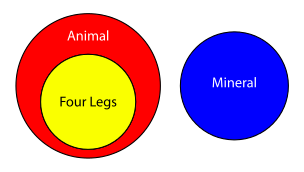 Nick mentioned Euler diagrams when we looked at Venn diagrams and sent the following
explaining the difference between Venn and Euler diagrams. I'm actually
not convinced why one should distinguish cases, where the intersection is
empty or not with a different notion. One can perfectly well just
work with Venn diagrams alone. Maybe it could be useful when building
data structures.
Nick mentioned Euler diagrams when we looked at Venn diagrams and sent the following
explaining the difference between Venn and Euler diagrams. I'm actually
not convinced why one should distinguish cases, where the intersection is
empty or not with a different notion. One can perfectly well just
work with Venn diagrams alone. Maybe it could be useful when building
data structures. The questions which appear in set theory are also of rather philosophical nature: how can we be sure to have a solid foundation of mathematics. How do we map all truth? Does infinity really exist? Is our universe finite? Do we really need to model nature with structures needing infinity. Apropos Cosmos, there was just a new book published by Ian Stewart. Calculating the Cosmos. The New York times has an announcement. |
| What is my number if half of my number is half of 400? |
 This is close to the expression 400/(2/2) is 400. The later non-associative
ambiguity of division is illustrated in
Pemdas disputes but here it appears pretty clear how to
translate the problem to algebra. A question like
"What is half of half of 400" would lead to 100. Still, at the heart
of the problem is the ambiguity of order of division (a/b/c)
which gives different results when evaluated (a/b)/c or a/(b/c).
It is a major algebra mistake to mix up the two for example by not
specifying which one the problem has in mind. Anyway,
"Bild" calls it the "most dangerous math problem in the world"! Well
if that does not make algebra exciting.
end of addition of October 10].
This is close to the expression 400/(2/2) is 400. The later non-associative
ambiguity of division is illustrated in
Pemdas disputes but here it appears pretty clear how to
translate the problem to algebra. A question like
"What is half of half of 400" would lead to 100. Still, at the heart
of the problem is the ambiguity of order of division (a/b/c)
which gives different results when evaluated (a/b)/c or a/(b/c).
It is a major algebra mistake to mix up the two for example by not
specifying which one the problem has in mind. Anyway,
"Bild" calls it the "most dangerous math problem in the world"! Well
if that does not make algebra exciting.
end of addition of October 10]. 
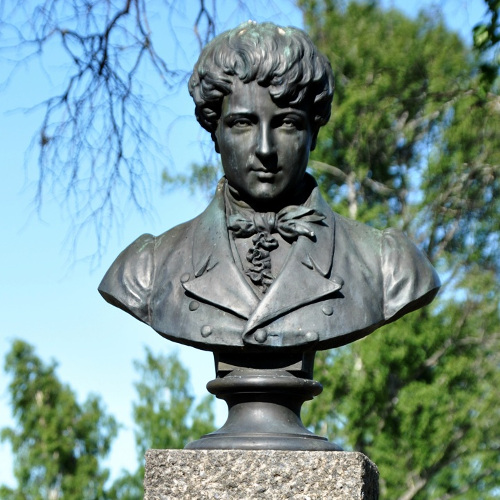 Neils Abel |
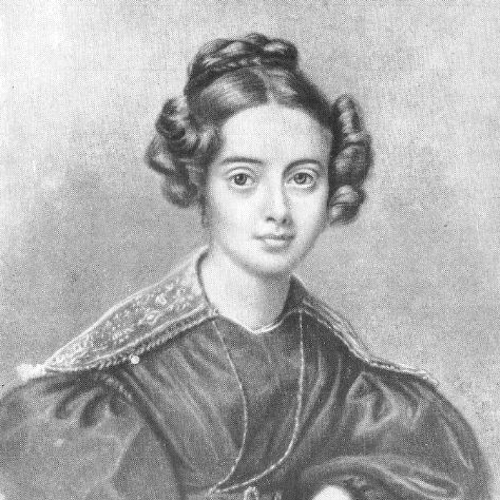 Christine Kemp |
 Galois: Image Source: galois.ihp.fr |
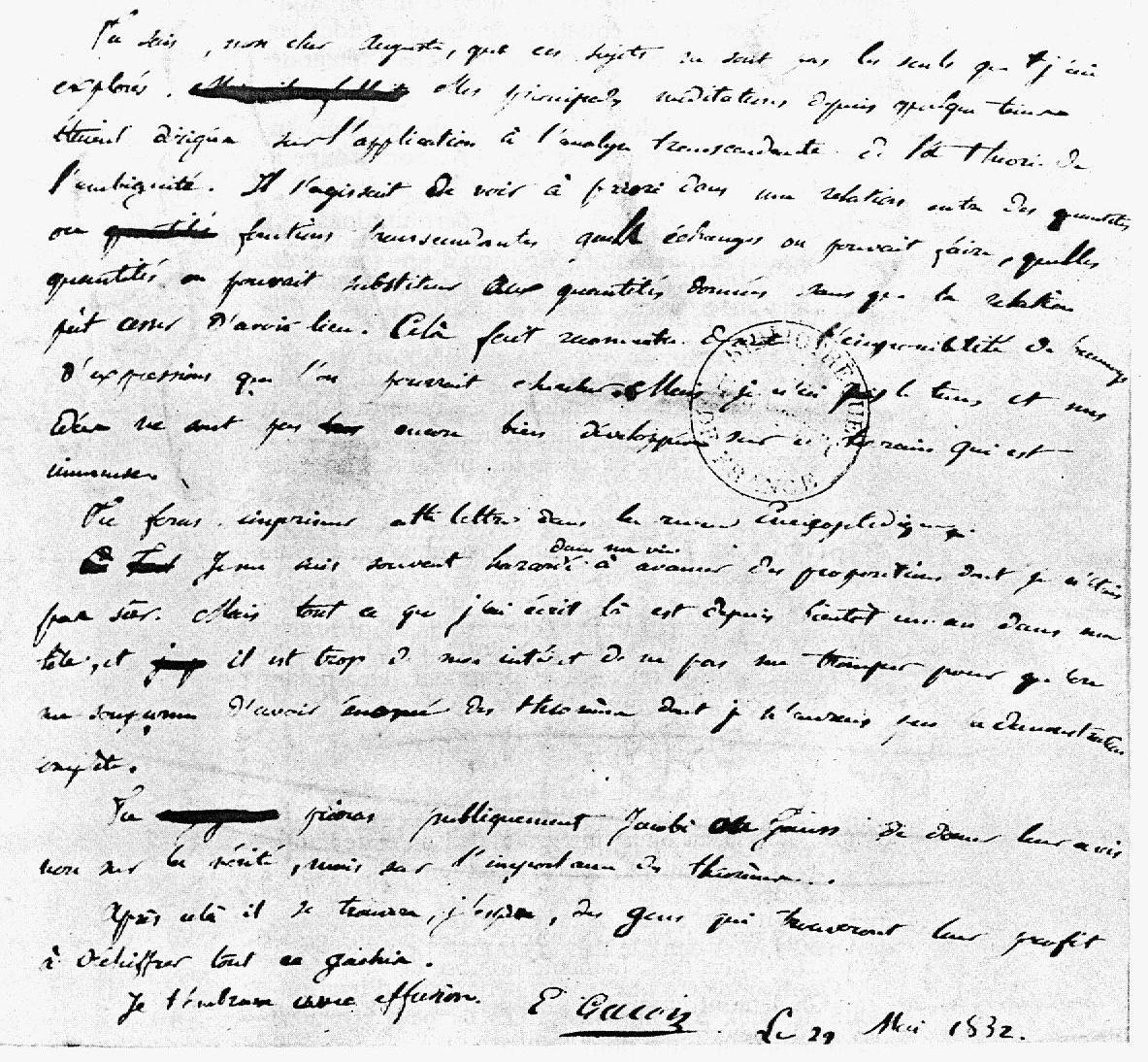 Letter of Galois, Mai 29, 1932 Image Source: here. |
|
|
 [Update October 13:] we talked about primes and will do so again in the
cryptology lecture. One of the problems one wants to solve given a prime
is to find for a given b a number x so that 2x - b is divisible
by p. This is the discrete log problem. Nobody knows how difficult
this problem is but one believes that it is hard in the following sense: for a given 300 digit number
(which are used today for encryption), there no efficient way to find
x = log2(b). It is believed that with current top notch algorithms,
an agency like NSA would need hardware worth of several hundred million of dollars to crack
such a 1024 bit discrete log problem. An
Heise article [in german]
reports today about a paper posted October 5,
which assures that for some primes can lead to easier problems as the solution can be
found using the number field sieve. In a cryptographic setting, the players are usually
called by palindromes: "Ana" sends a message to "Bob" and the adversary
"Eve" listens to their conversation. In the scenario of the paper, there is a
fourth player, called "Heidi" (like a third party producing primes).
I actually think, it would have been nice to call also this
fourth player by a palindrome, like Idi, the last three letters of Heidi. Now, all the four
players Ana,Bob,Eve,Idi would be three letter polindromes.
We will come back to these stories in the cryptology lecture.
[Update October 13:] we talked about primes and will do so again in the
cryptology lecture. One of the problems one wants to solve given a prime
is to find for a given b a number x so that 2x - b is divisible
by p. This is the discrete log problem. Nobody knows how difficult
this problem is but one believes that it is hard in the following sense: for a given 300 digit number
(which are used today for encryption), there no efficient way to find
x = log2(b). It is believed that with current top notch algorithms,
an agency like NSA would need hardware worth of several hundred million of dollars to crack
such a 1024 bit discrete log problem. An
Heise article [in german]
reports today about a paper posted October 5,
which assures that for some primes can lead to easier problems as the solution can be
found using the number field sieve. In a cryptographic setting, the players are usually
called by palindromes: "Ana" sends a message to "Bob" and the adversary
"Eve" listens to their conversation. In the scenario of the paper, there is a
fourth player, called "Heidi" (like a third party producing primes).
I actually think, it would have been nice to call also this
fourth player by a palindrome, like Idi, the last three letters of Heidi. Now, all the four
players Ana,Bob,Eve,Idi would be three letter polindromes.
We will come back to these stories in the cryptology lecture.  Because number theory deals with integers, one could have the impression that
it is easy. It turns out to be one of the most difficult and technical area of
mathematics.
In this lecture we look at a few mathematical results as well as some open problems.
We also talked about Goldbach, today probably the most iconic open problems in mathematics
since it has entered in numerous ways into popular culture (novels and feature movies
as we have seen). Here is some recent news about Goldbach and
an application. It is the Helfgott proof of the weak Goldbach conjecture:
Because number theory deals with integers, one could have the impression that
it is easy. It turns out to be one of the most difficult and technical area of
mathematics.
In this lecture we look at a few mathematical results as well as some open problems.
We also talked about Goldbach, today probably the most iconic open problems in mathematics
since it has entered in numerous ways into popular culture (novels and feature movies
as we have seen). Here is some recent news about Goldbach and
an application. It is the Helfgott proof of the weak Goldbach conjecture:
 Scientific American and
Slashdot.
The Helfgott proof is a landmark in mathematics as it settles one of the
important problems in number theory. But if one looks at the
article, it also becomes apparent
that the proof is not easy. Actually, analytic number theory is probably one of the
most technical areas within number theory. The ternary conjecture looks close
to the actual Goldbach conjecture but some of the best number theorists
believe that the current methods might just
not be
strong enough to crack the actual binary Goldbach conjecture
and that additional ideas are needed. Still, there is
hardly any doubt that an eventual proof of Goldbach will be difficult.
Why do we know? We don't, but history tells us that any miracle approach is very
unlikely! If we look at major open problems in
mathematics, then either they were settled with a counter example or then with
hard work and heavy machinery or then with an elaborate construction of a theory.
A general picture explaining this has been painted in 1985 by Alexander Grothendieck
(who without doubt was one of the most creative mathematicians in recent times).
Scientific American and
Slashdot.
The Helfgott proof is a landmark in mathematics as it settles one of the
important problems in number theory. But if one looks at the
article, it also becomes apparent
that the proof is not easy. Actually, analytic number theory is probably one of the
most technical areas within number theory. The ternary conjecture looks close
to the actual Goldbach conjecture but some of the best number theorists
believe that the current methods might just
not be
strong enough to crack the actual binary Goldbach conjecture
and that additional ideas are needed. Still, there is
hardly any doubt that an eventual proof of Goldbach will be difficult.
Why do we know? We don't, but history tells us that any miracle approach is very
unlikely! If we look at major open problems in
mathematics, then either they were settled with a counter example or then with
hard work and heavy machinery or then with an elaborate construction of a theory.
A general picture explaining this has been painted in 1985 by Alexander Grothendieck
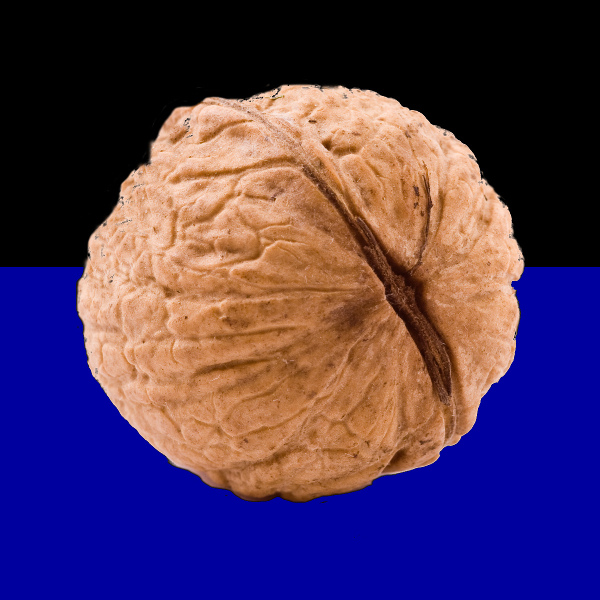
(who without doubt was one of the most creative mathematicians in recent times). It is the Hammer and Chisle versus Rising Sea approach. It has been mentioned in the McLarty article (which is an iconic document by itself) from which I take this. The allegory compare the theorem with a nut which needs to be opened (one even says in colloquial language: cracking a nut).
| Hammer and Chisle principle | Rising Sea principle |
|---|---|
| The Hammer and Chisle principle is to put the cutting edge of the chisel against the shell and strike hard. If needed, begin again at many different points until the shell cracks-and you are satisfied. Grothendieck puts this poetically by comparing the theorem to a nut to be opened. The mathematician uses the Hammer and Chisle to reach "the nourishing flesh protected by the shell". | The Rising Sea principle is to submerge the problem by vast theory, going well beyond the results originally to be established. Grothendieck imagines to immerse the nut in some softening liquid until the shell becomes more flexible. After weeks and months, by mere hand pressure, the shell opens like a perfectly ripened avocado! |
 | 
|
 You find the solution on the solution page: the area of the triangle with points A=(a,0,0), B=(0,b,0)
C=(0,0,c) is half the area of a parallelogram. In vector geometry, one learns that this
area is the length of the cross product between the vectors AB, AC spanning it.
This is | (bc,ac,ab) |2/2 = (bc)2/4 + (ac)2/4
+ (ab)2/4 by definition of the length (here is where the classical Pythagoras
enters) as the definition of length is motivated by Pythagoras. Now the three
terms can be interpreted as the squares of areas of the sides.
You find the solution on the solution page: the area of the triangle with points A=(a,0,0), B=(0,b,0)
C=(0,0,c) is half the area of a parallelogram. In vector geometry, one learns that this
area is the length of the cross product between the vectors AB, AC spanning it.
This is | (bc,ac,ab) |2/2 = (bc)2/4 + (ac)2/4
+ (ab)2/4 by definition of the length (here is where the classical Pythagoras
enters) as the definition of length is motivated by Pythagoras. Now the three
terms can be interpreted as the squares of areas of the sides. 
 A blackboard picture done during the proof of Thales theorem: