The paradox had also been mentioned in
Aubrey Clayton's talk from
2022, the author of the book "Bernoulli's Fallacy".
One should also mention the article "Why most published Research Findings are False" (2005)
by "John P.A. Ioannidis" from Stanford.
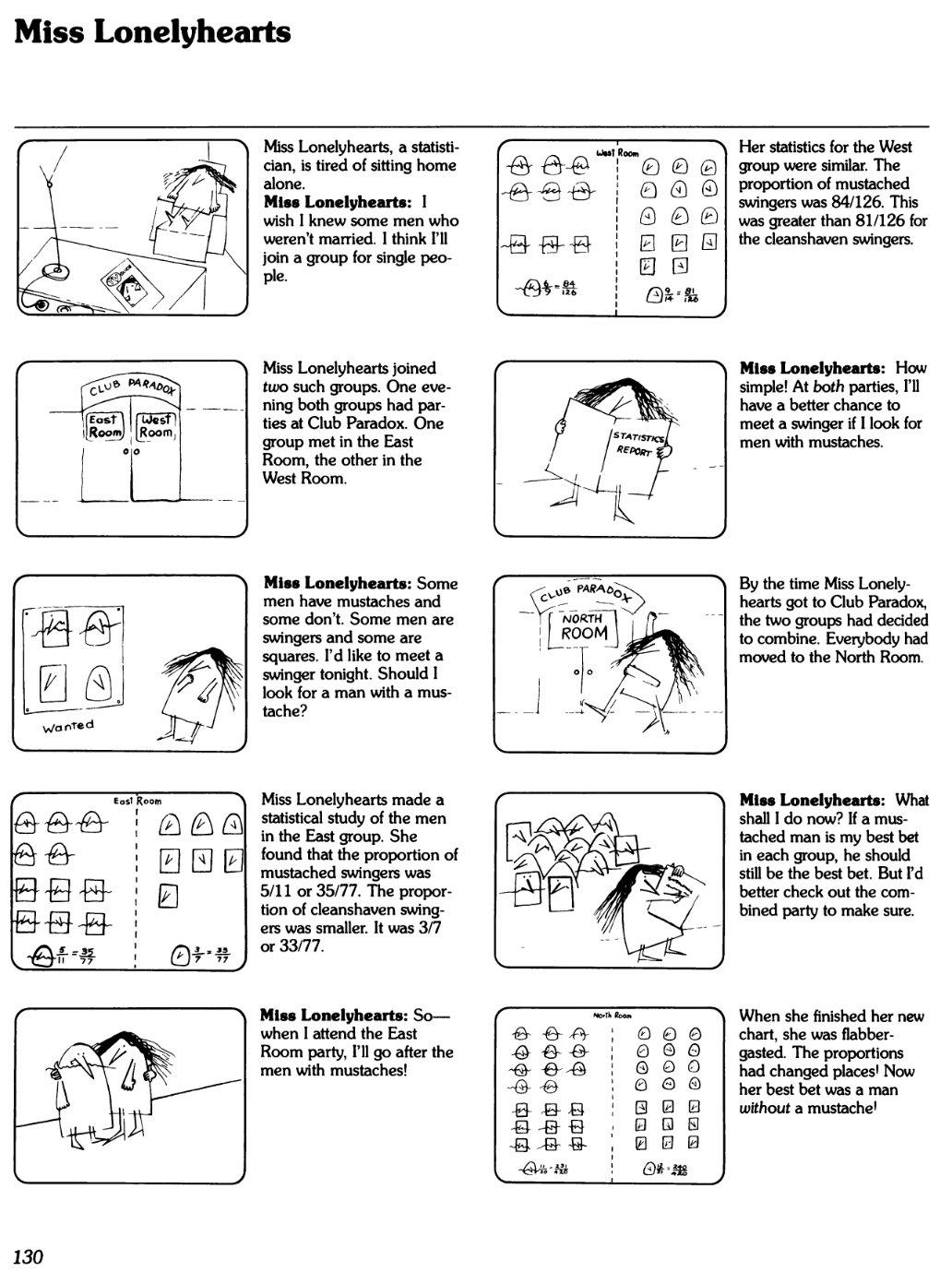
The Simpson paradox was already featured in one of the Gardners "Aha! Gotcha" from 1982 (thanks for Peter Renz for reminding me about it).
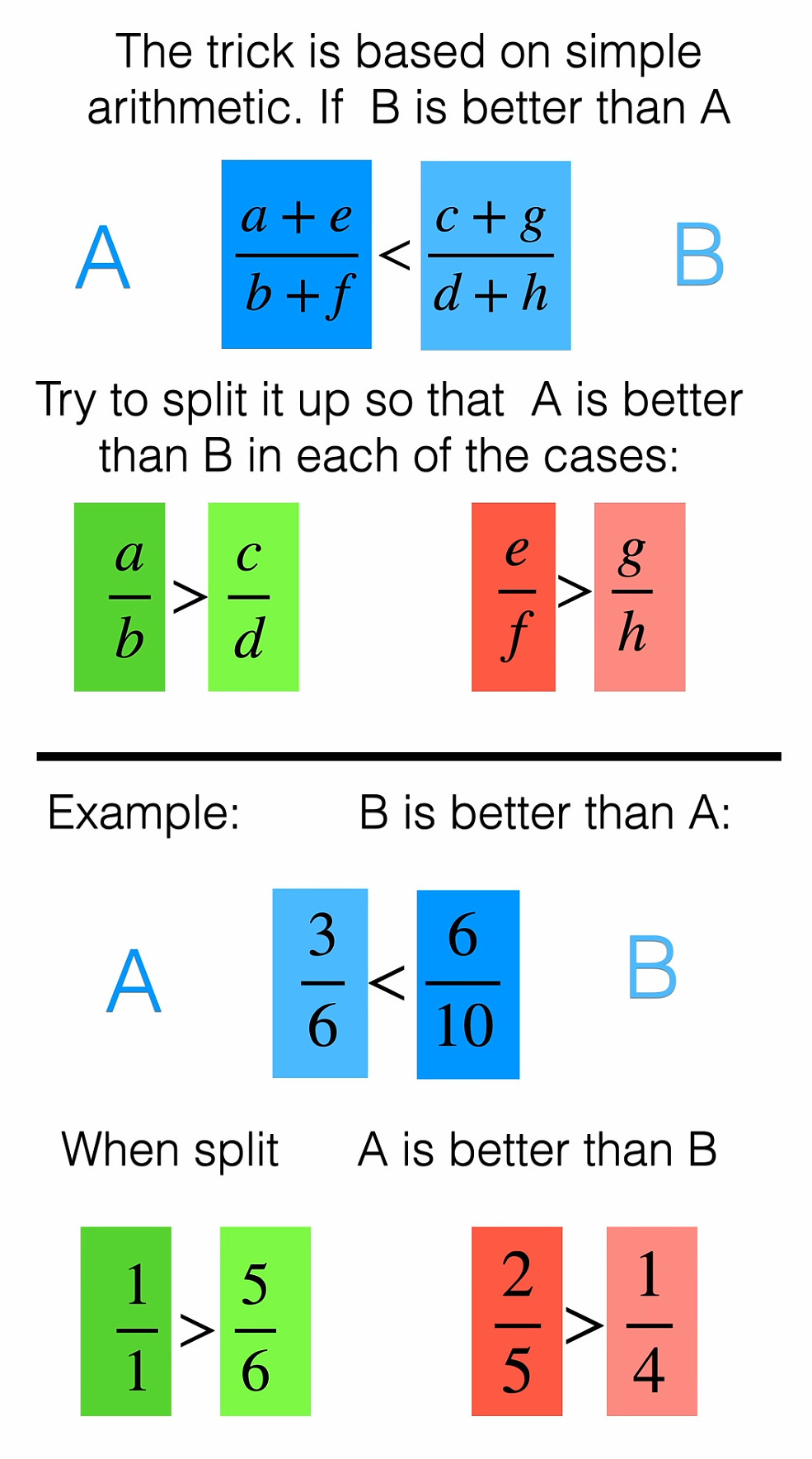
I explain it with the fact that fractions a/b > c/d and e/f > g/h can happen even so (a+e)/(b+f0) < (c+g)/(d+h)
and sell it as a receipe (of course with the tongue in the cheek) to manipulate data. Most of the time such manipulations happen
without intent. It can happen for example that you give one part of a study to one student and an other part of the study to
an other student. Both get to the same conclusion. But if you combine the two data sets the conclusion is different.