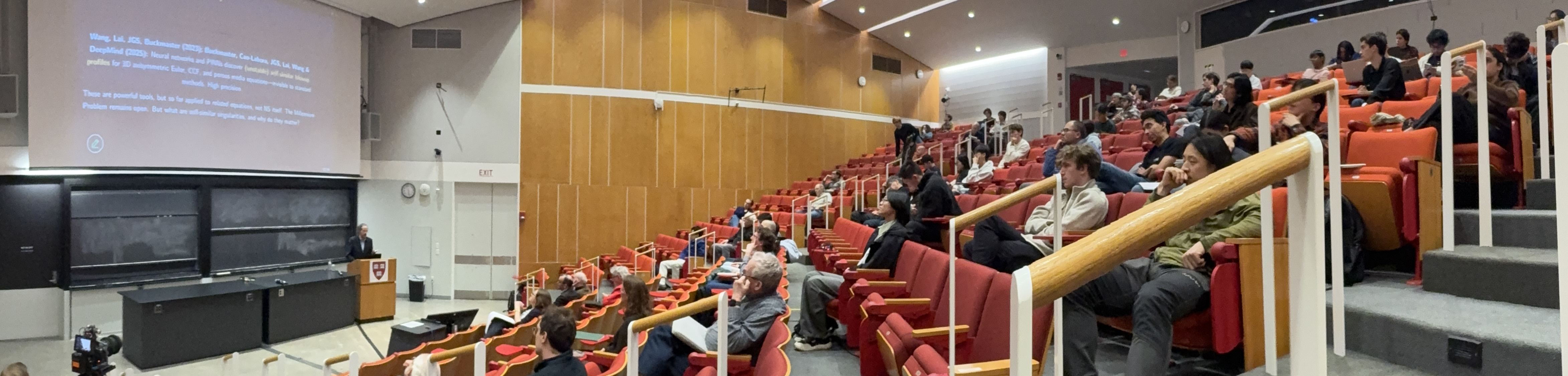
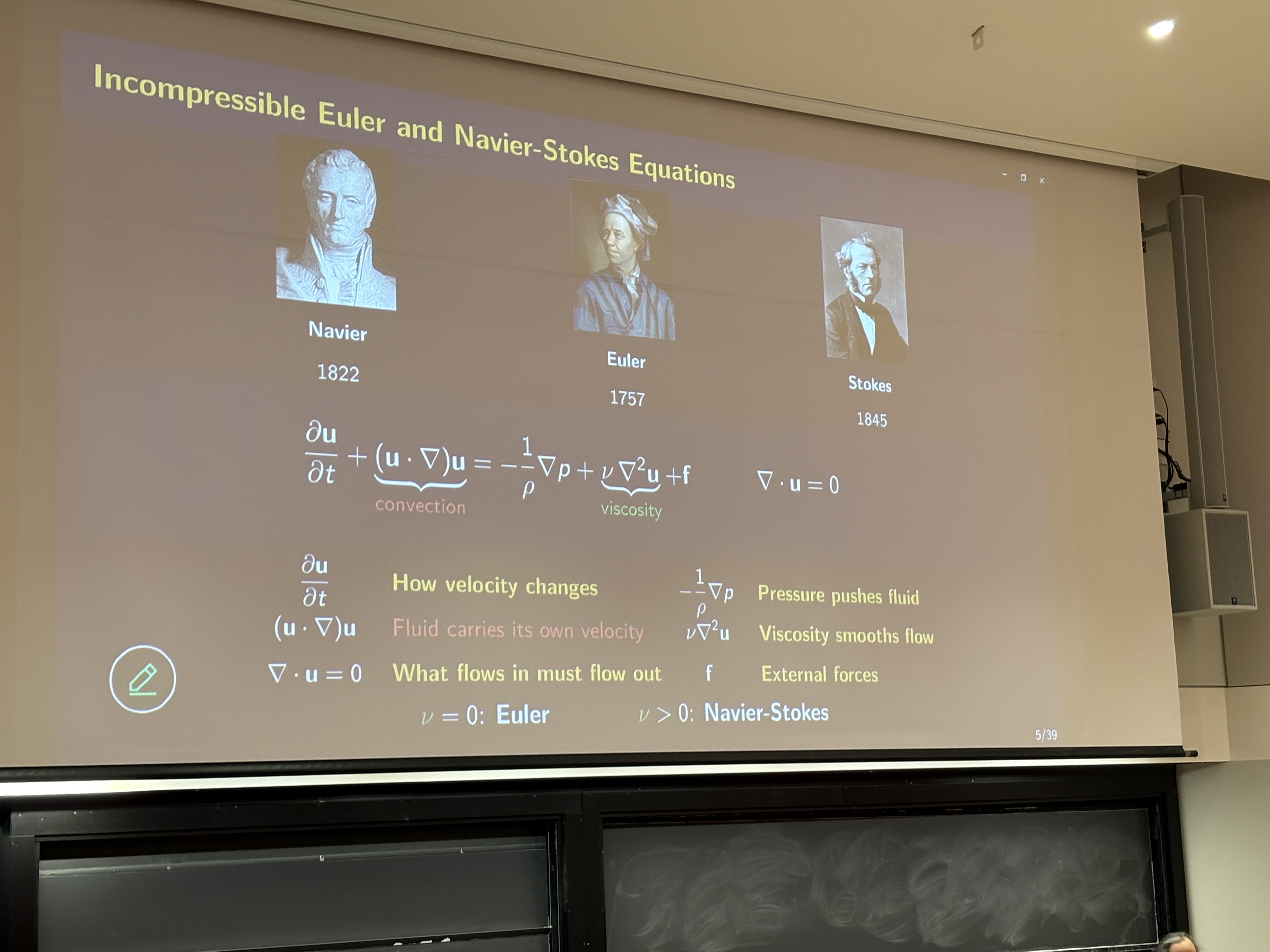
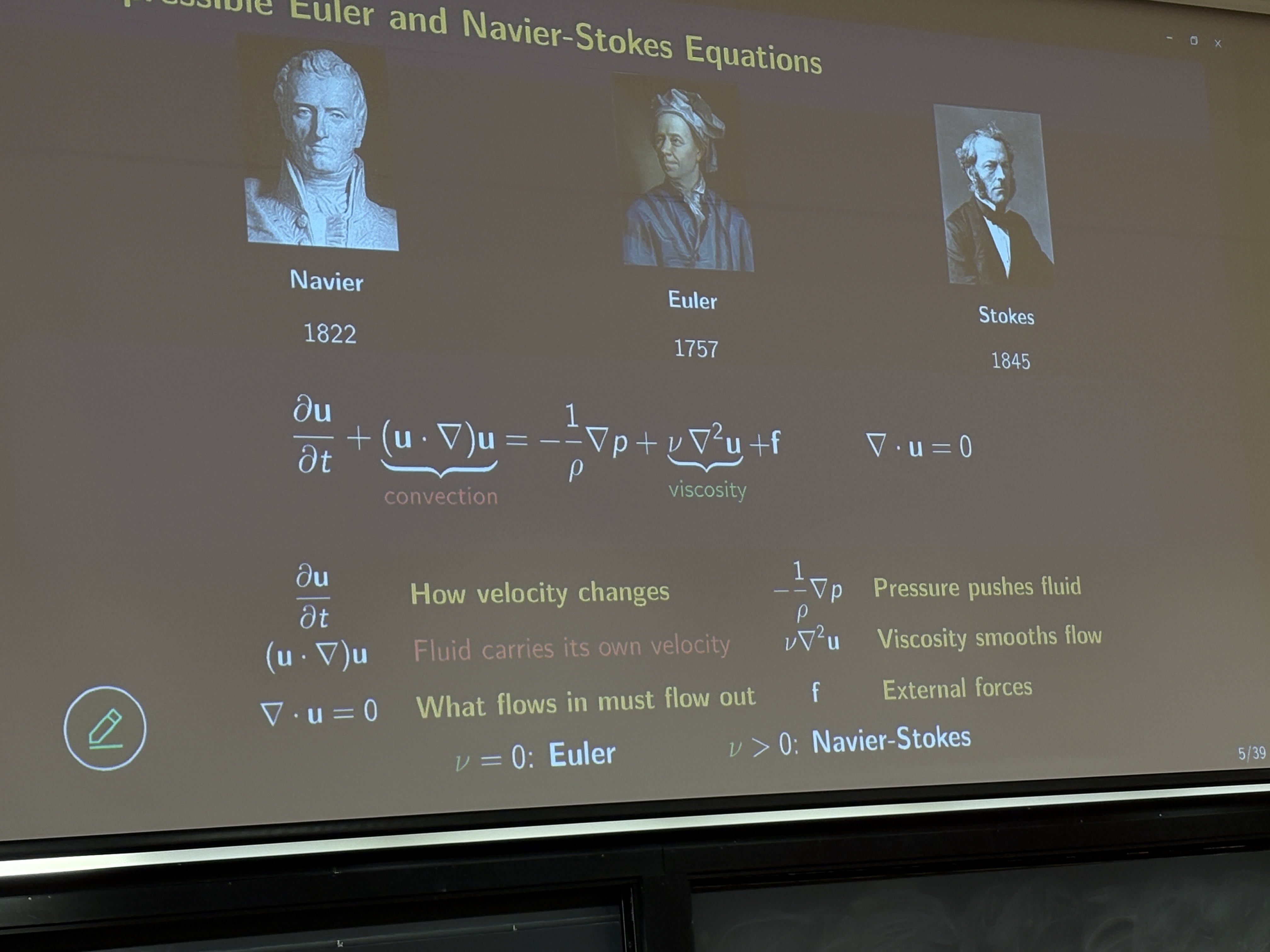
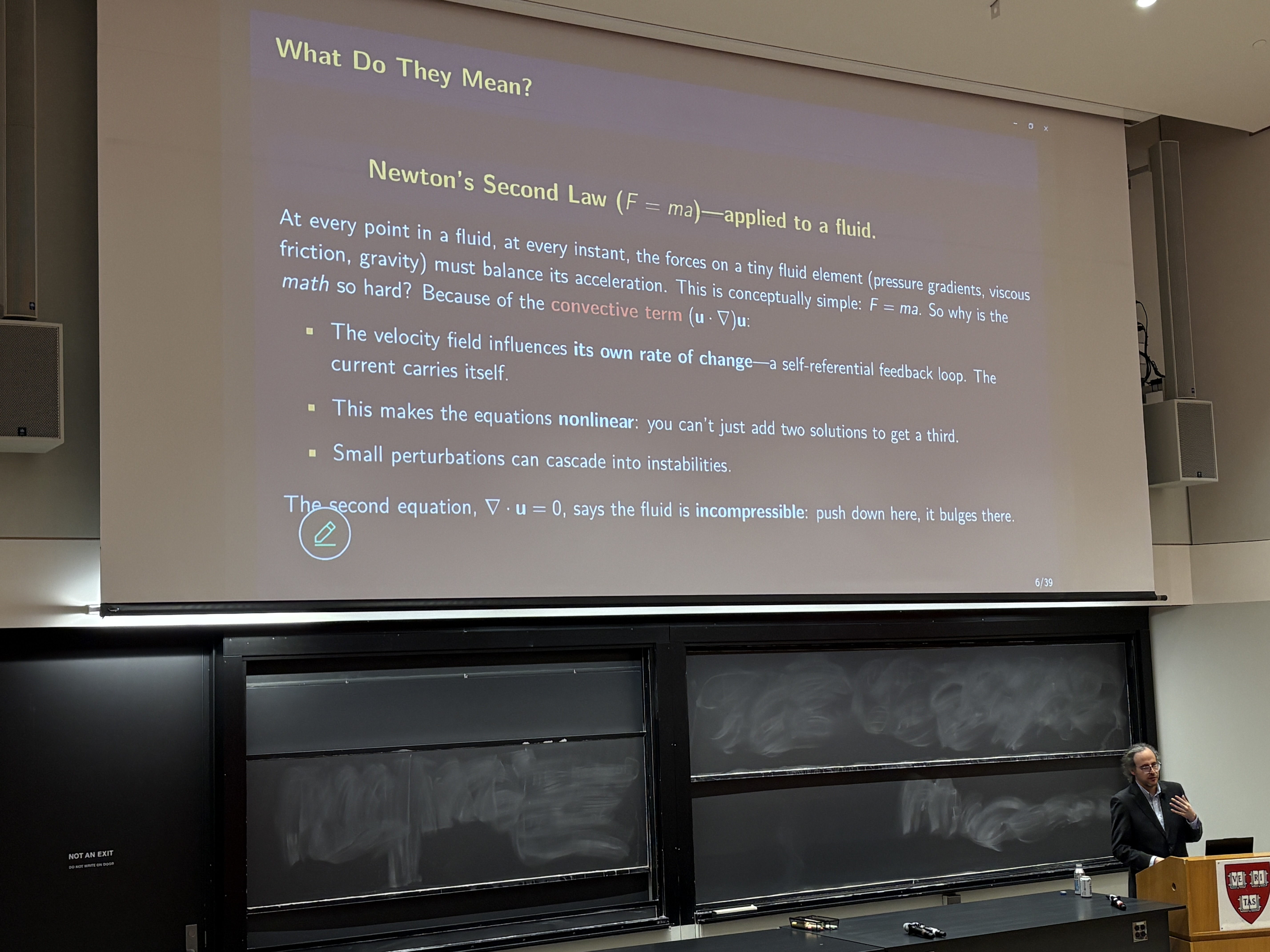
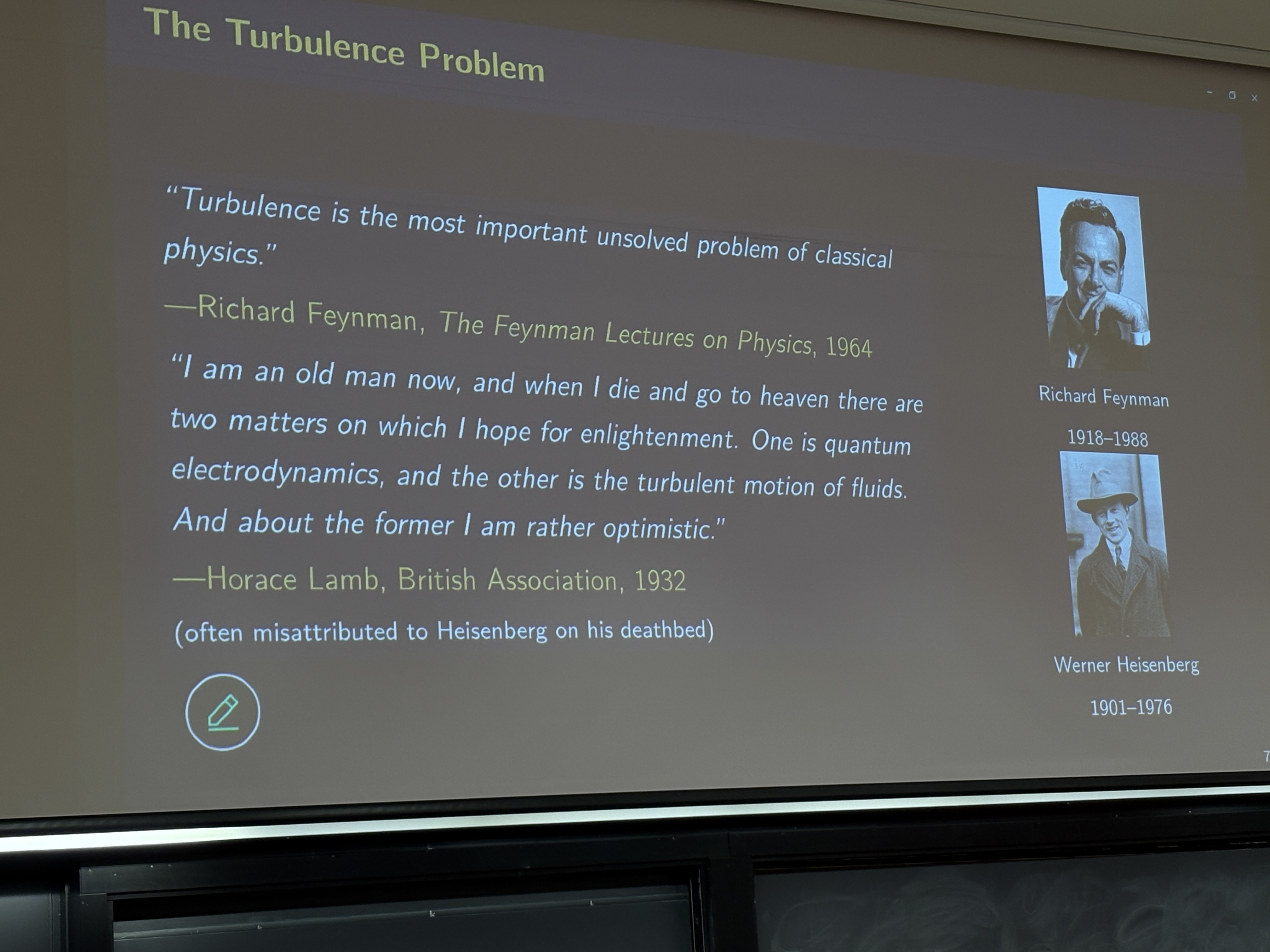
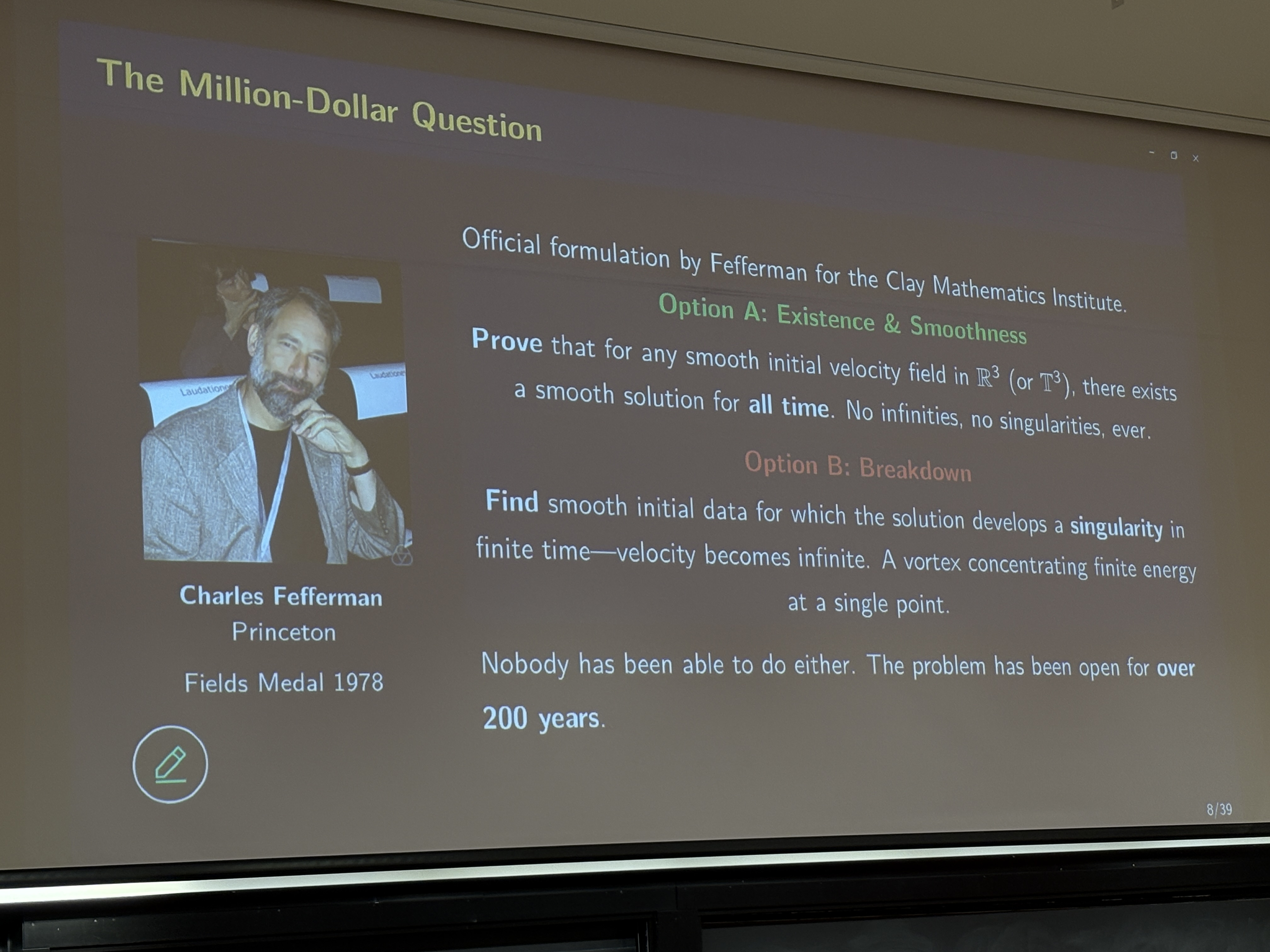
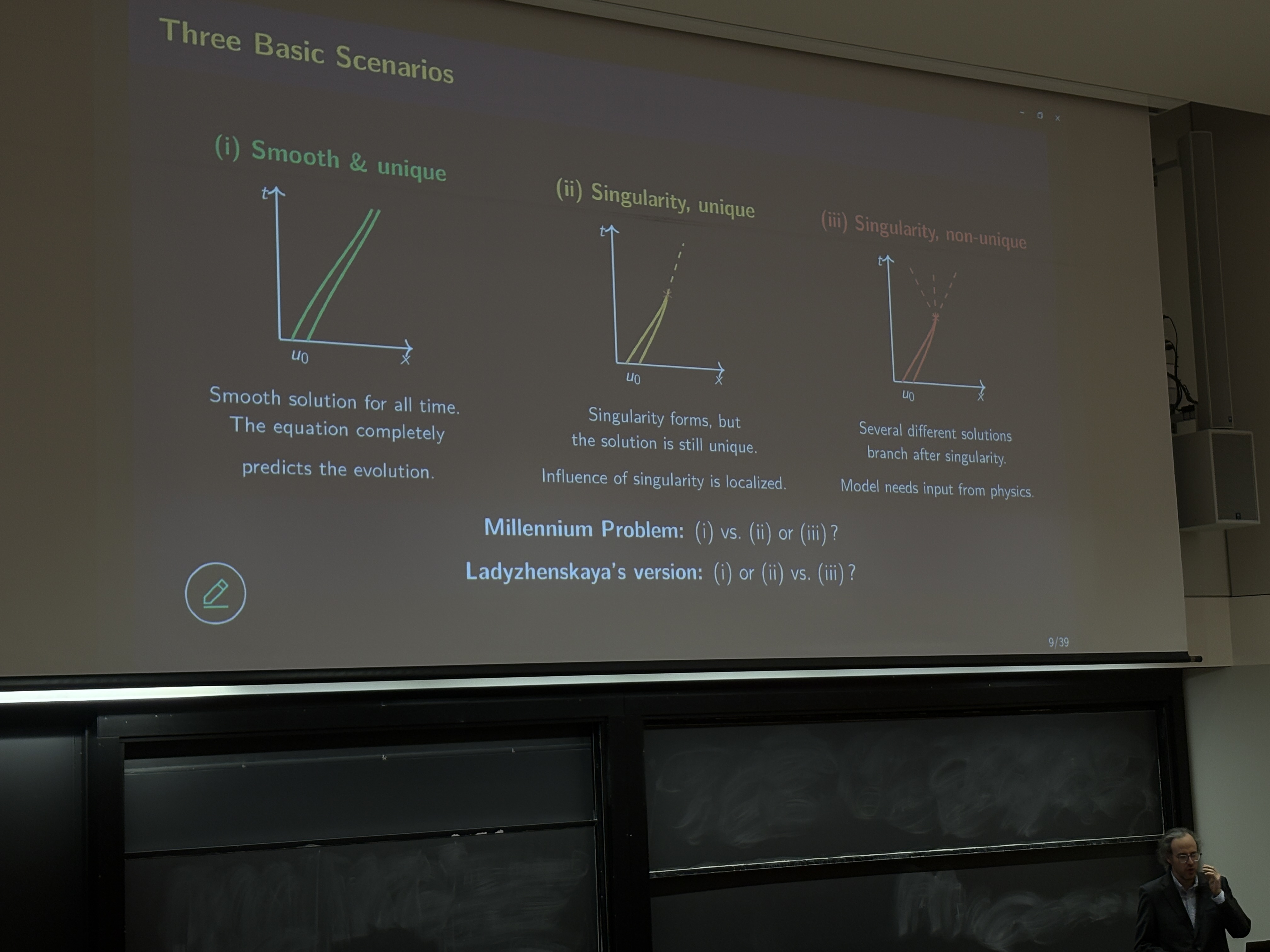
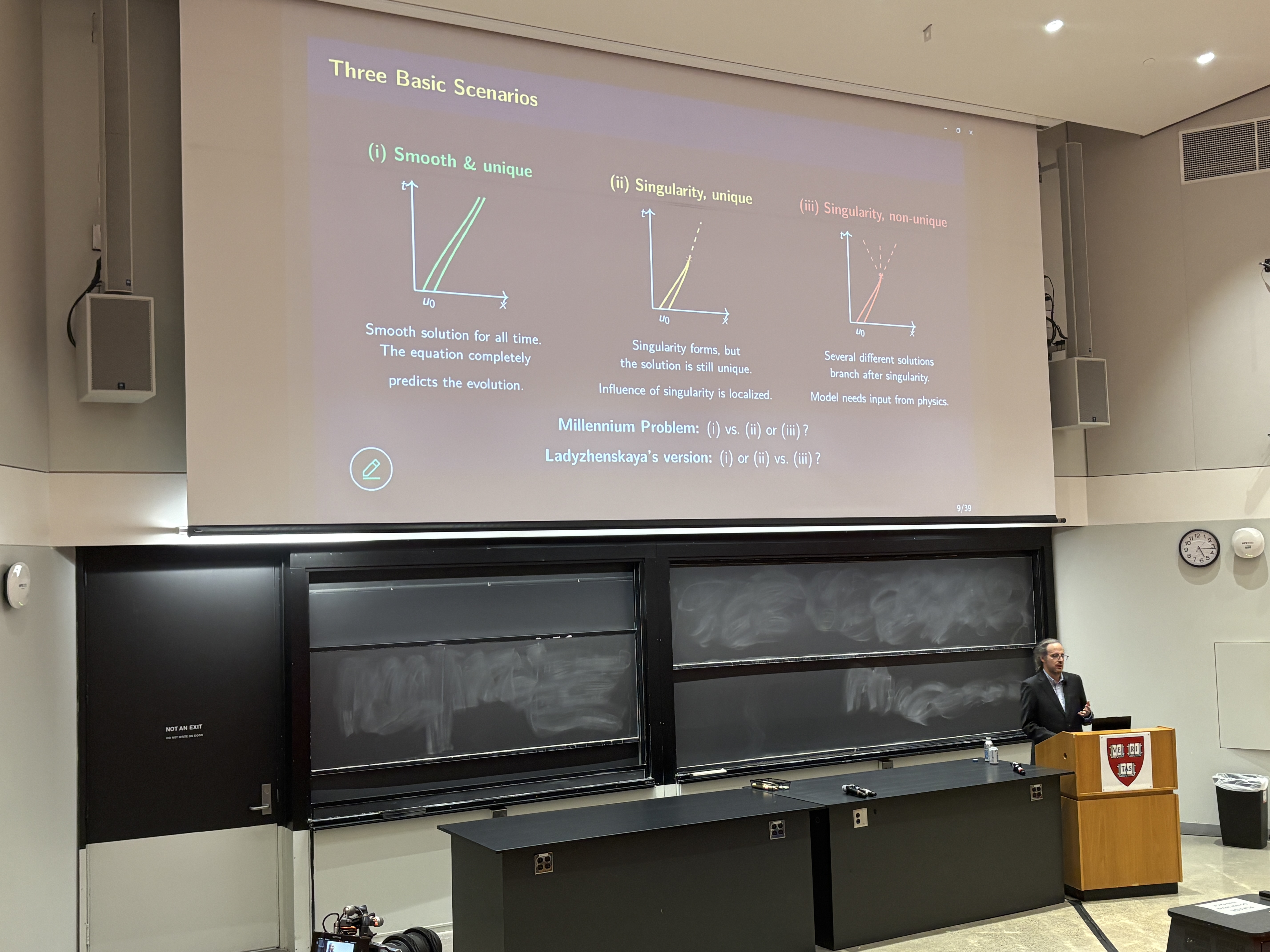
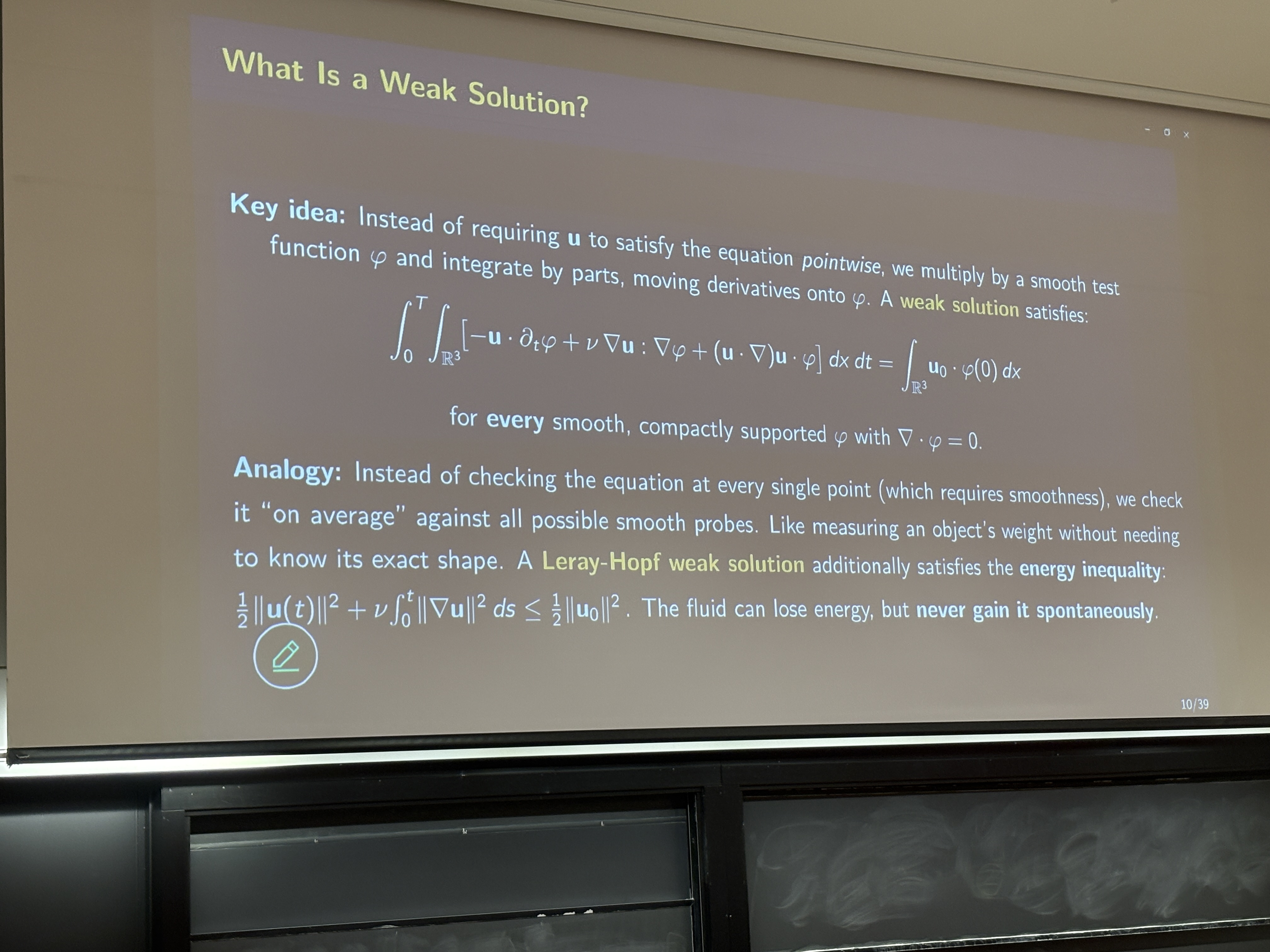
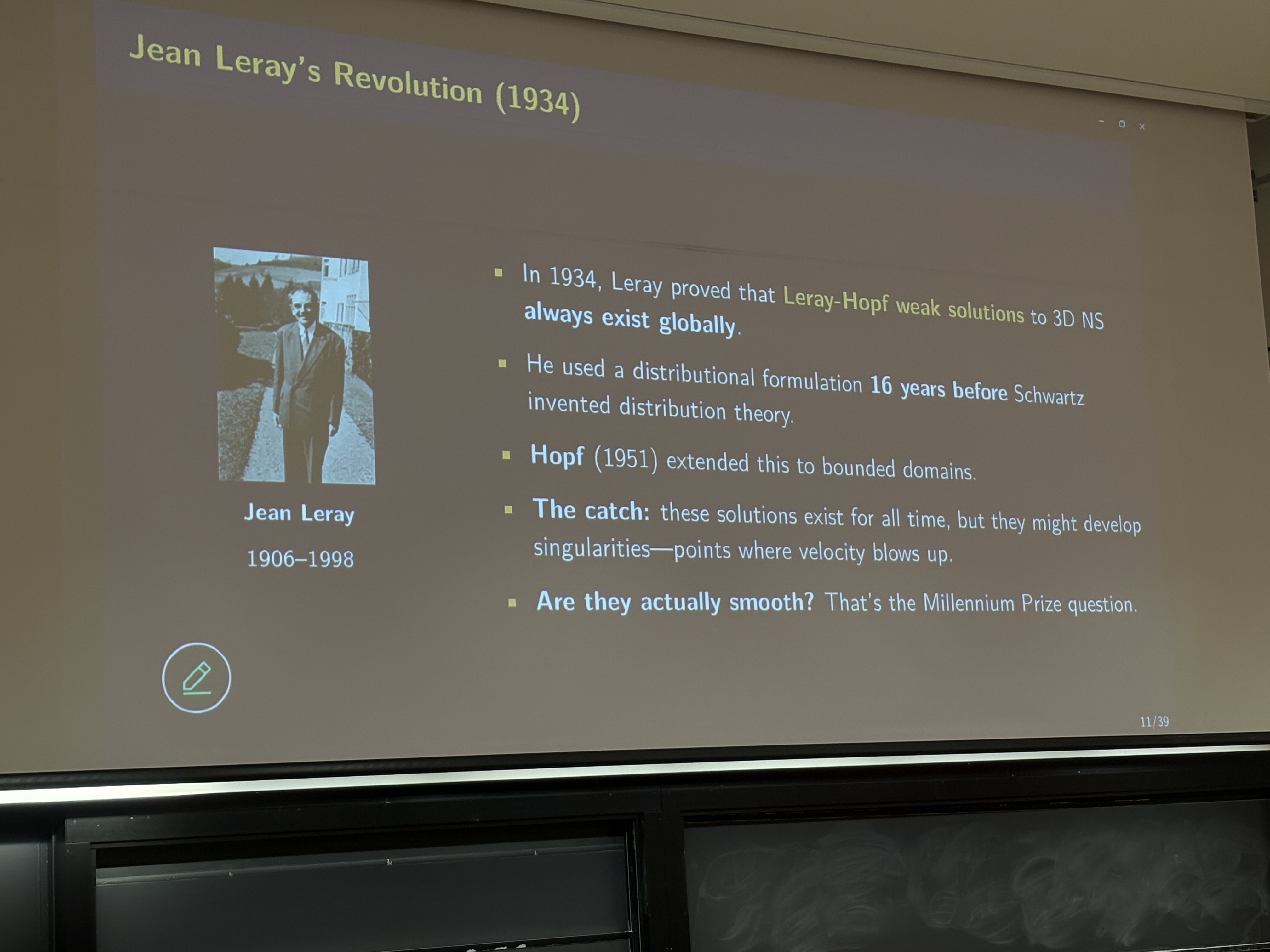
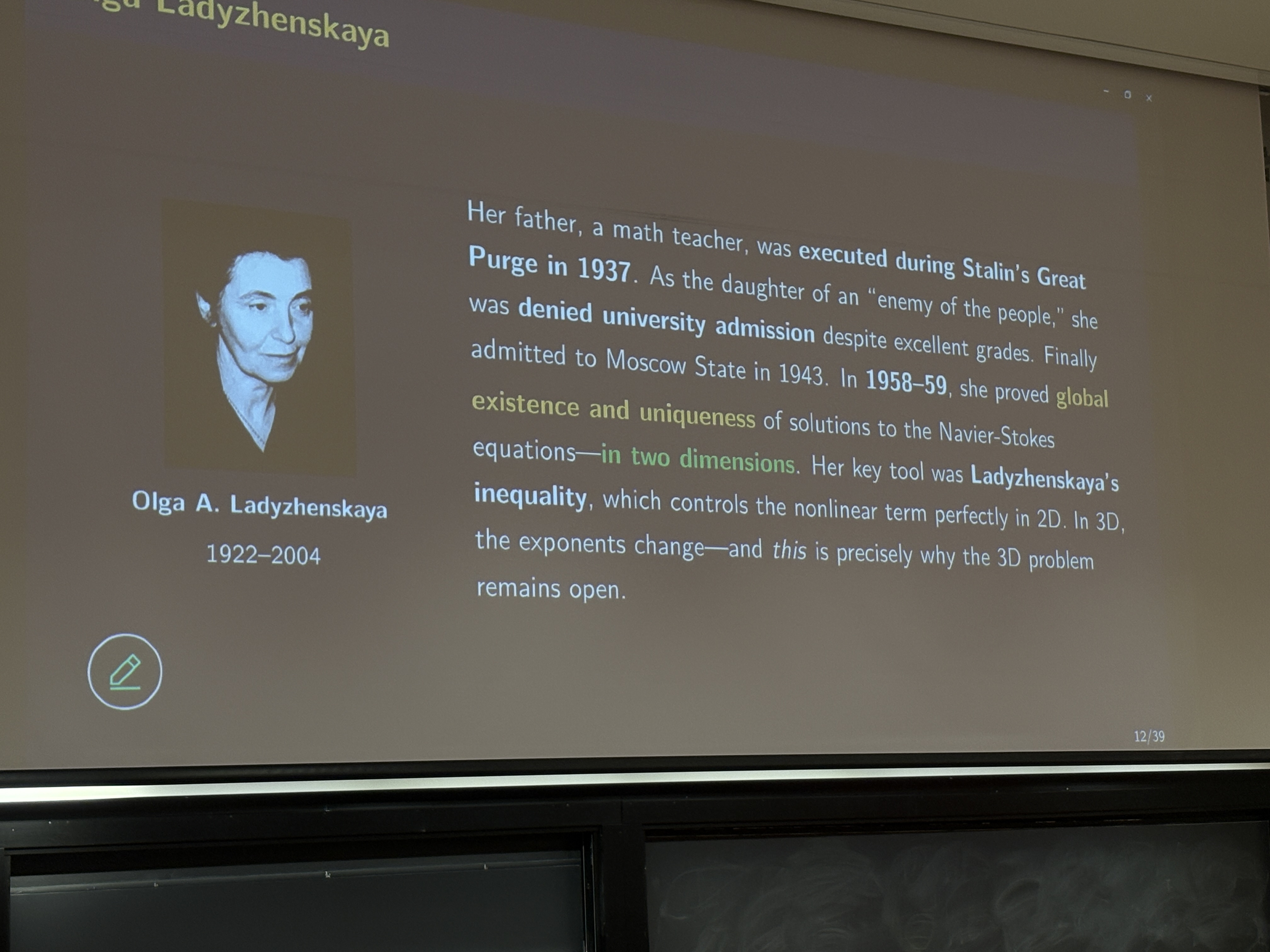
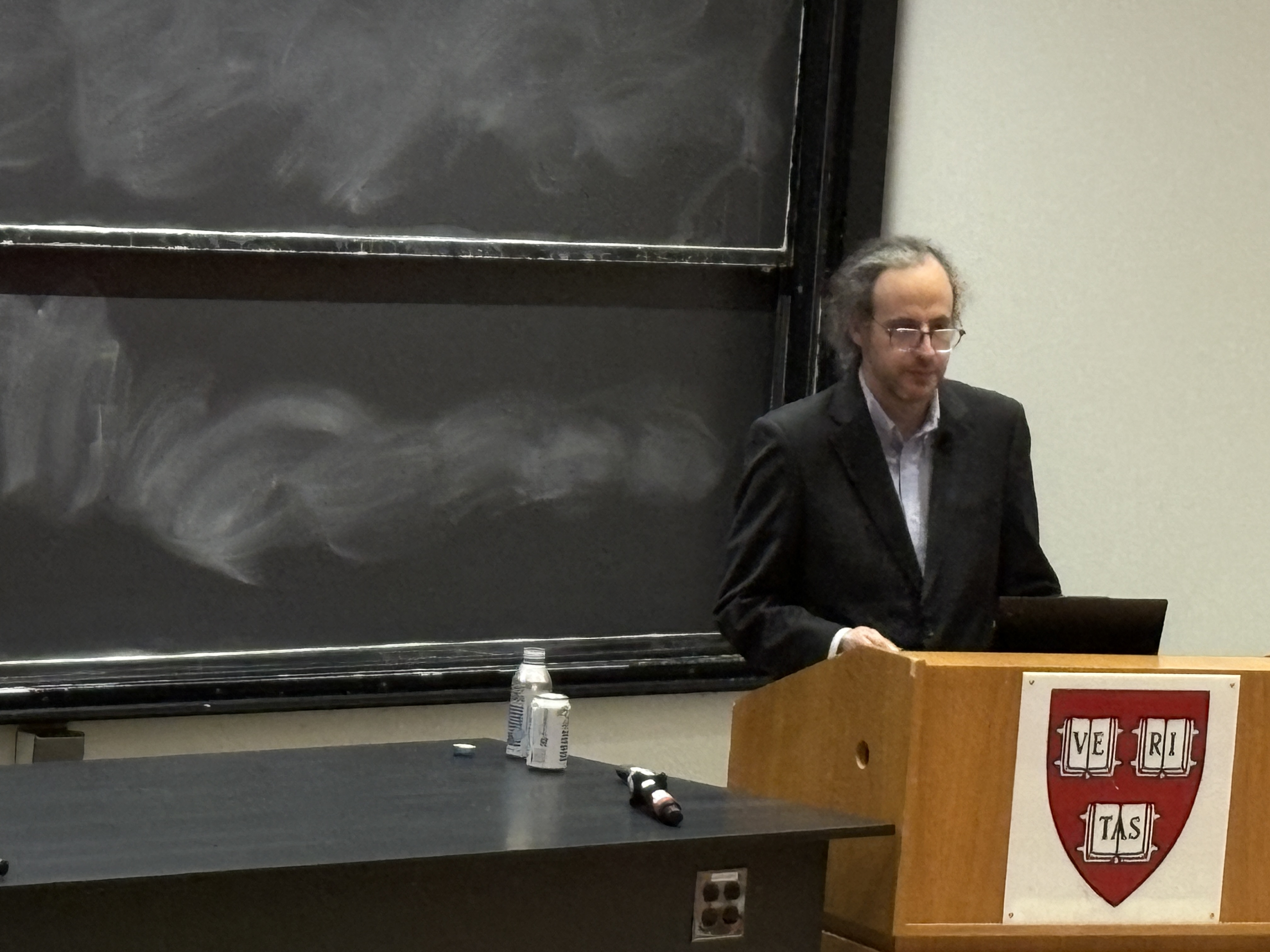
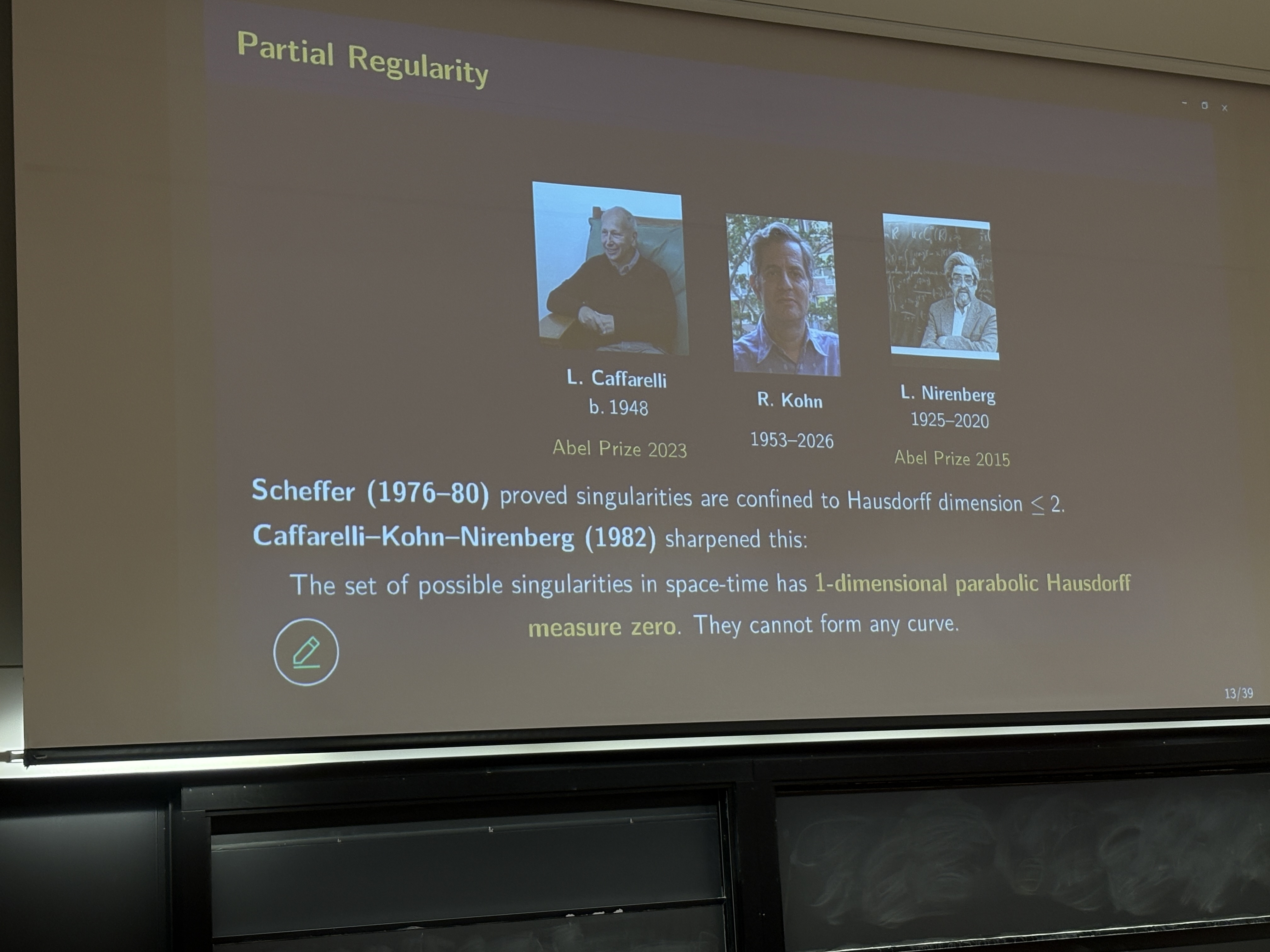
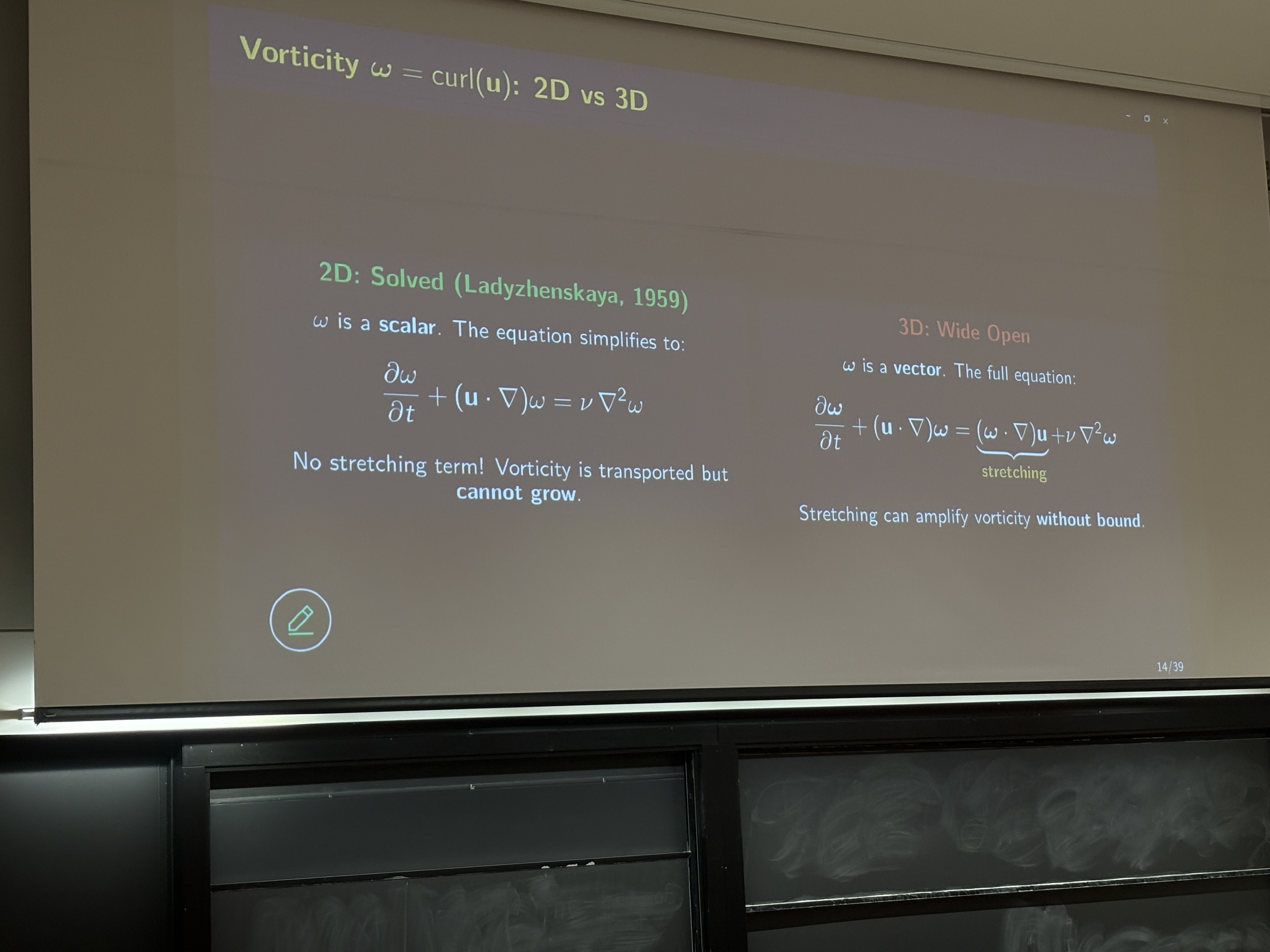
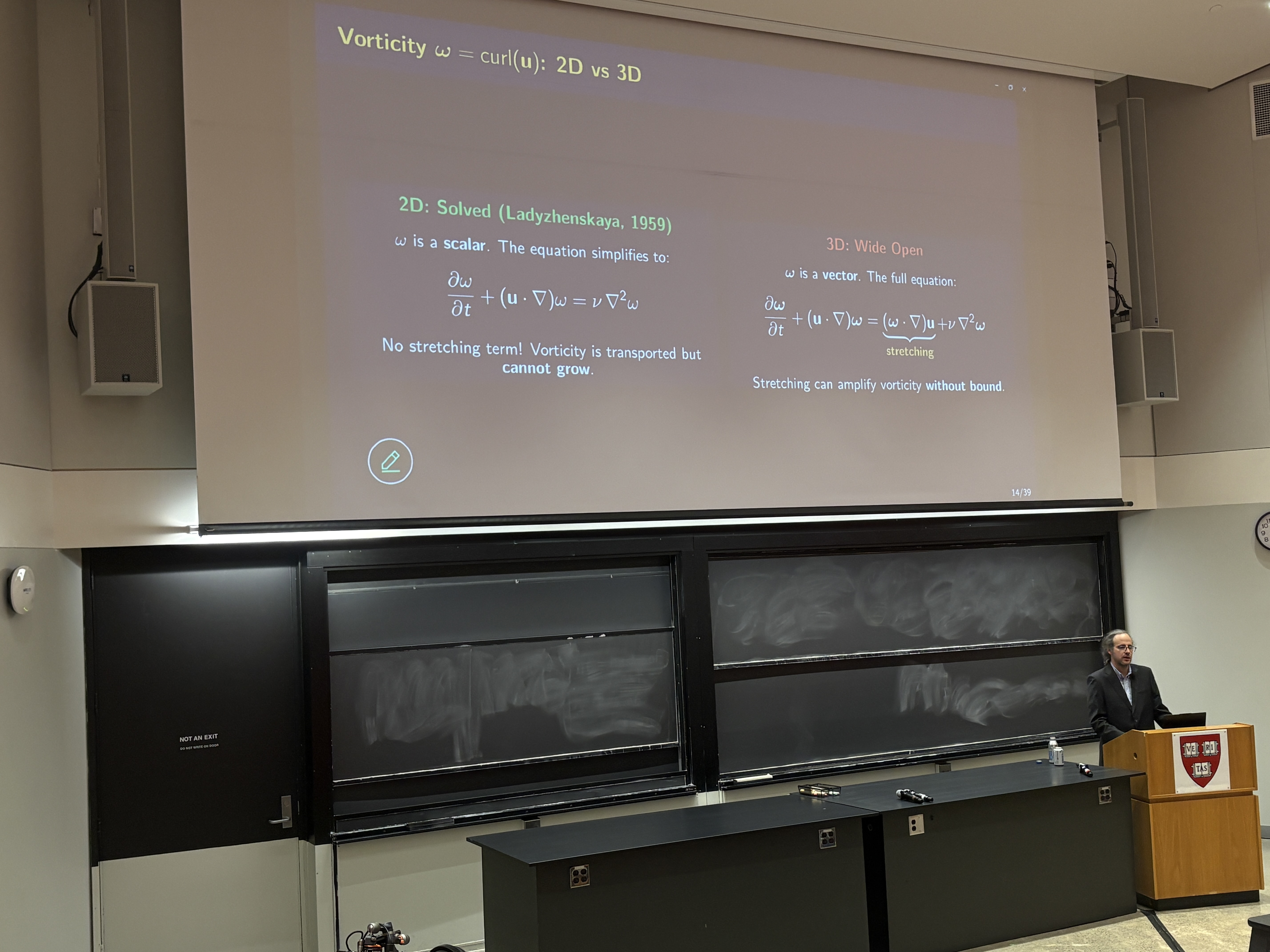
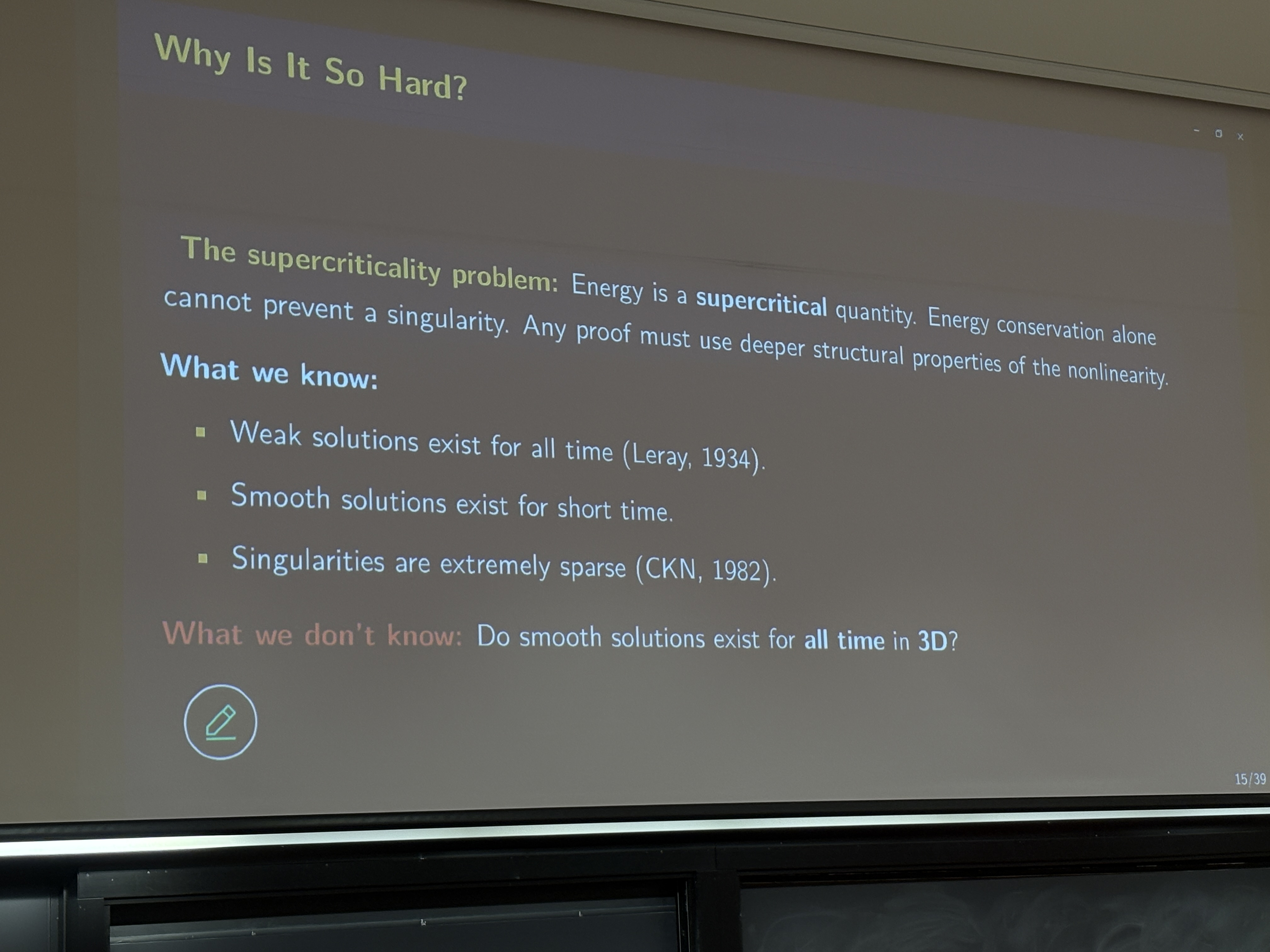
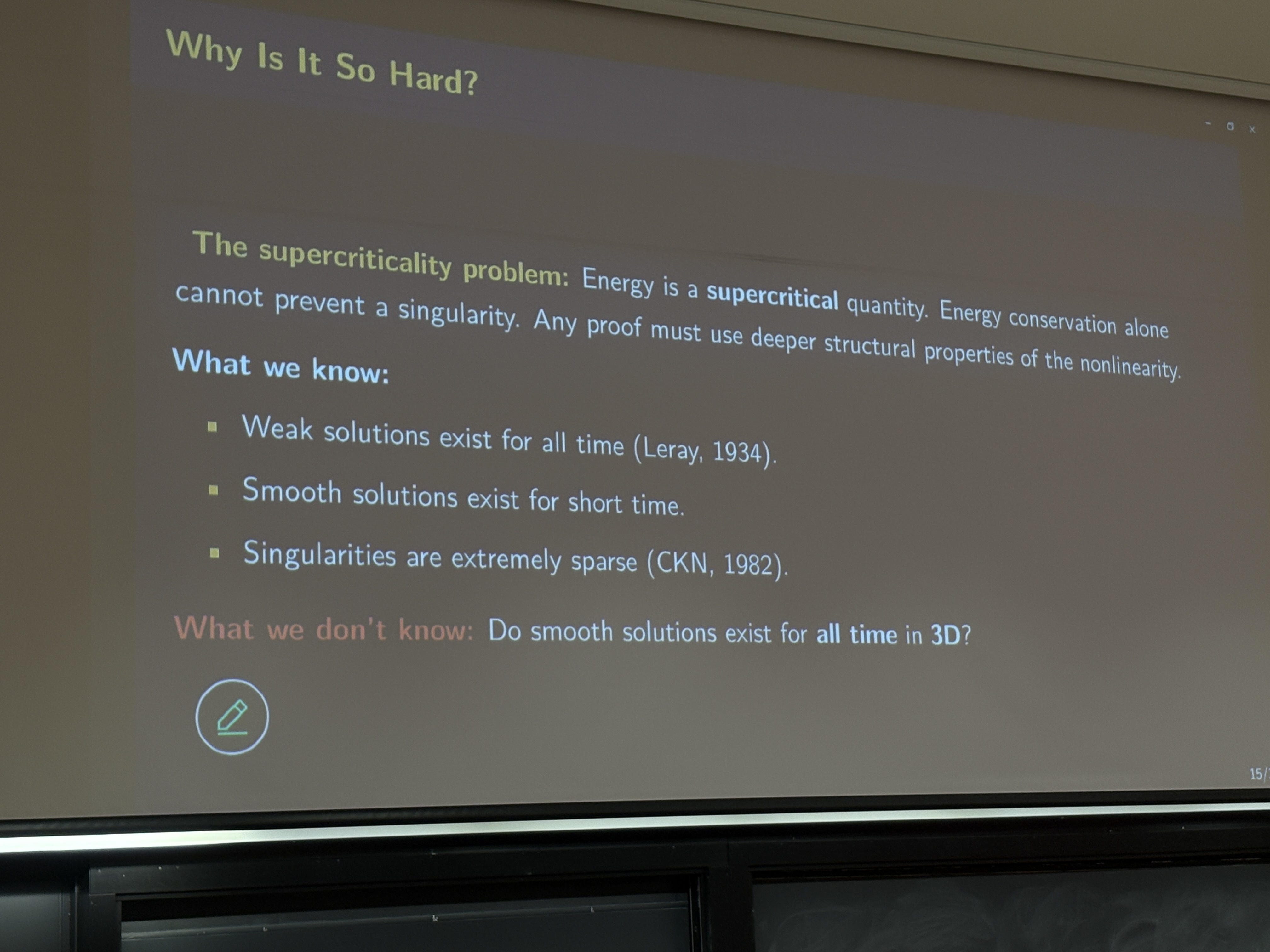
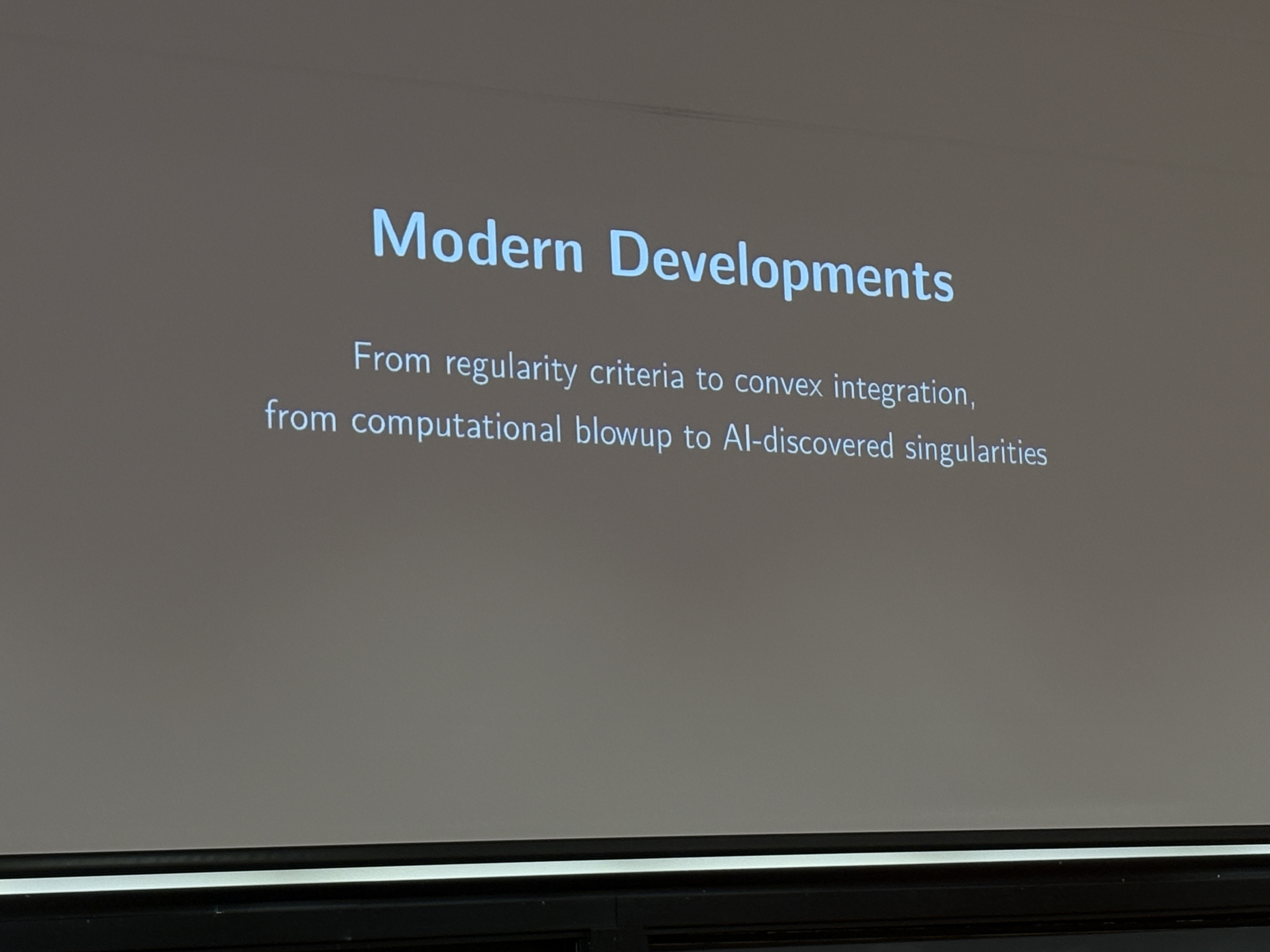
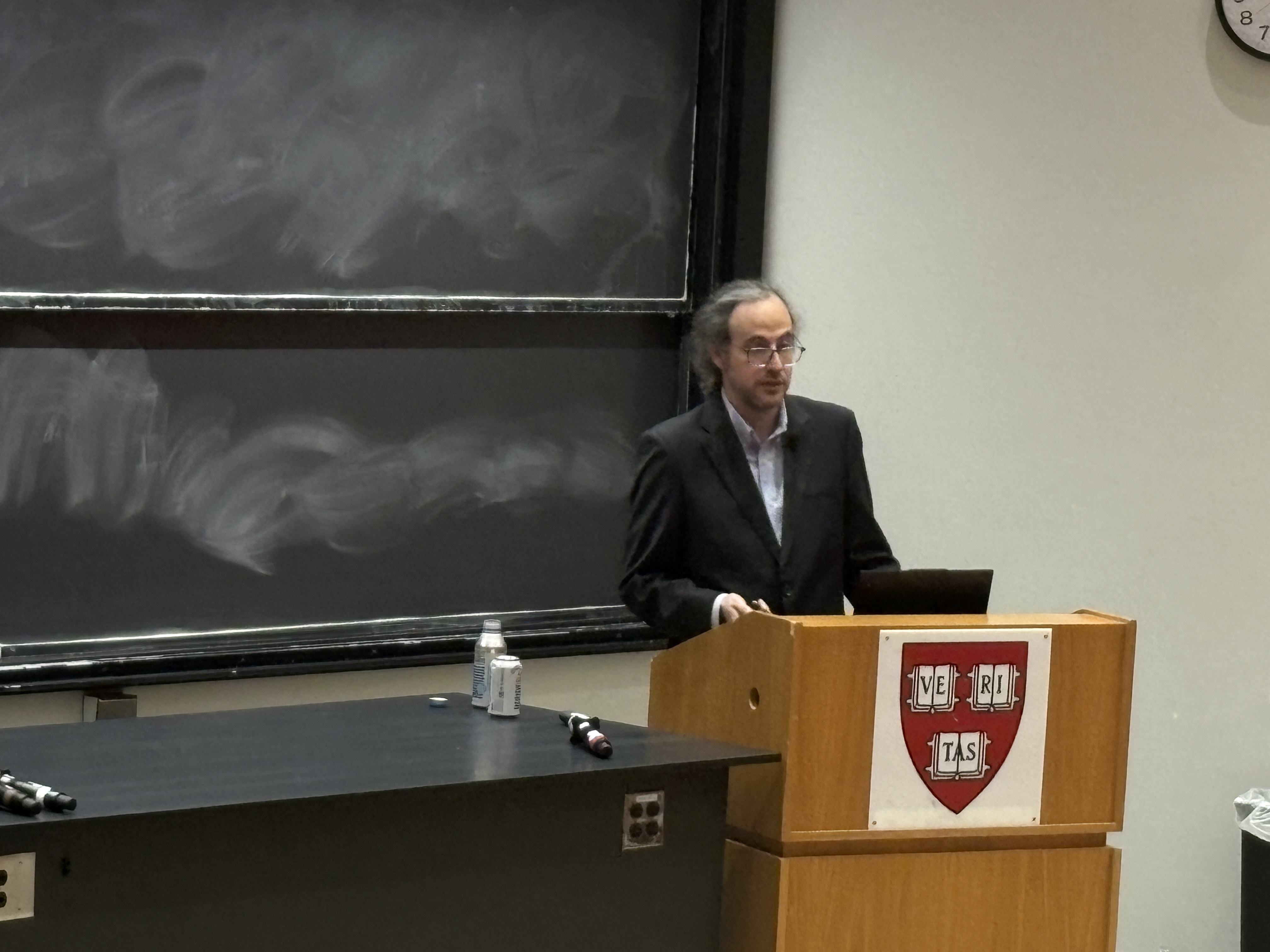
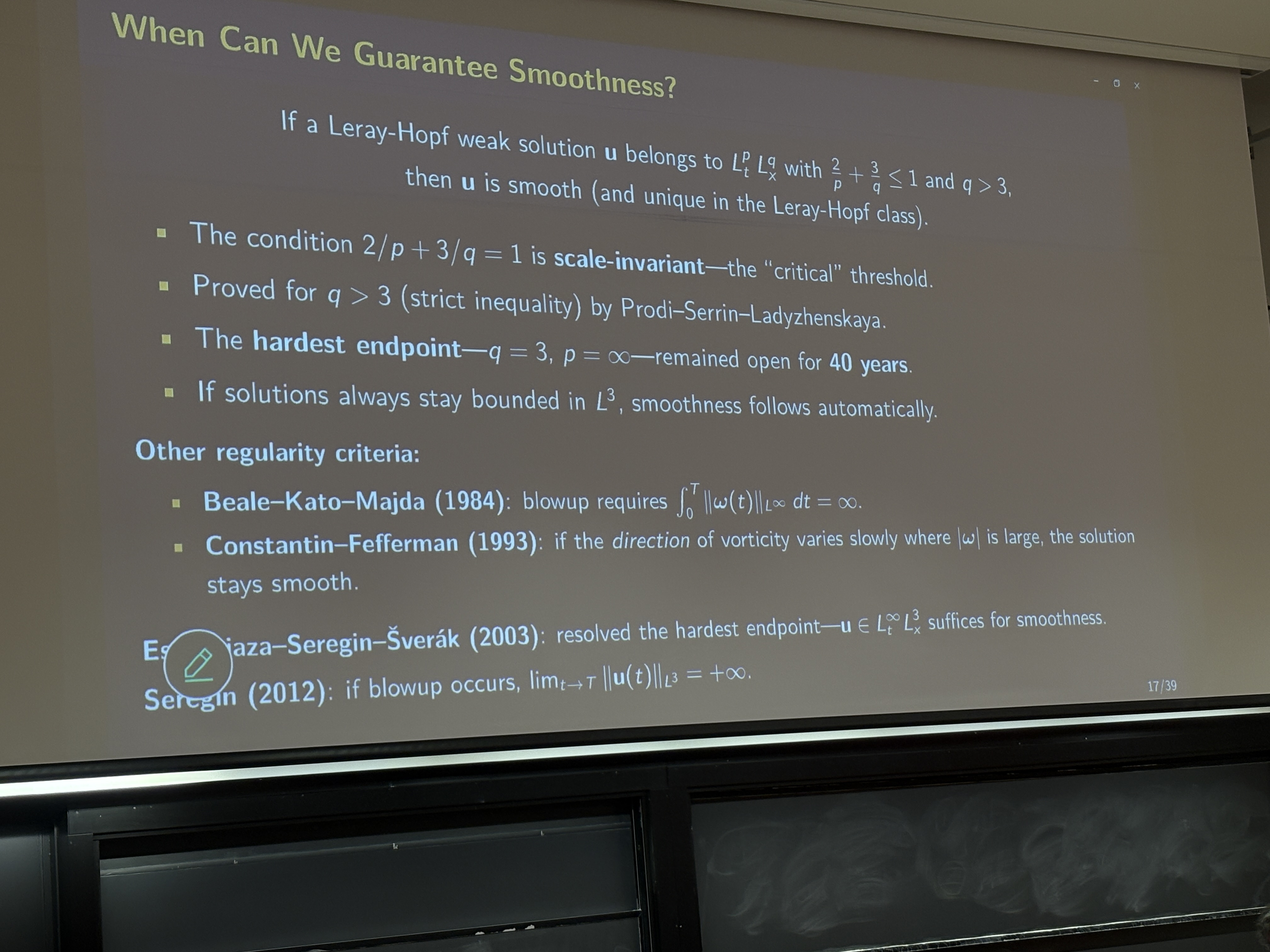
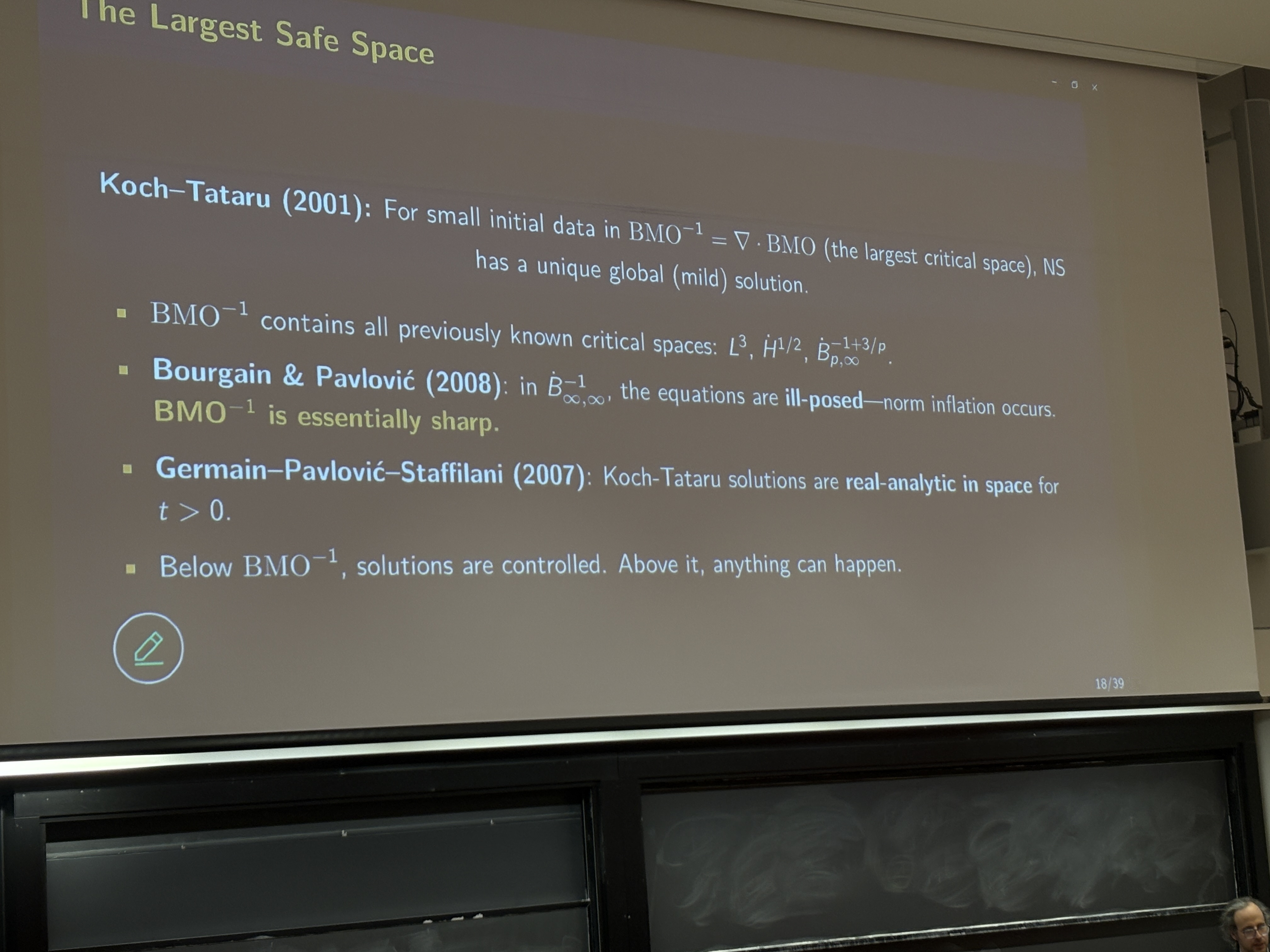
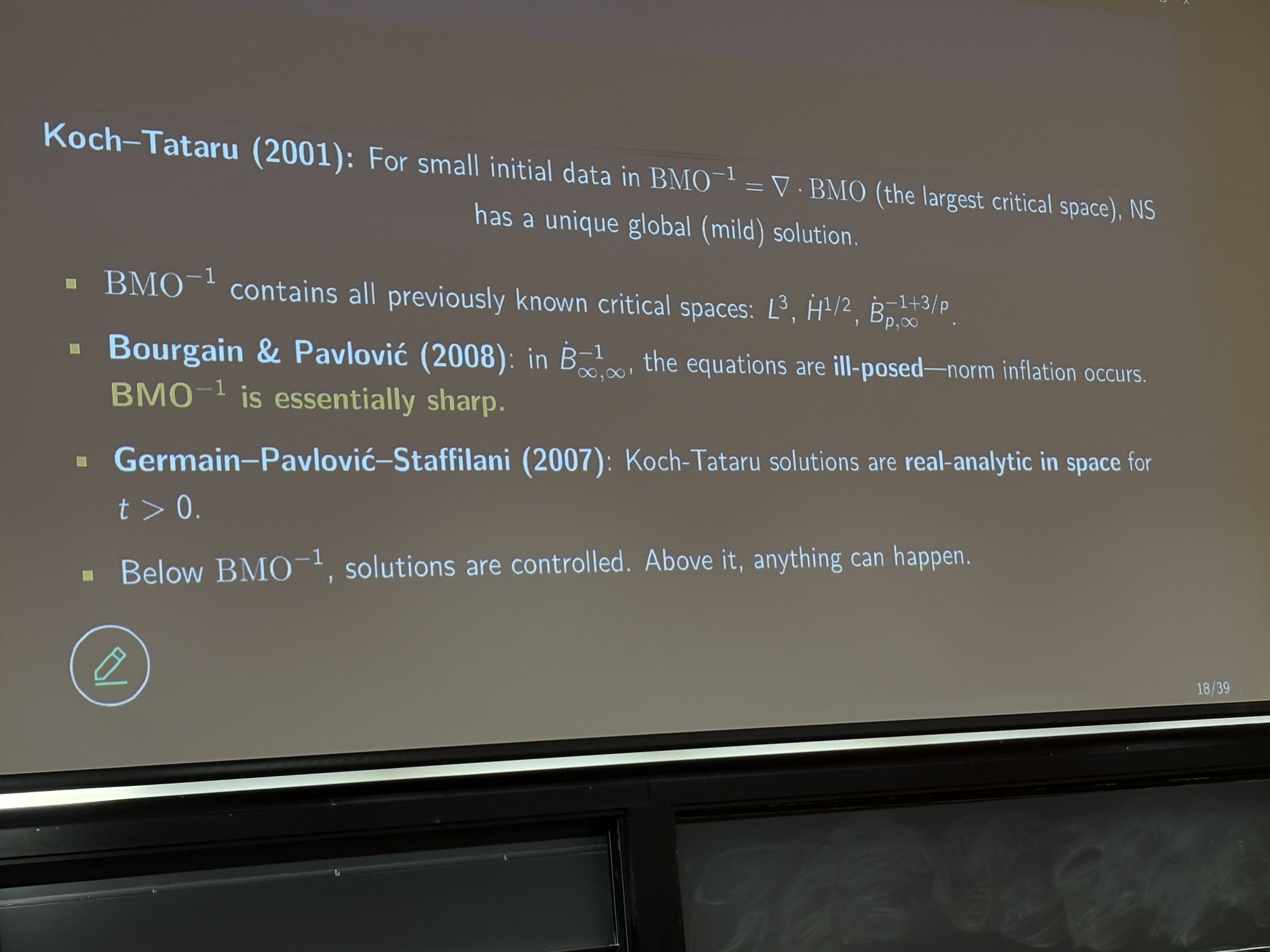
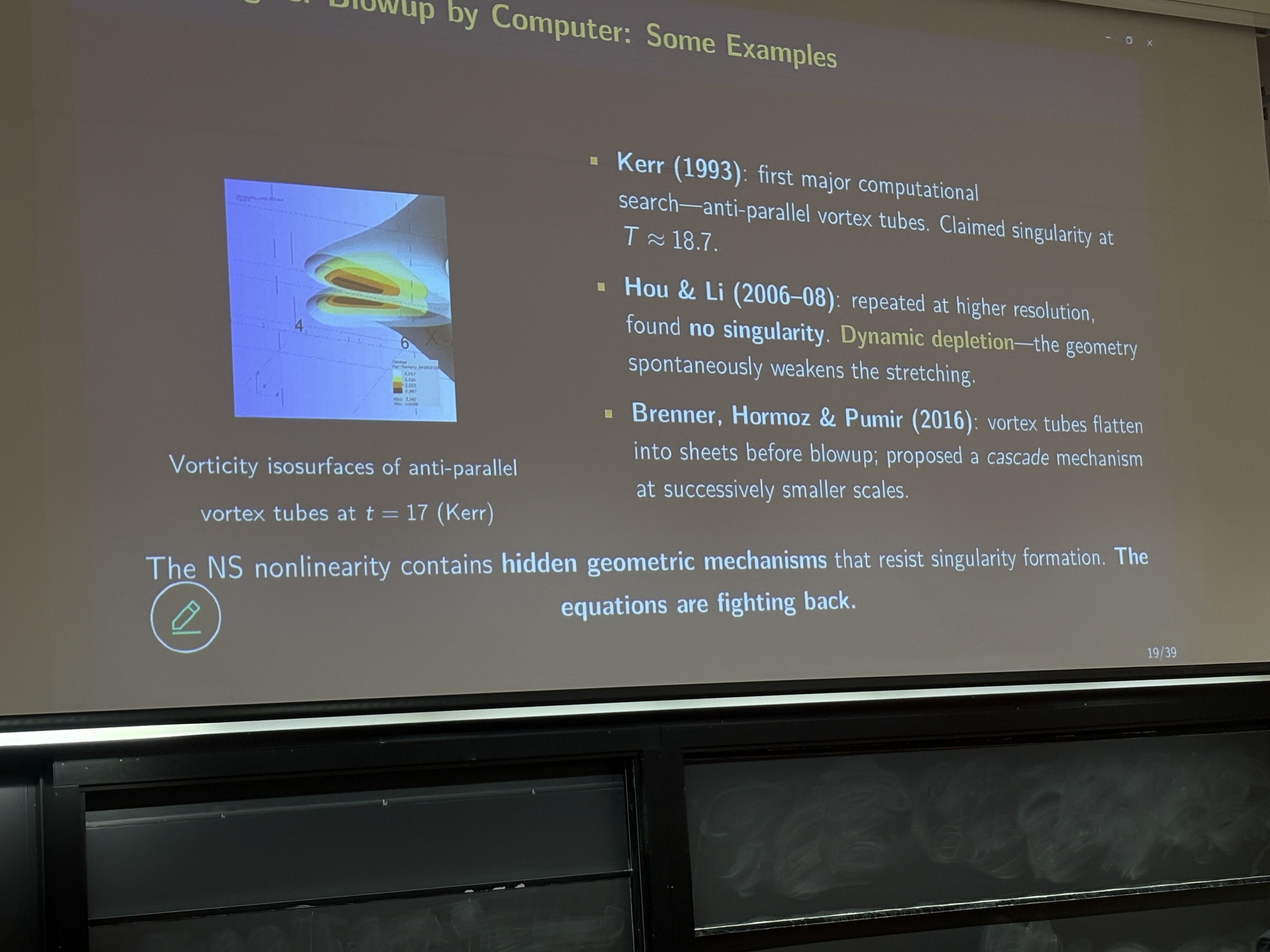
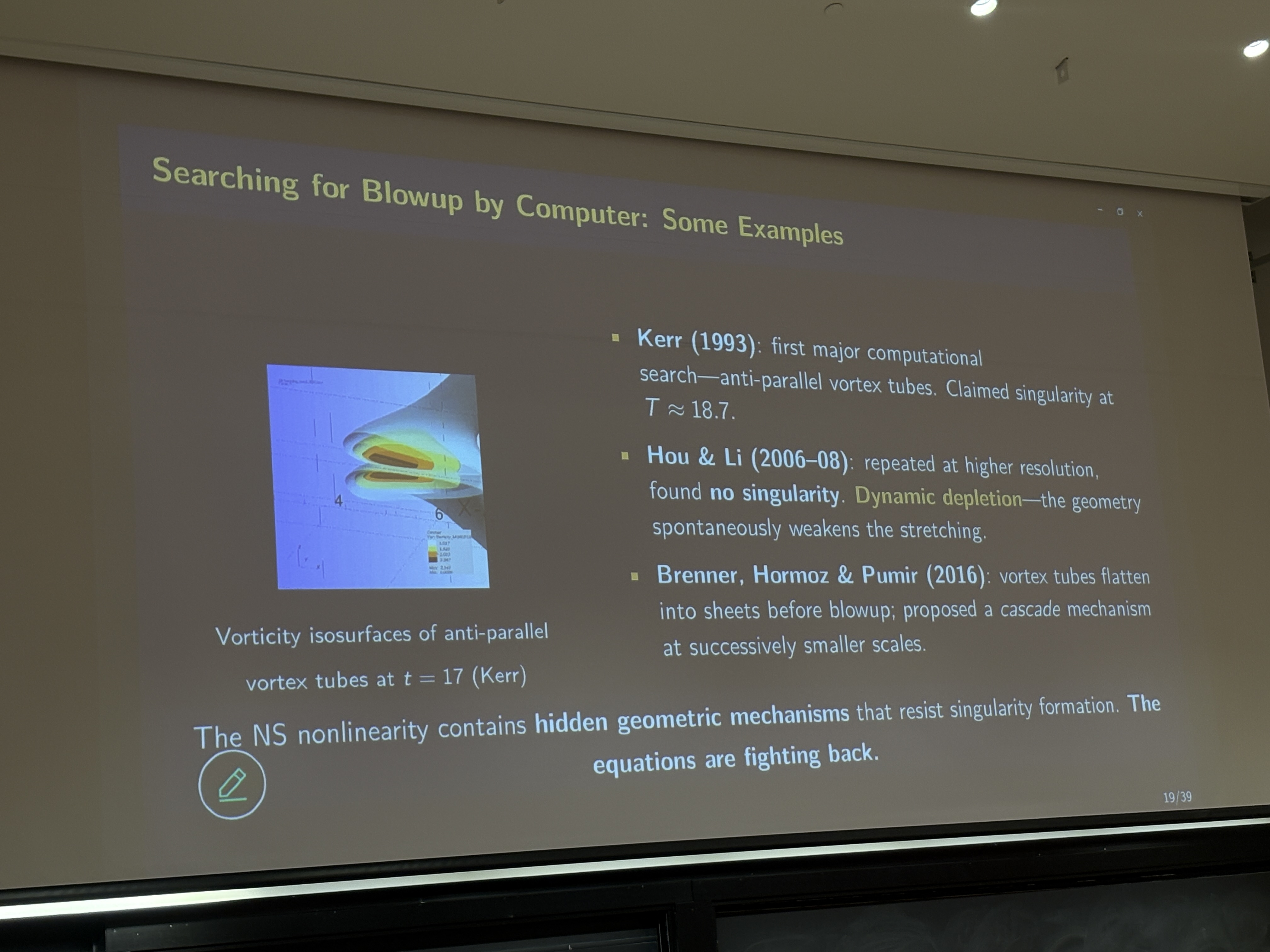
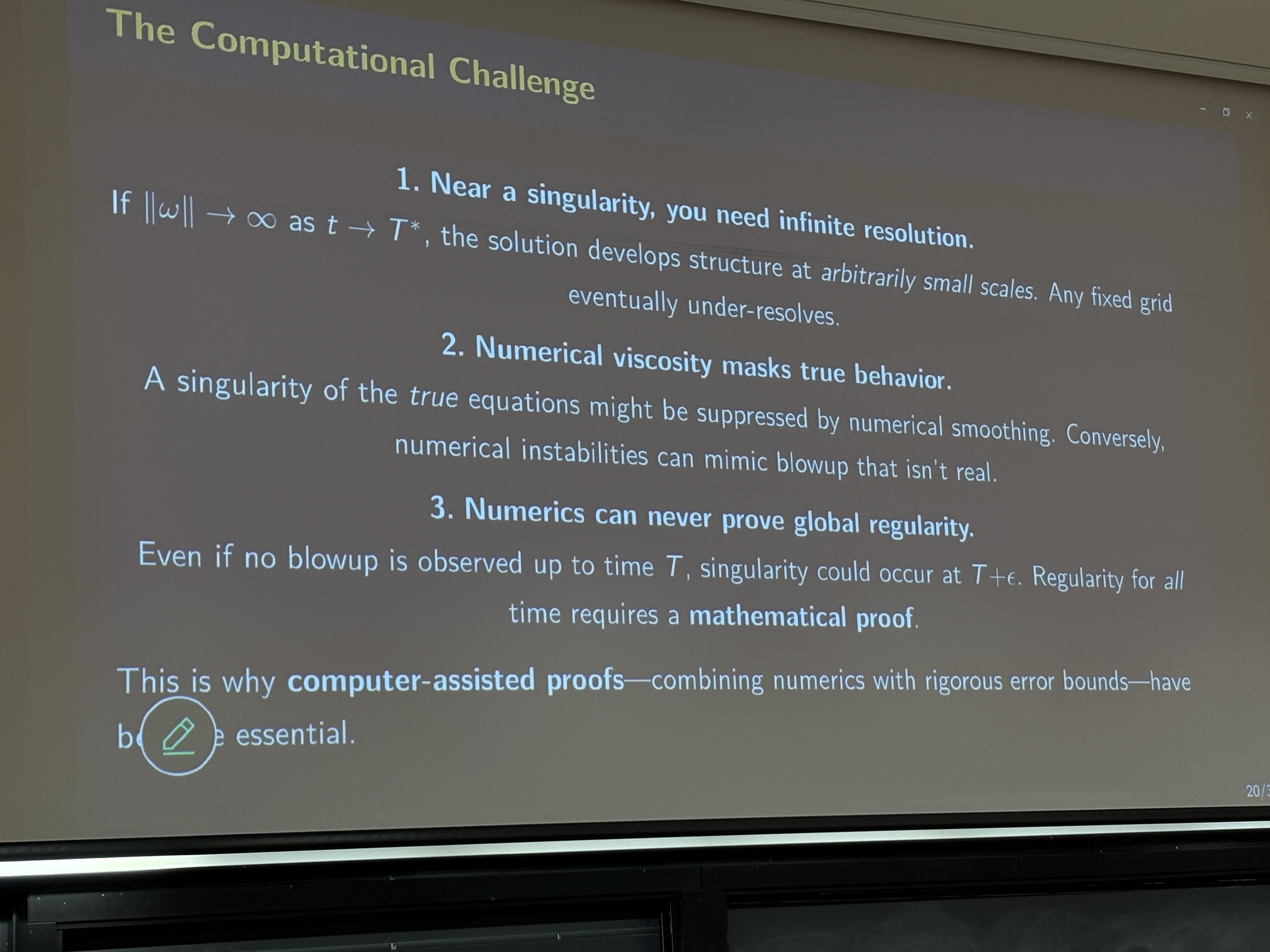
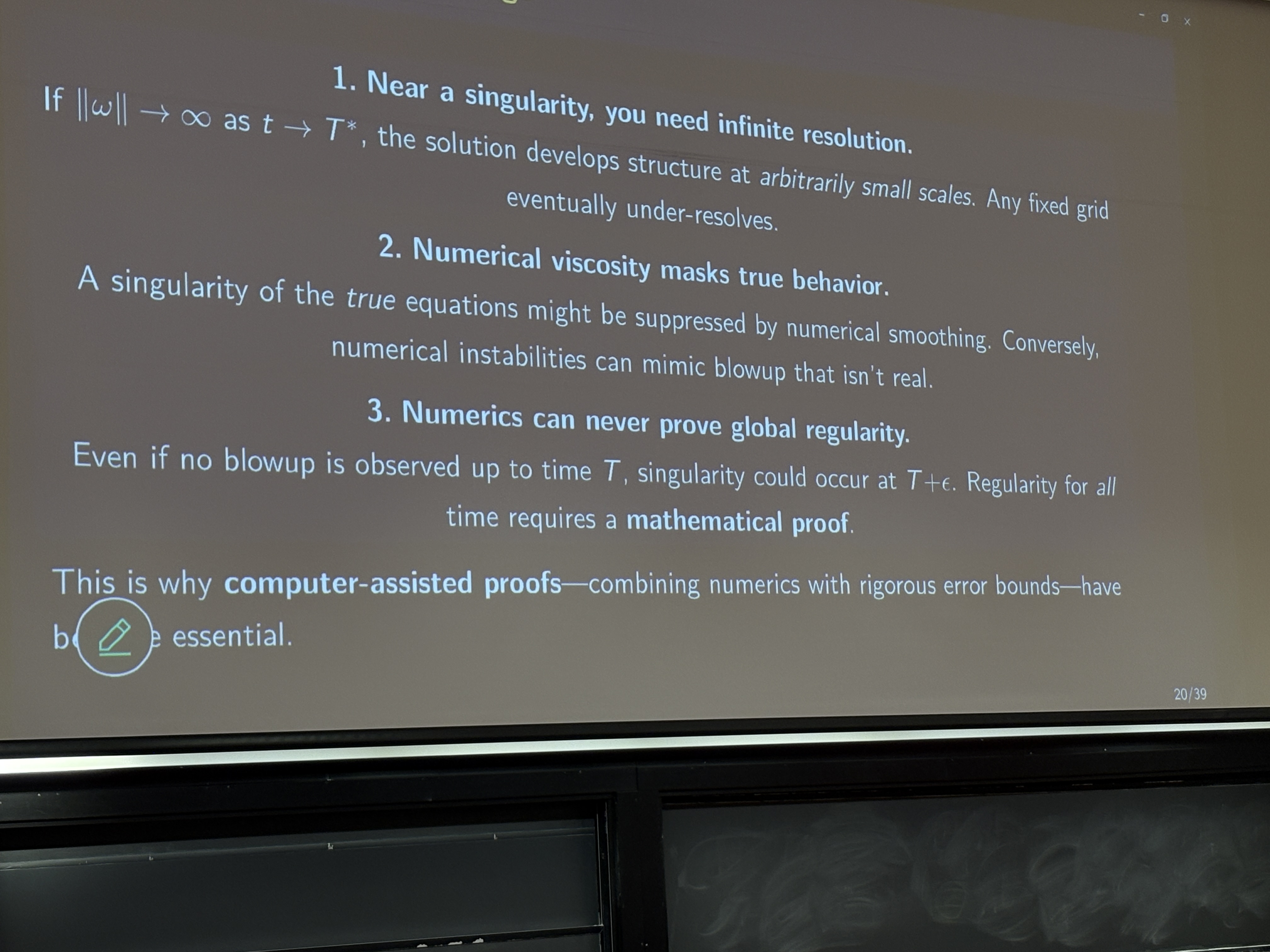
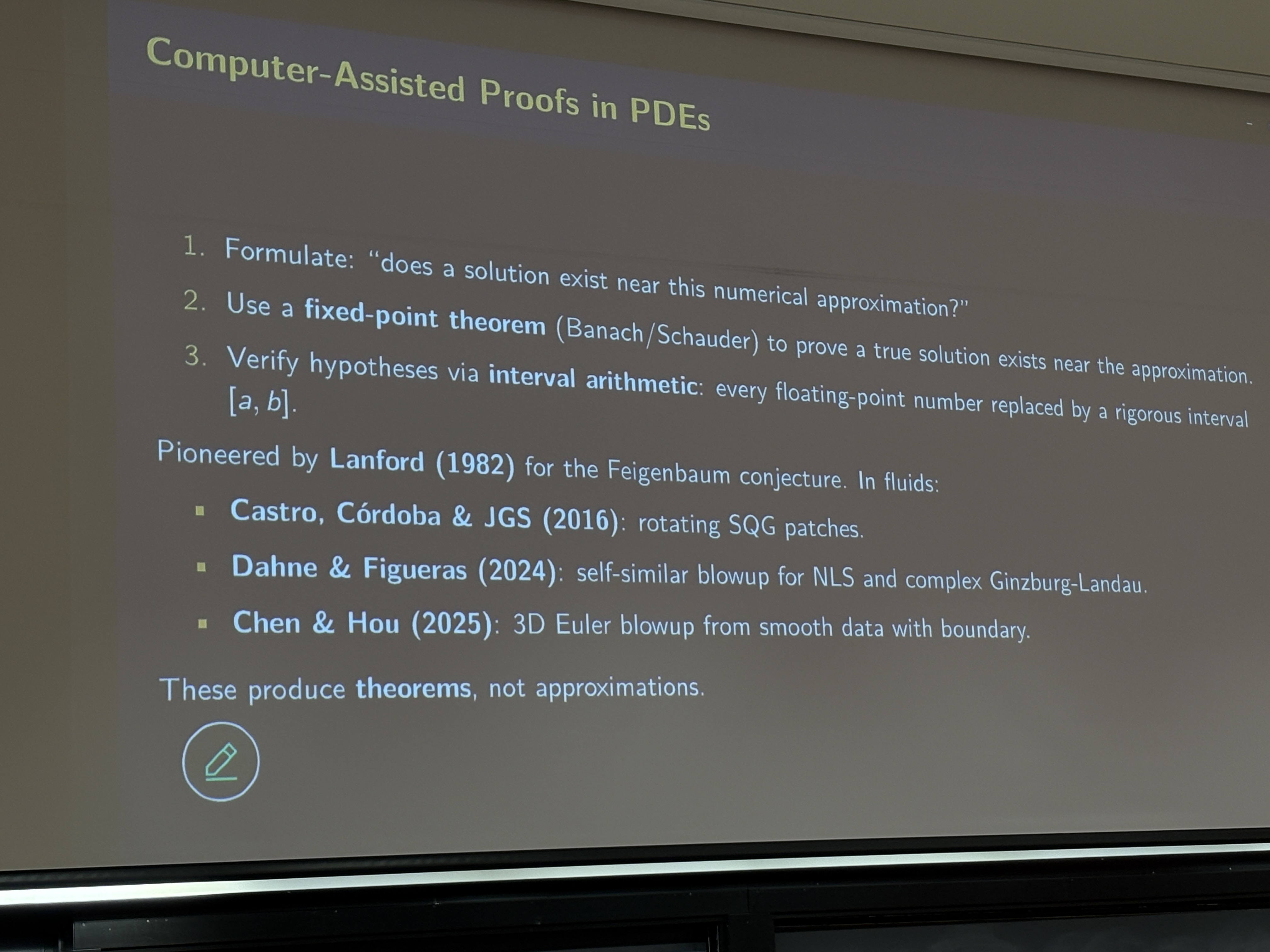
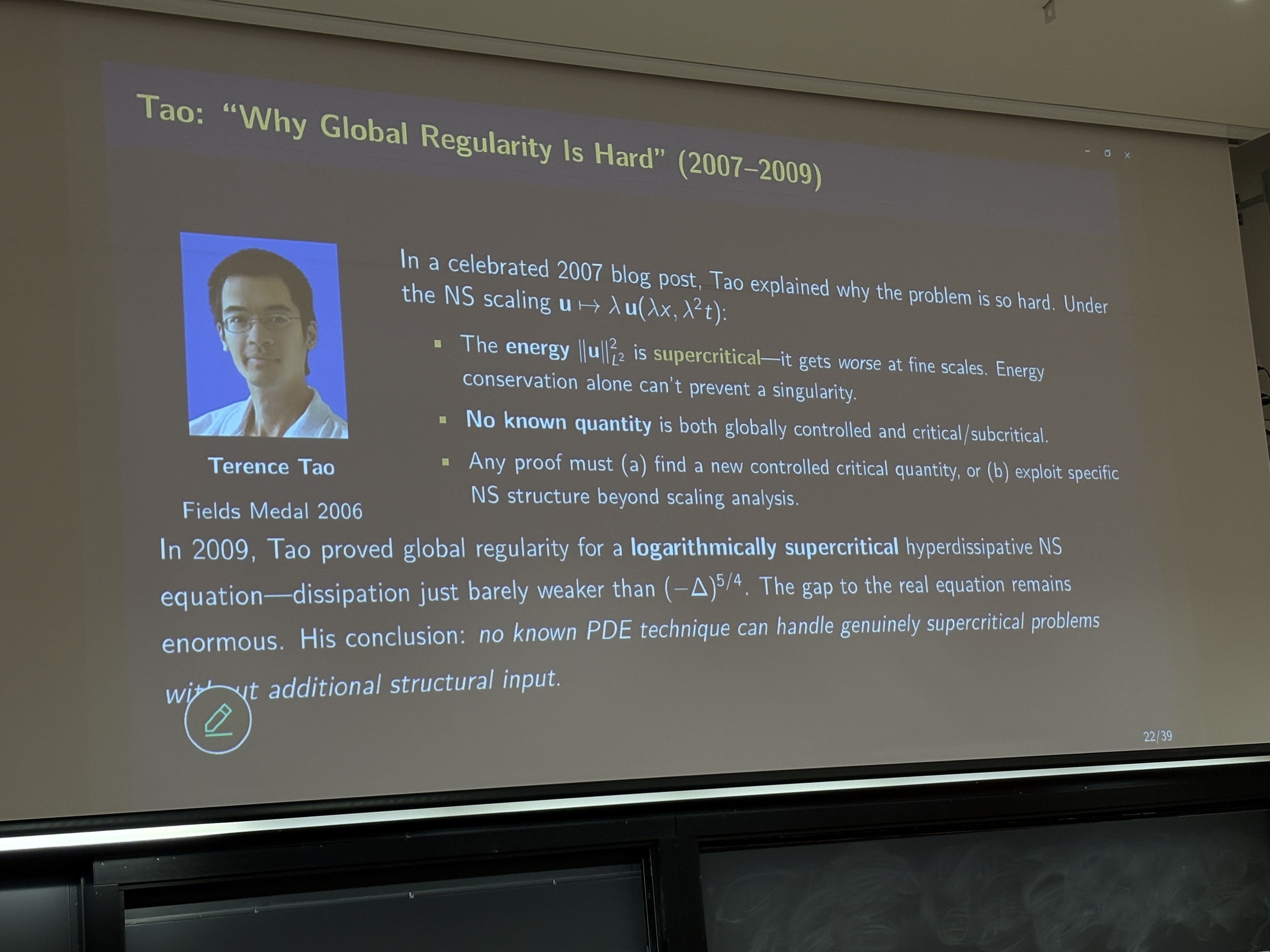
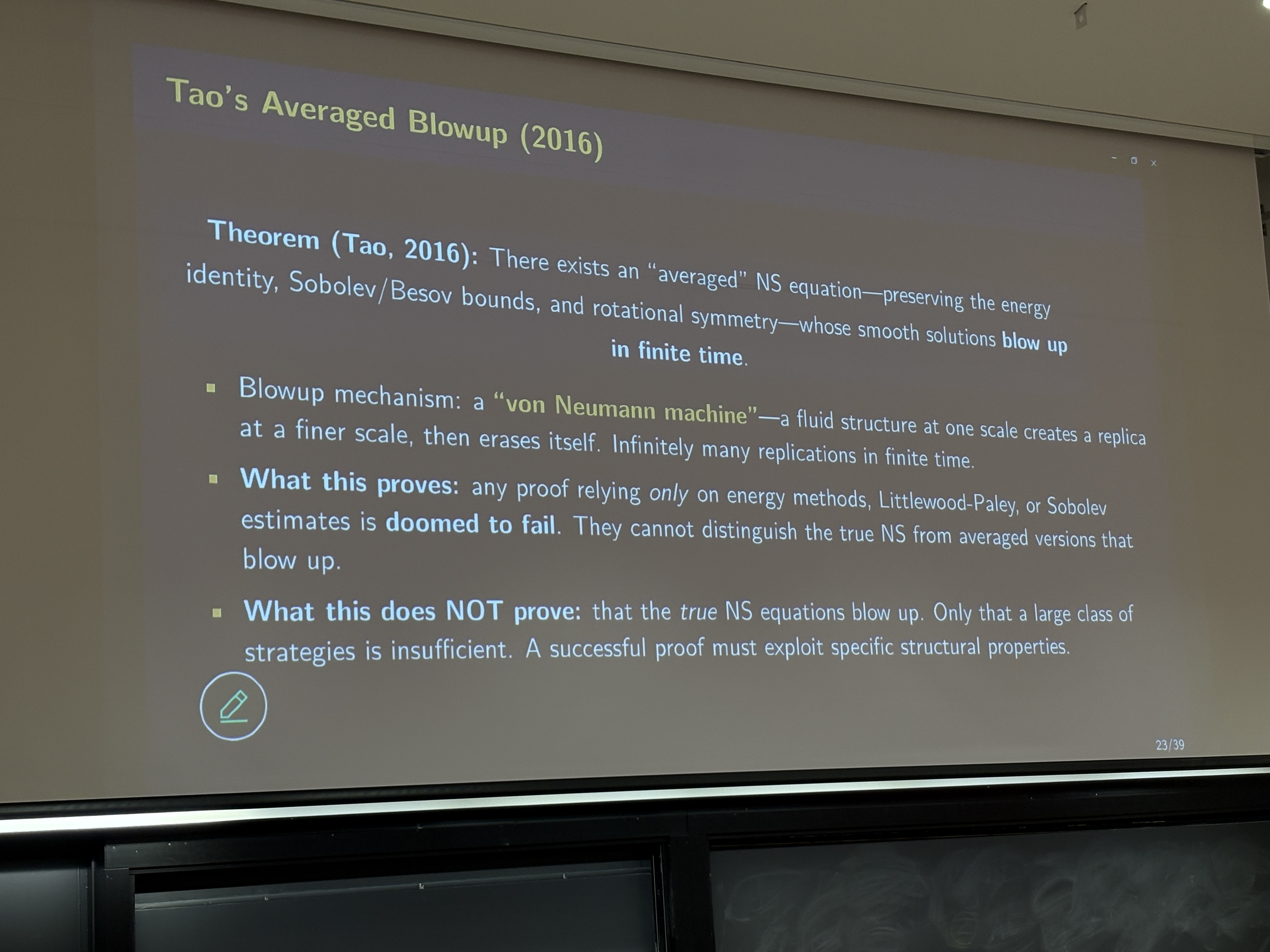
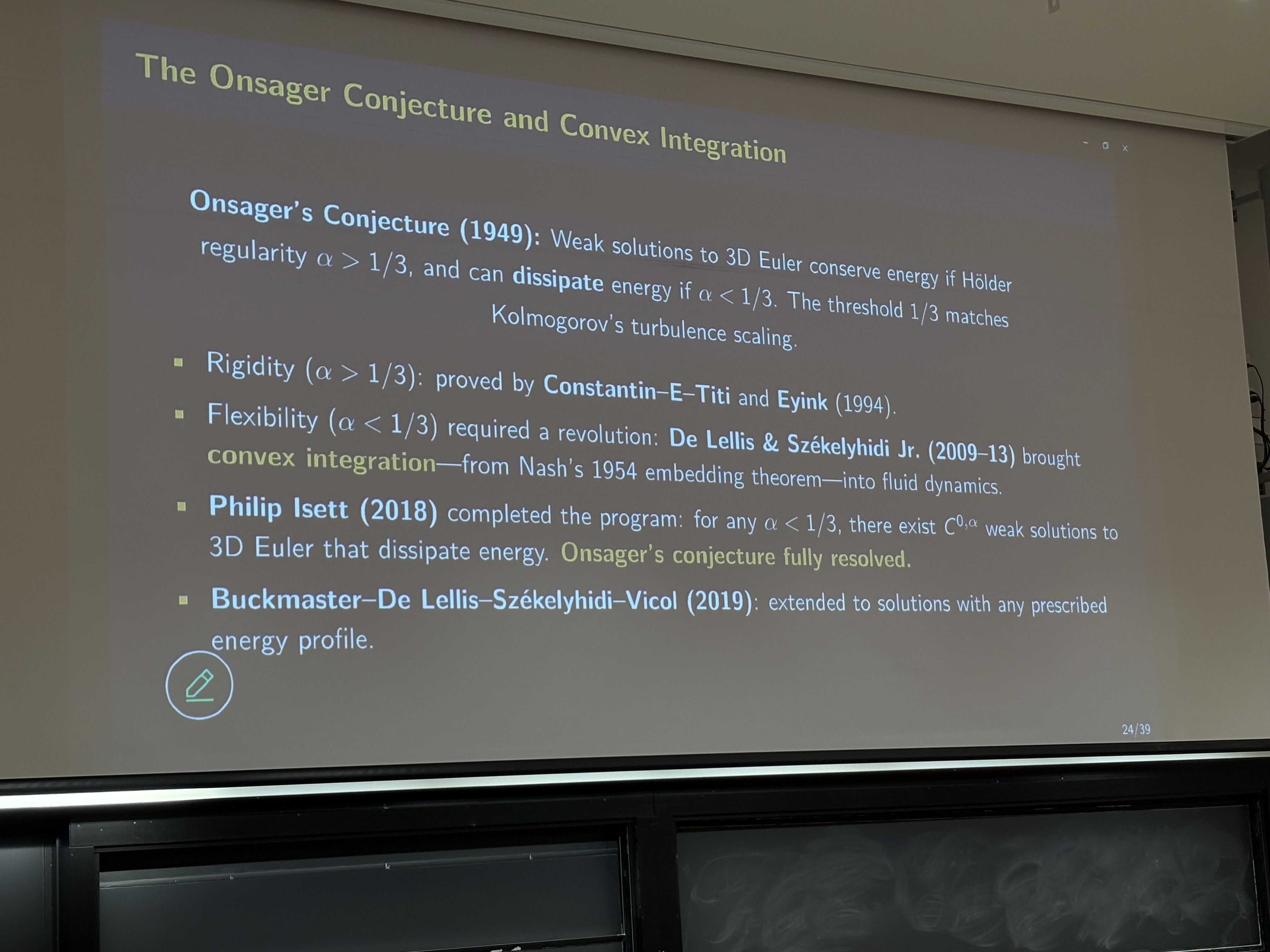
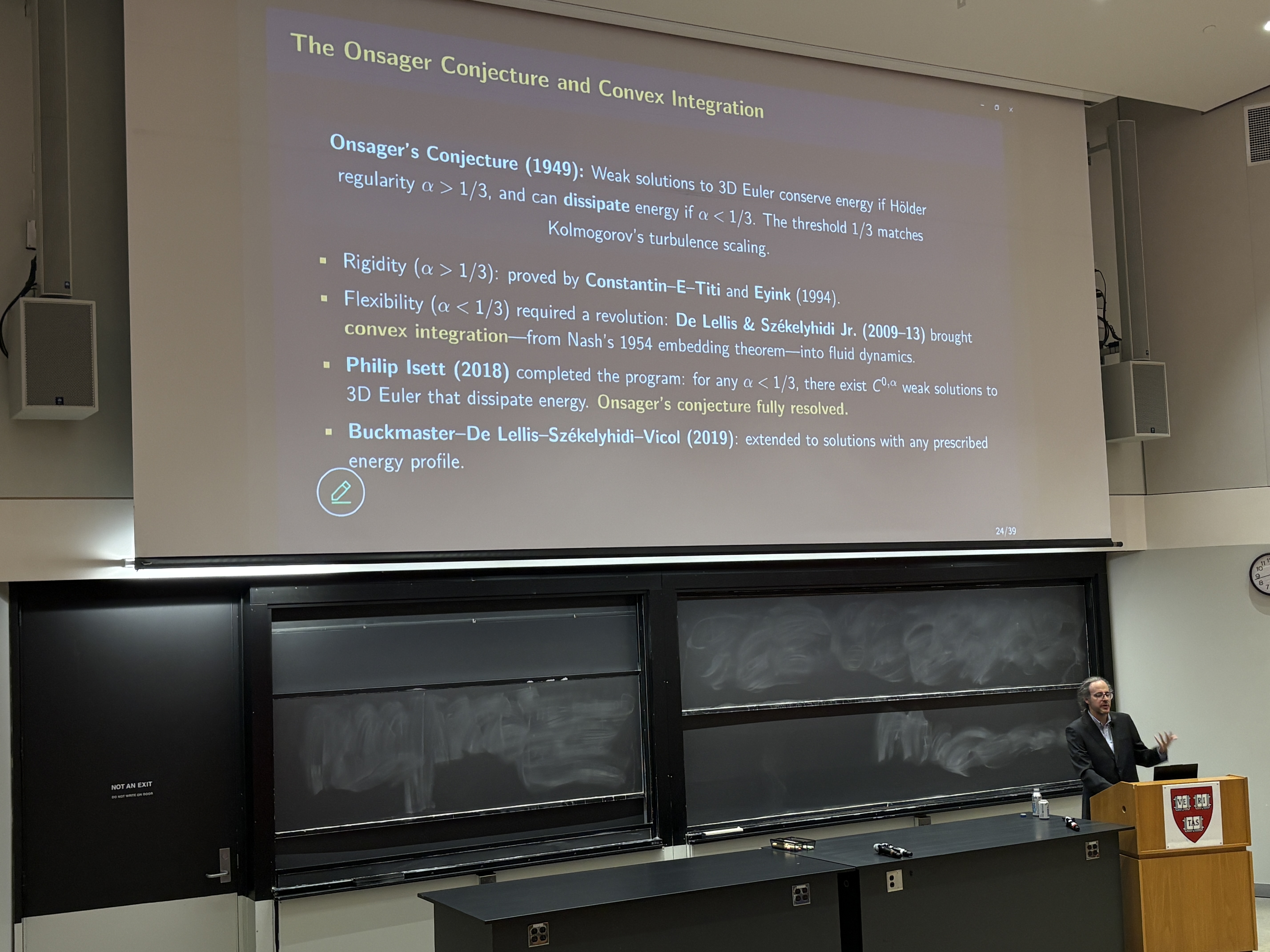
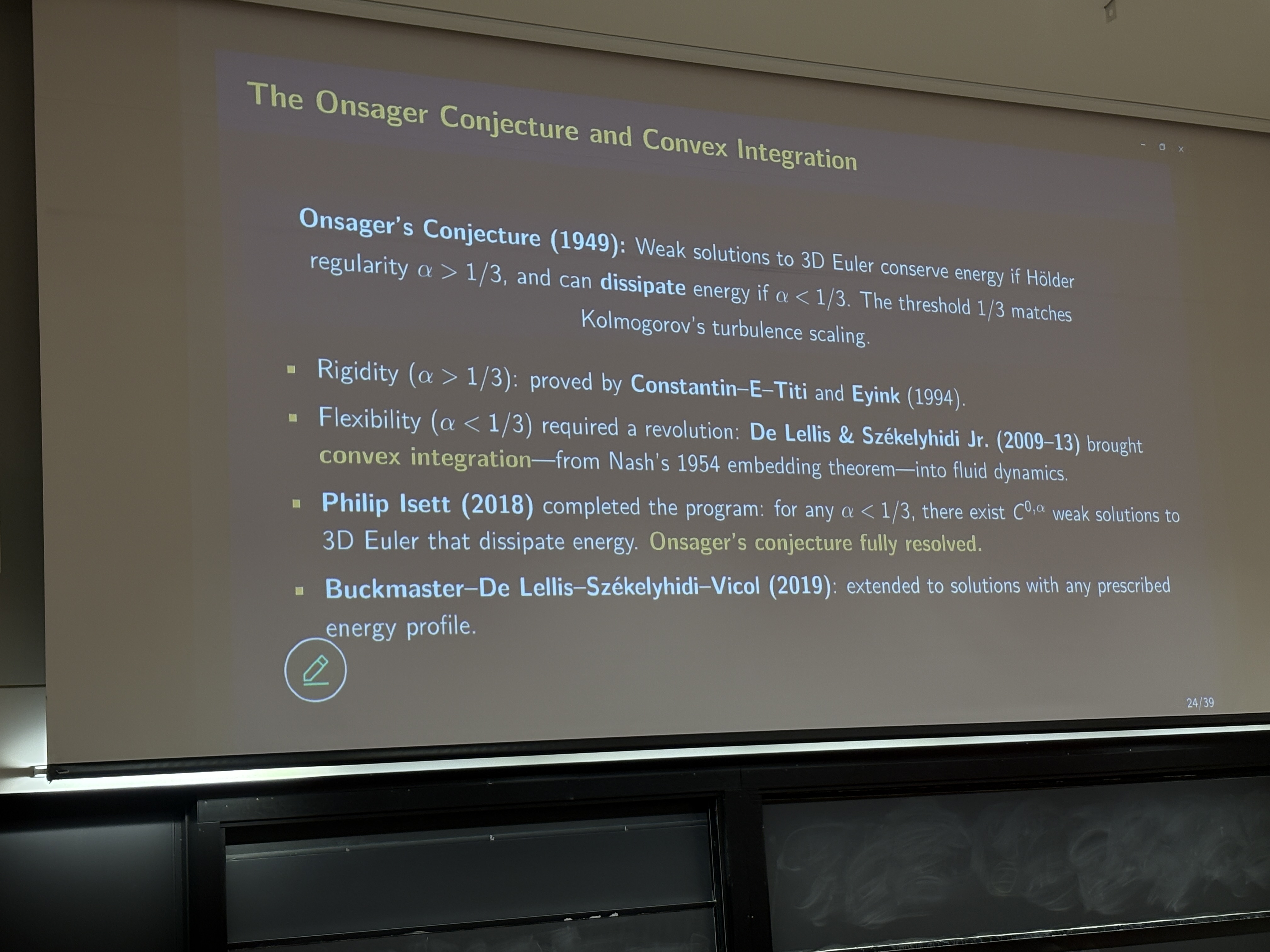
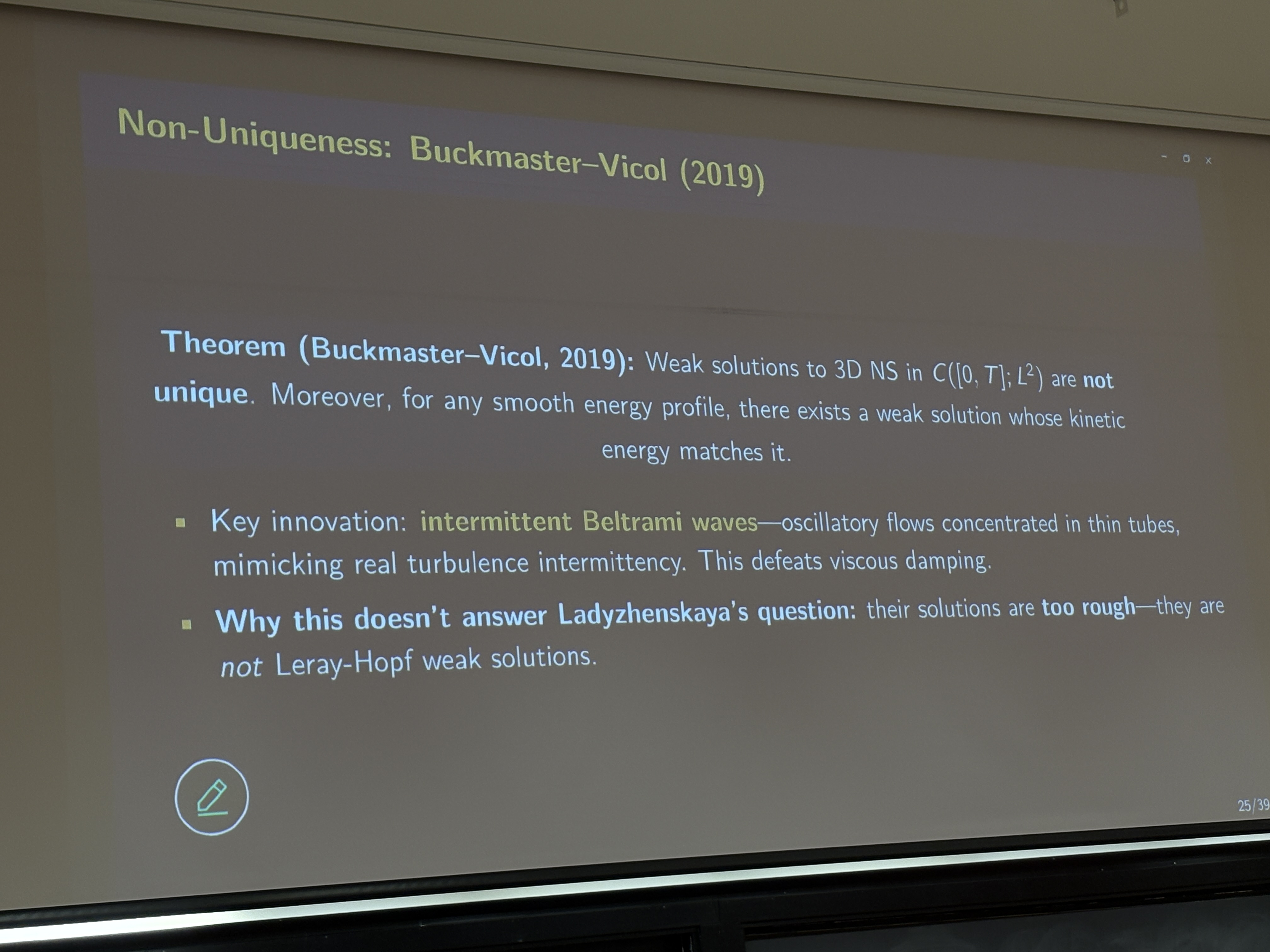
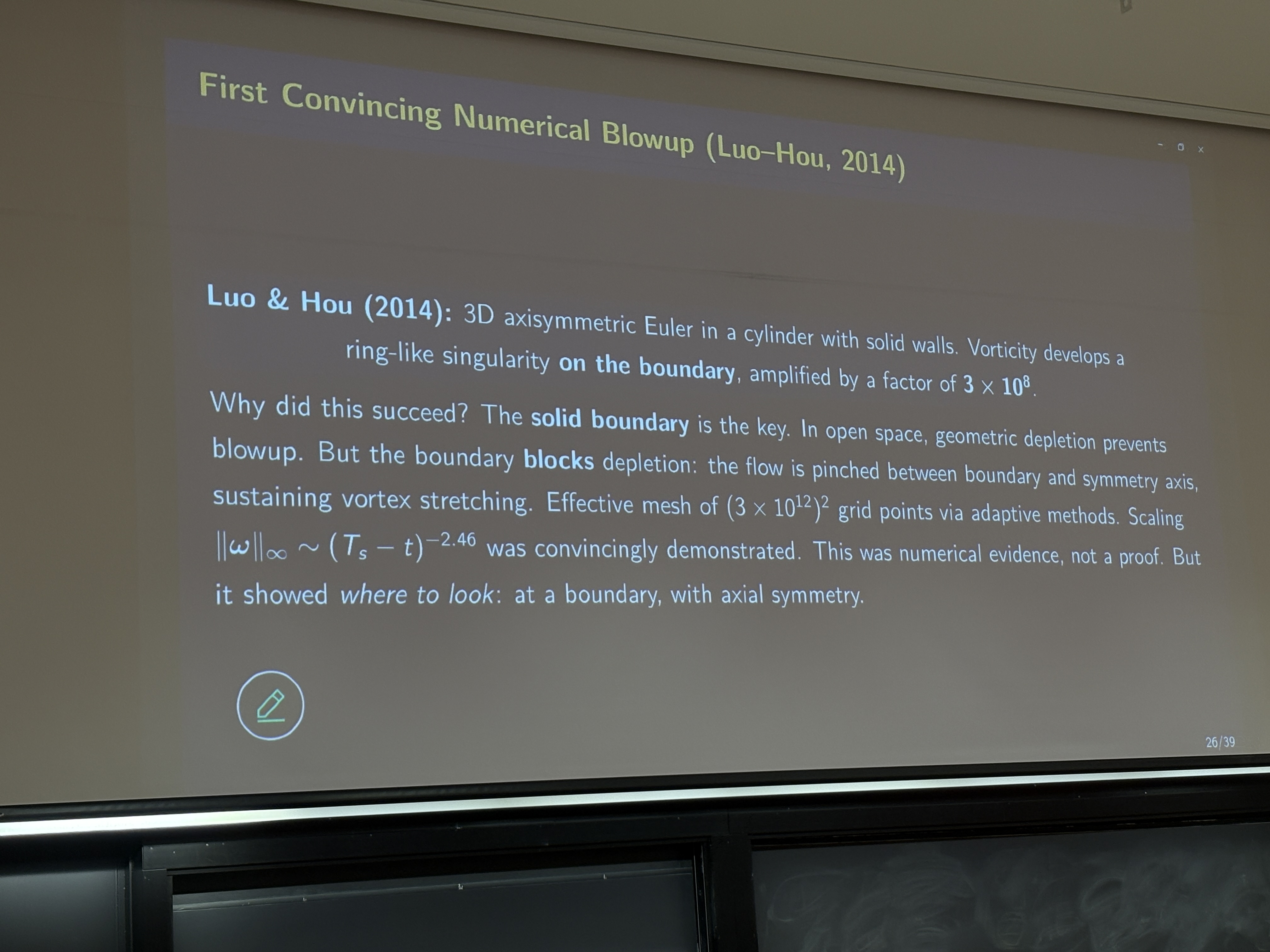
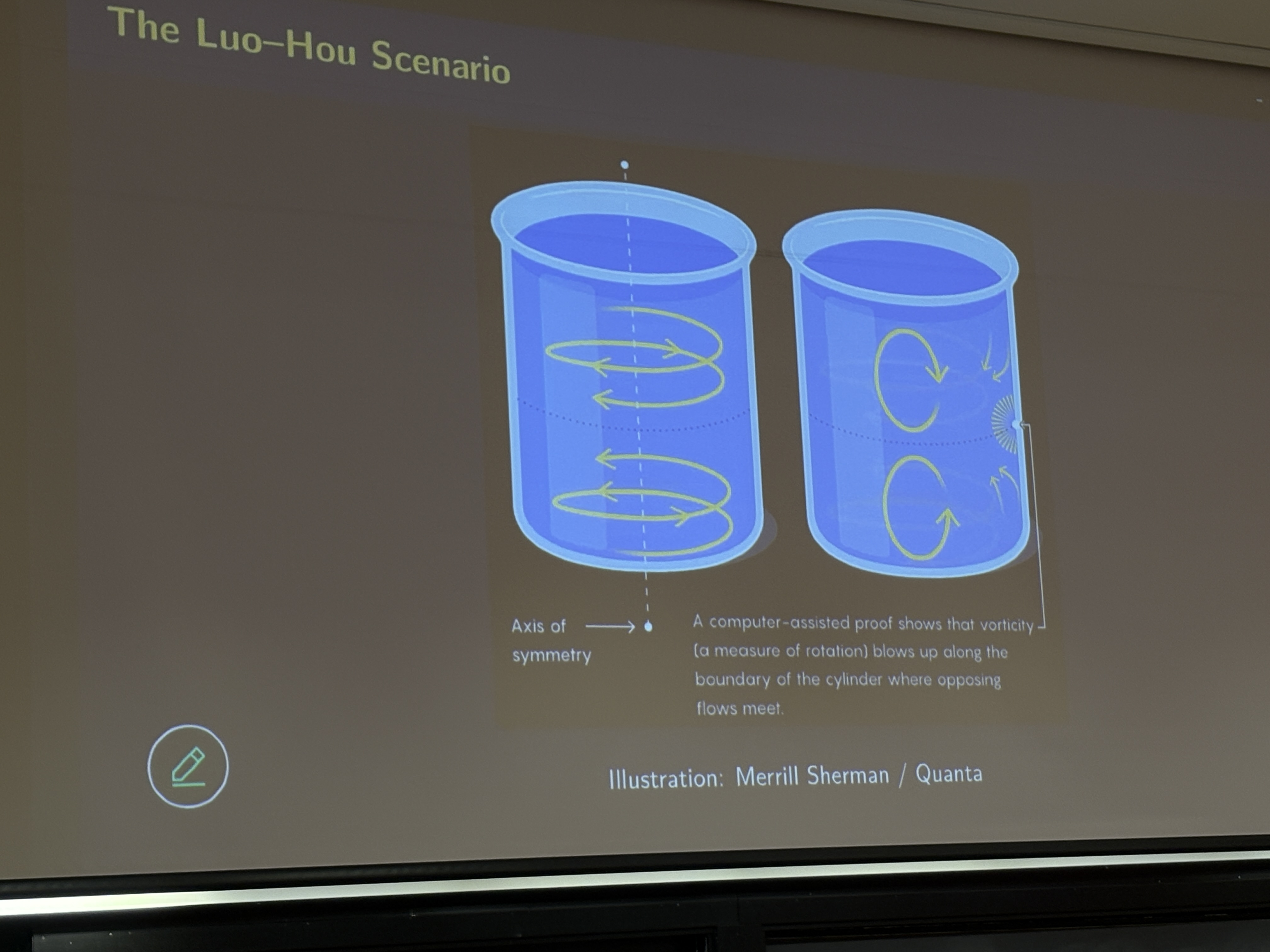
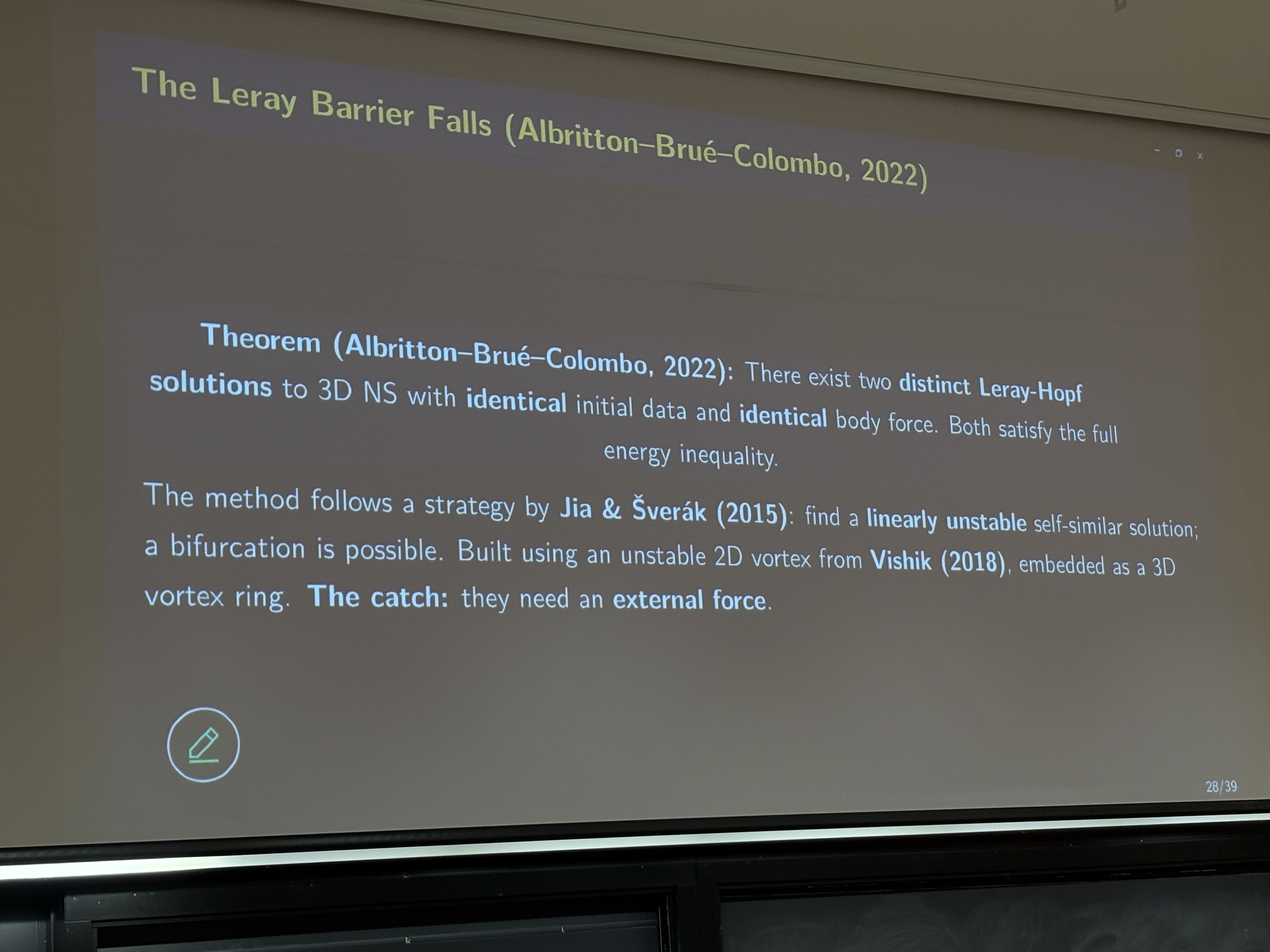
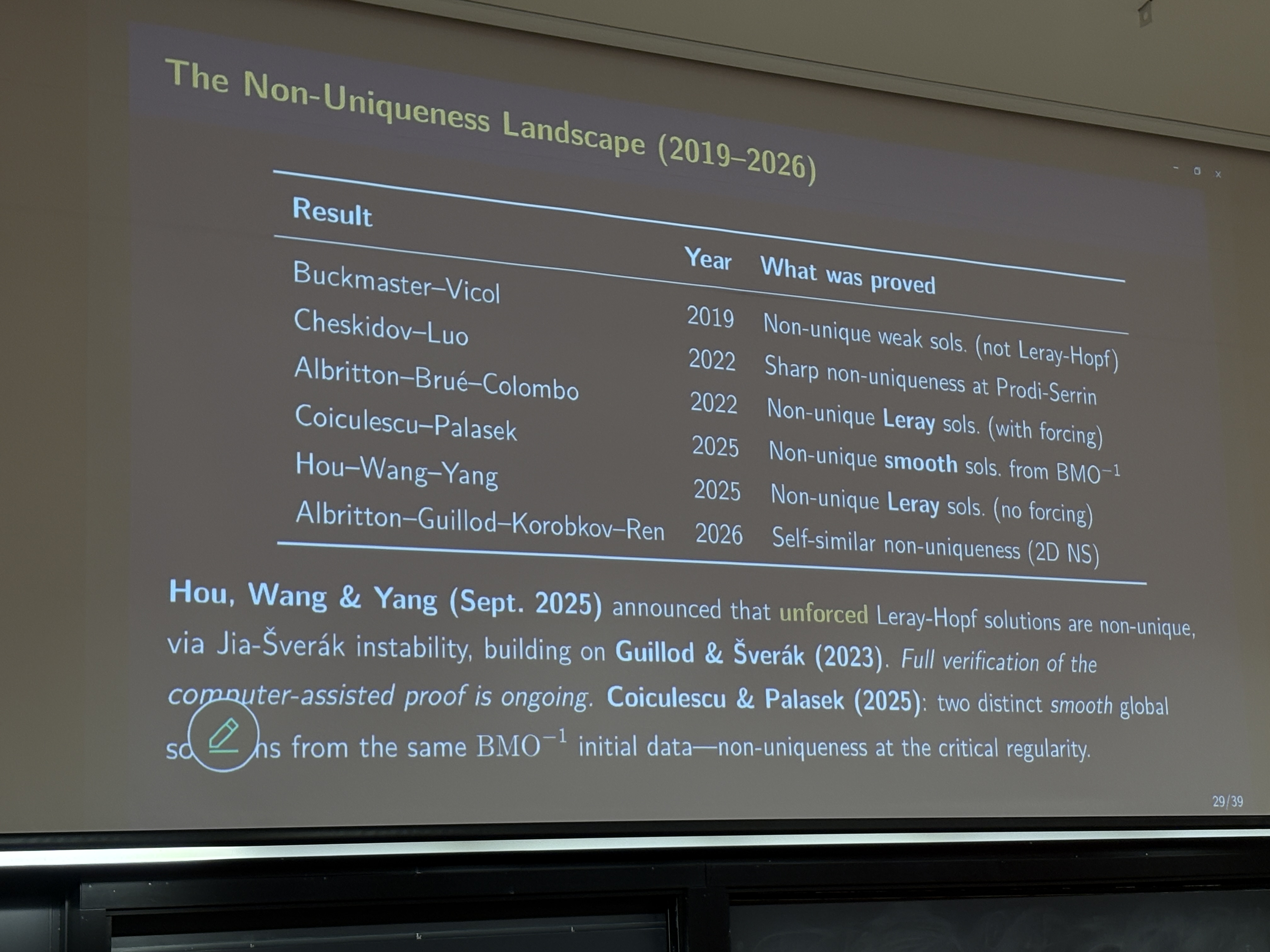
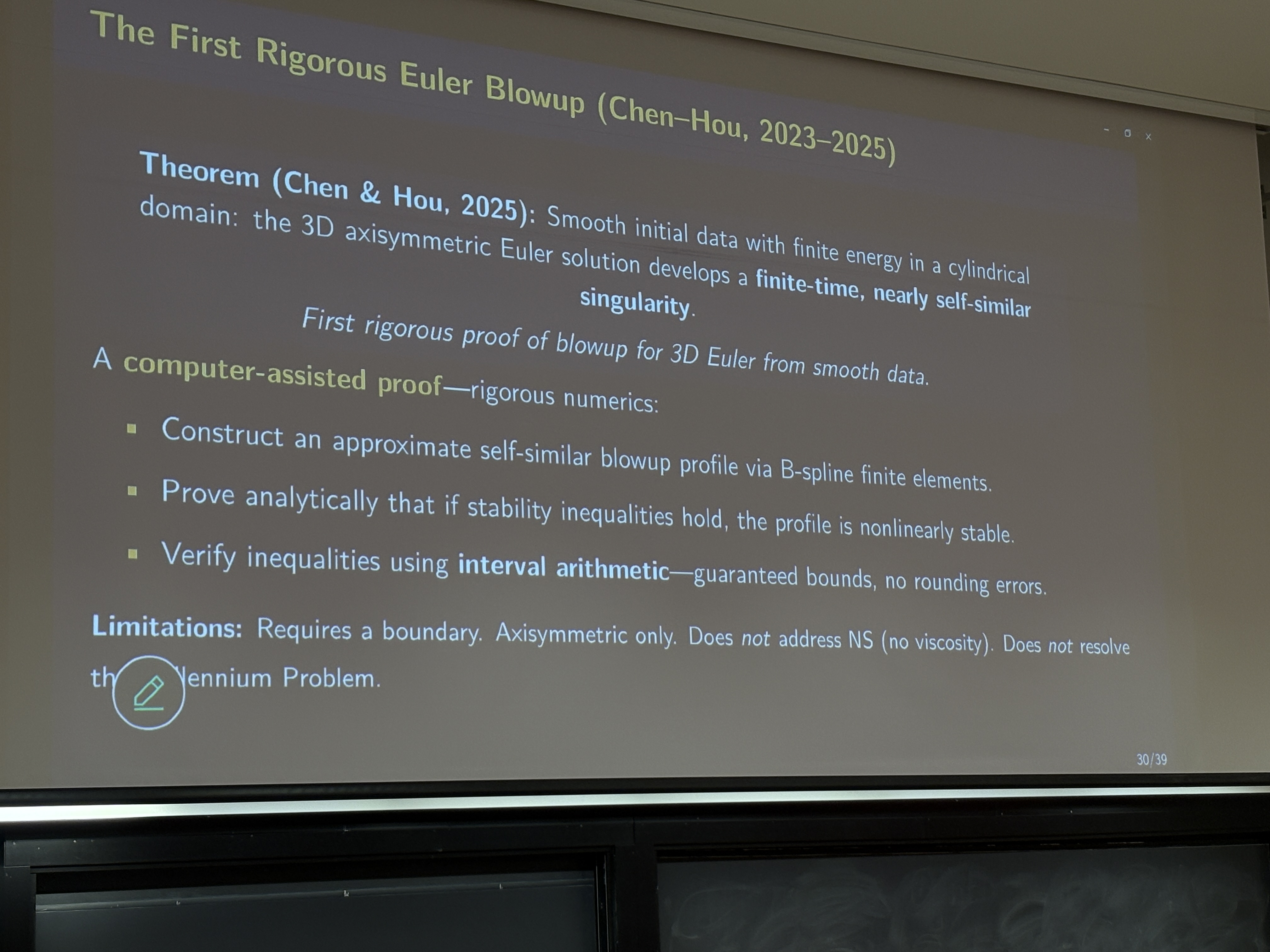
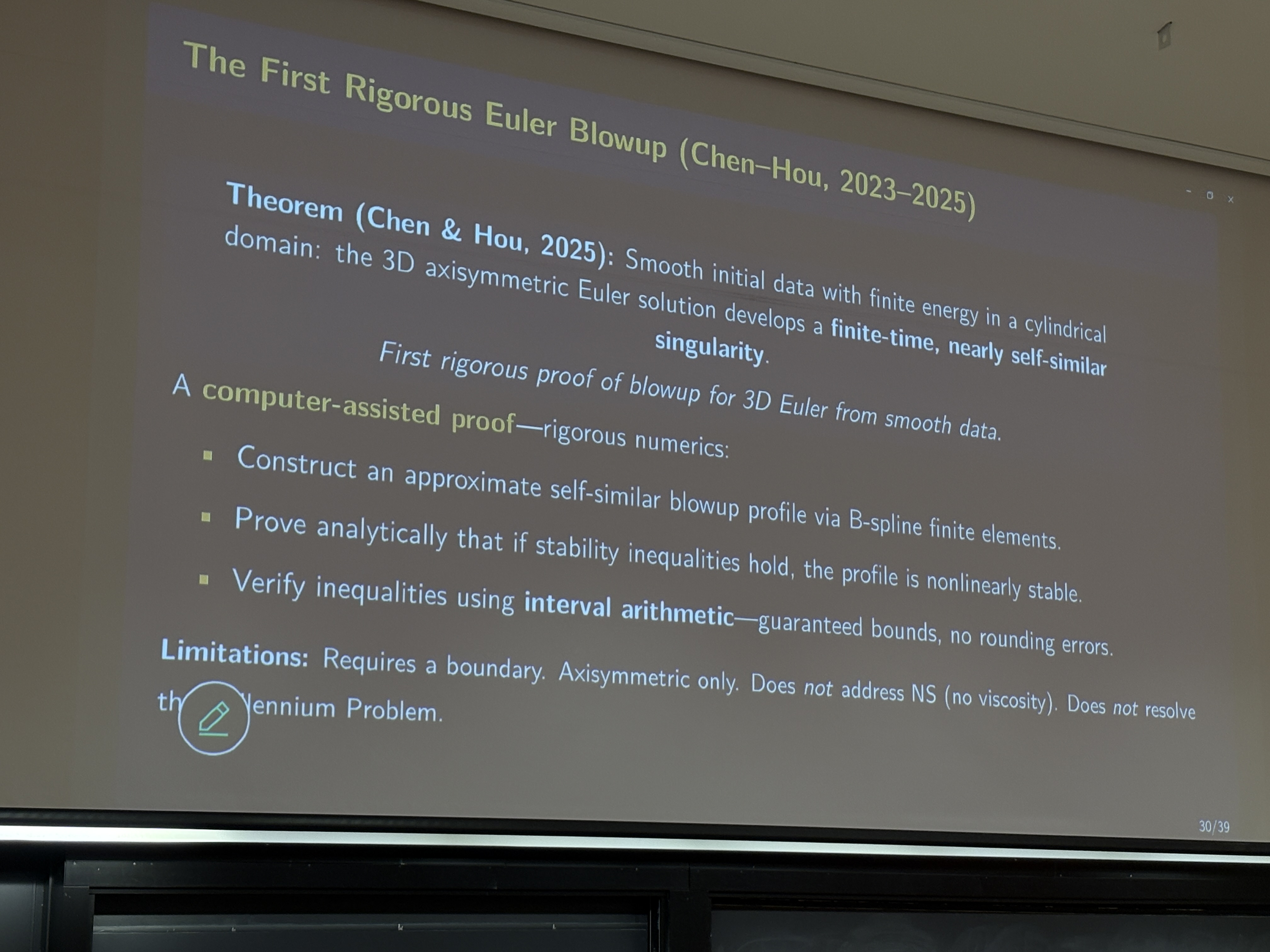
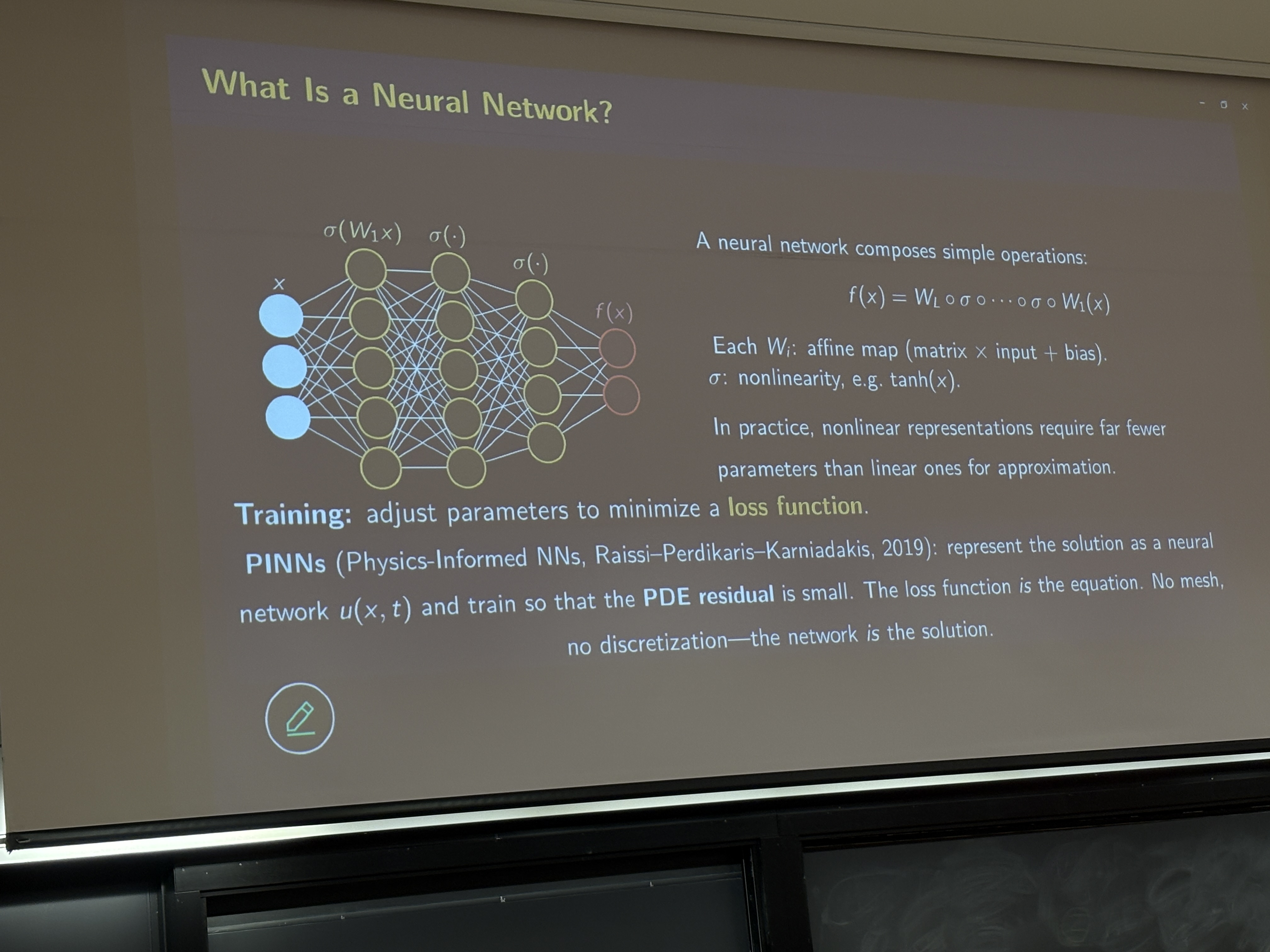
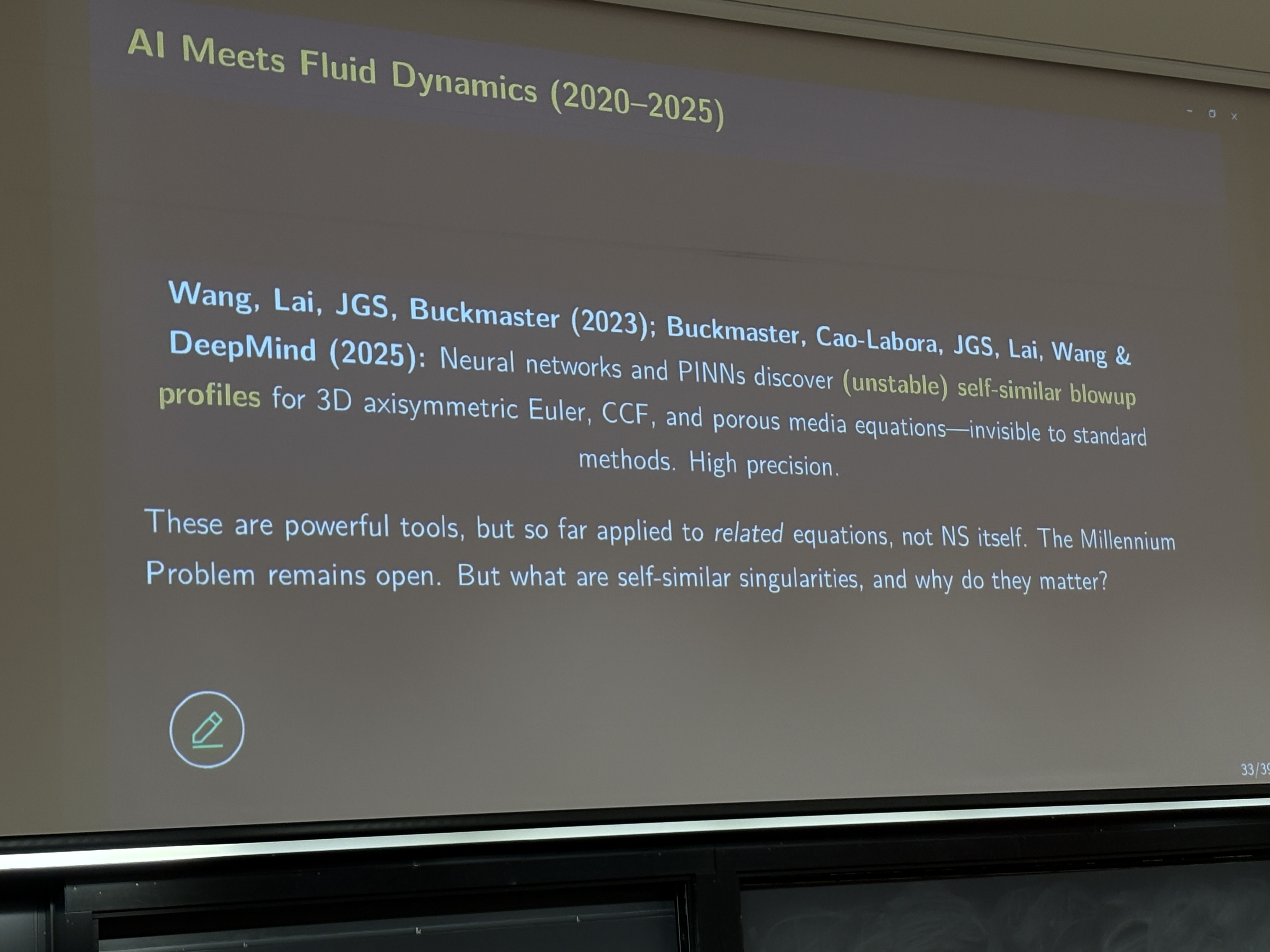
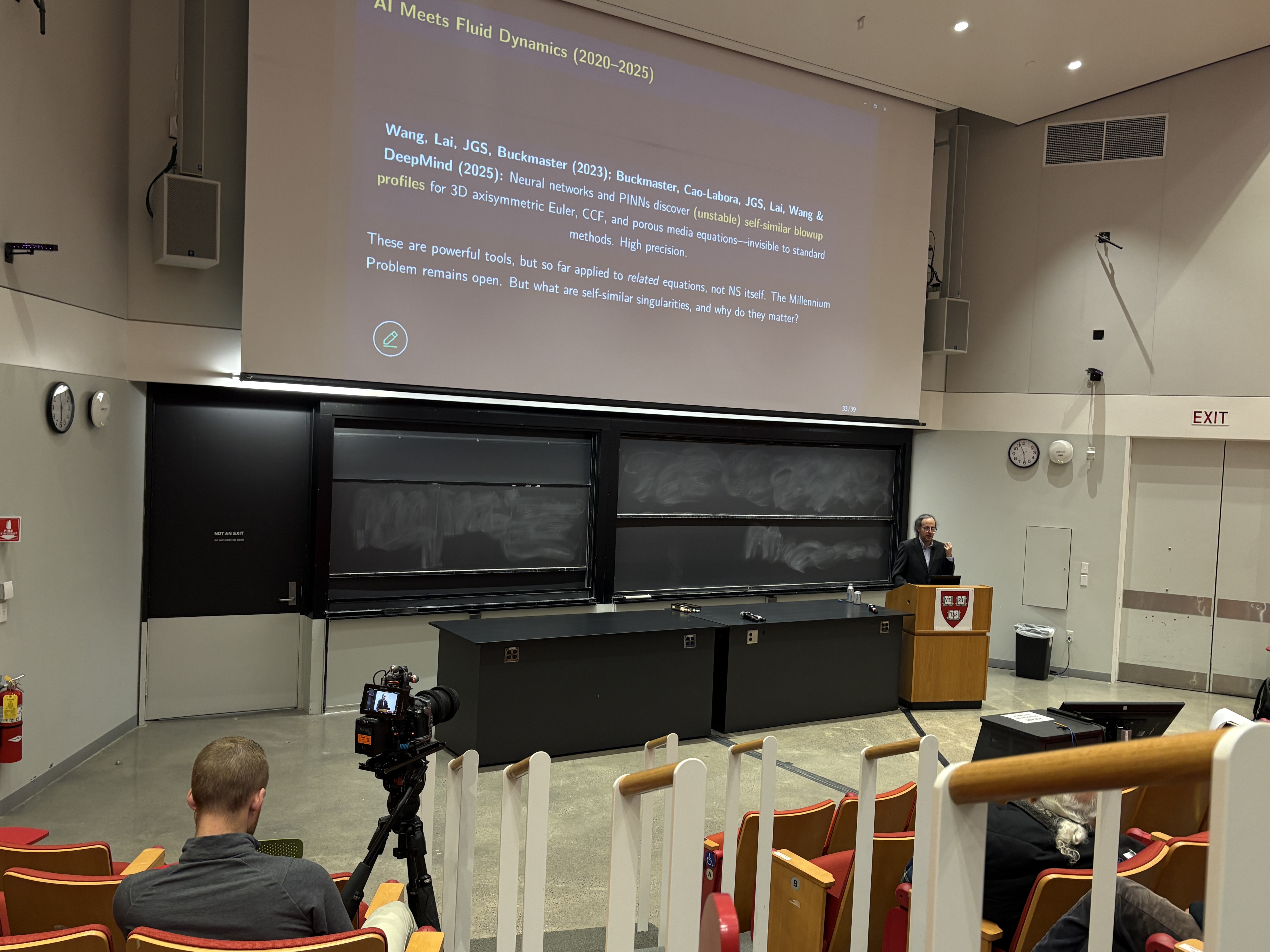
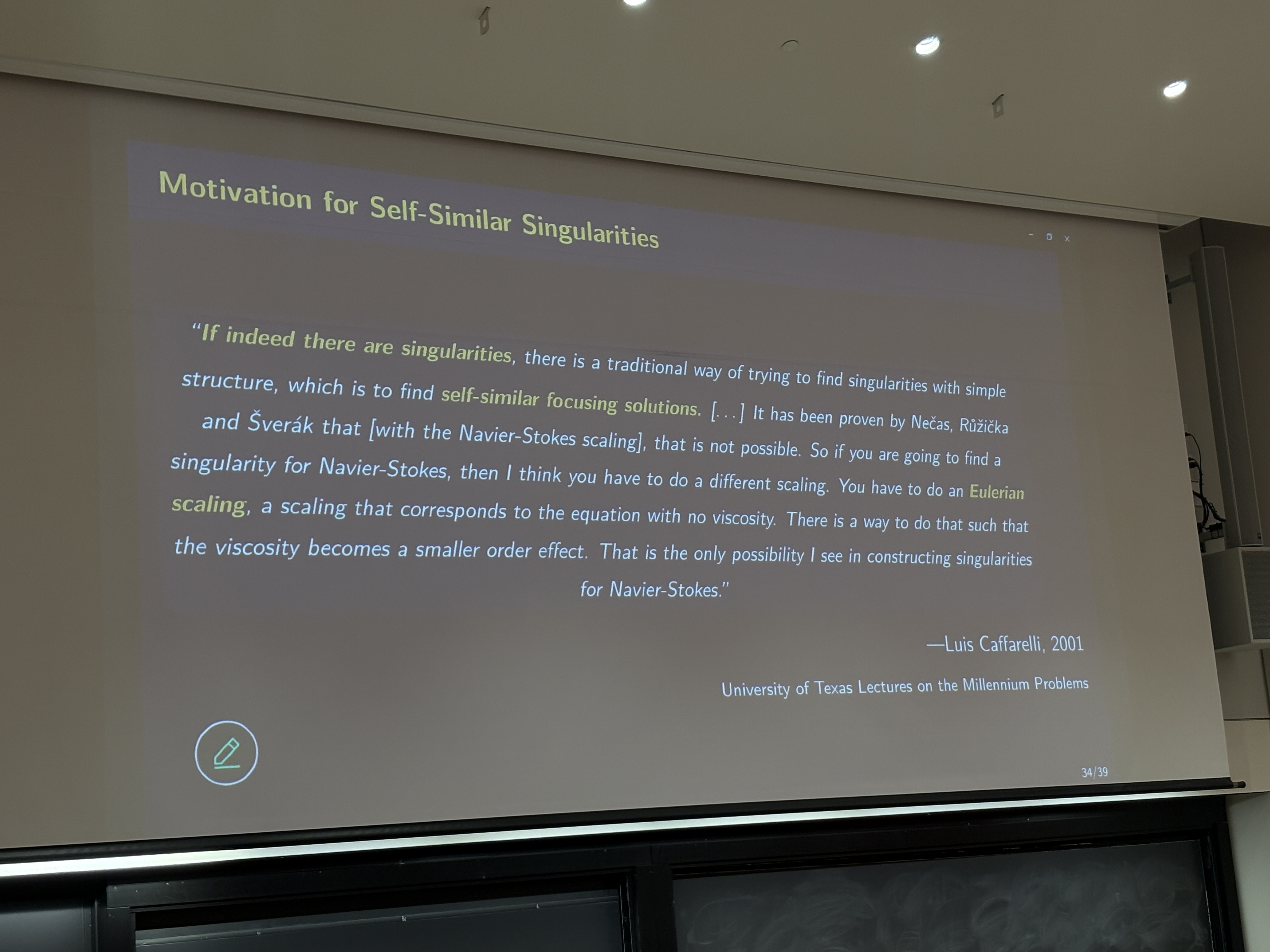
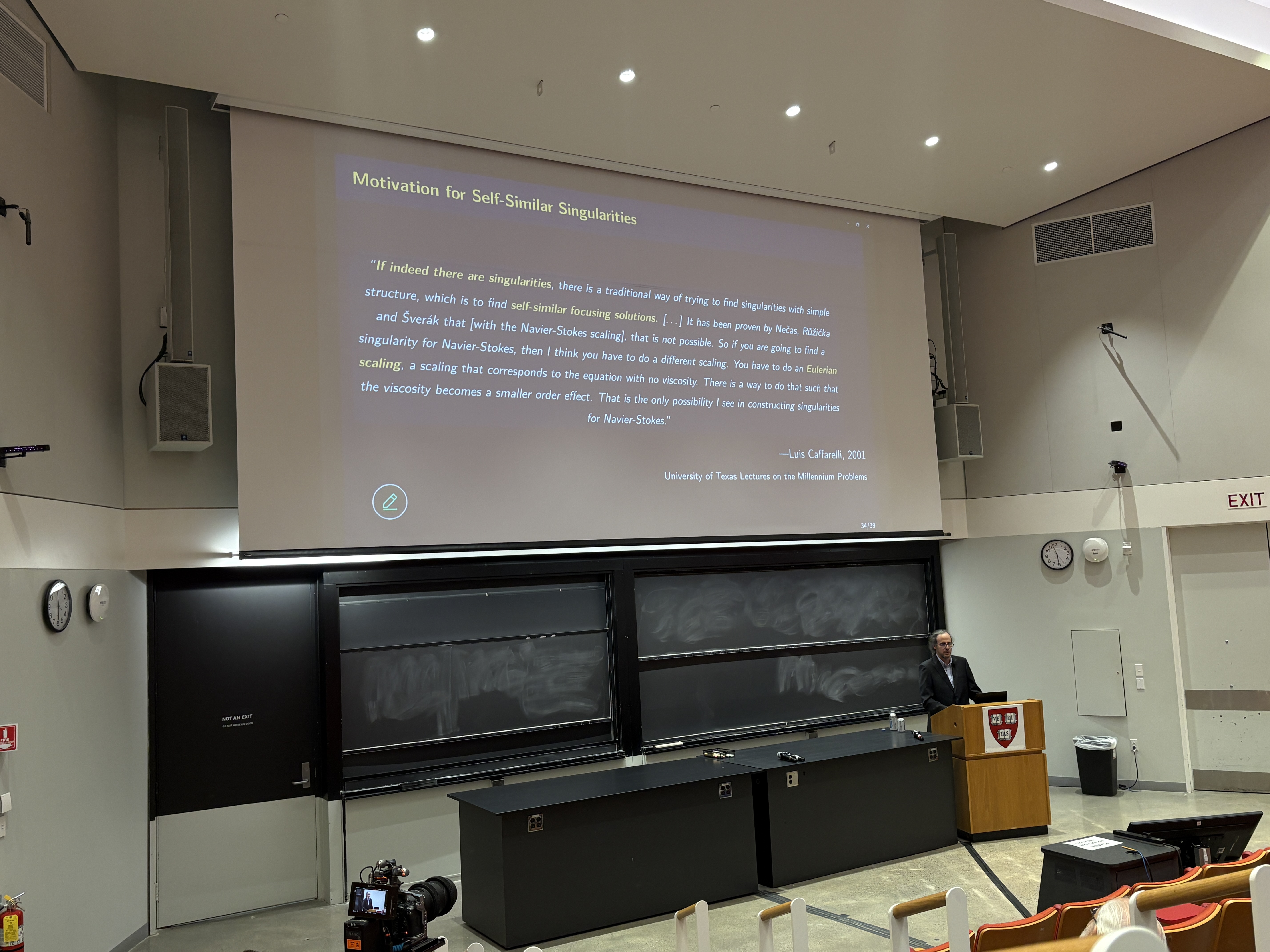
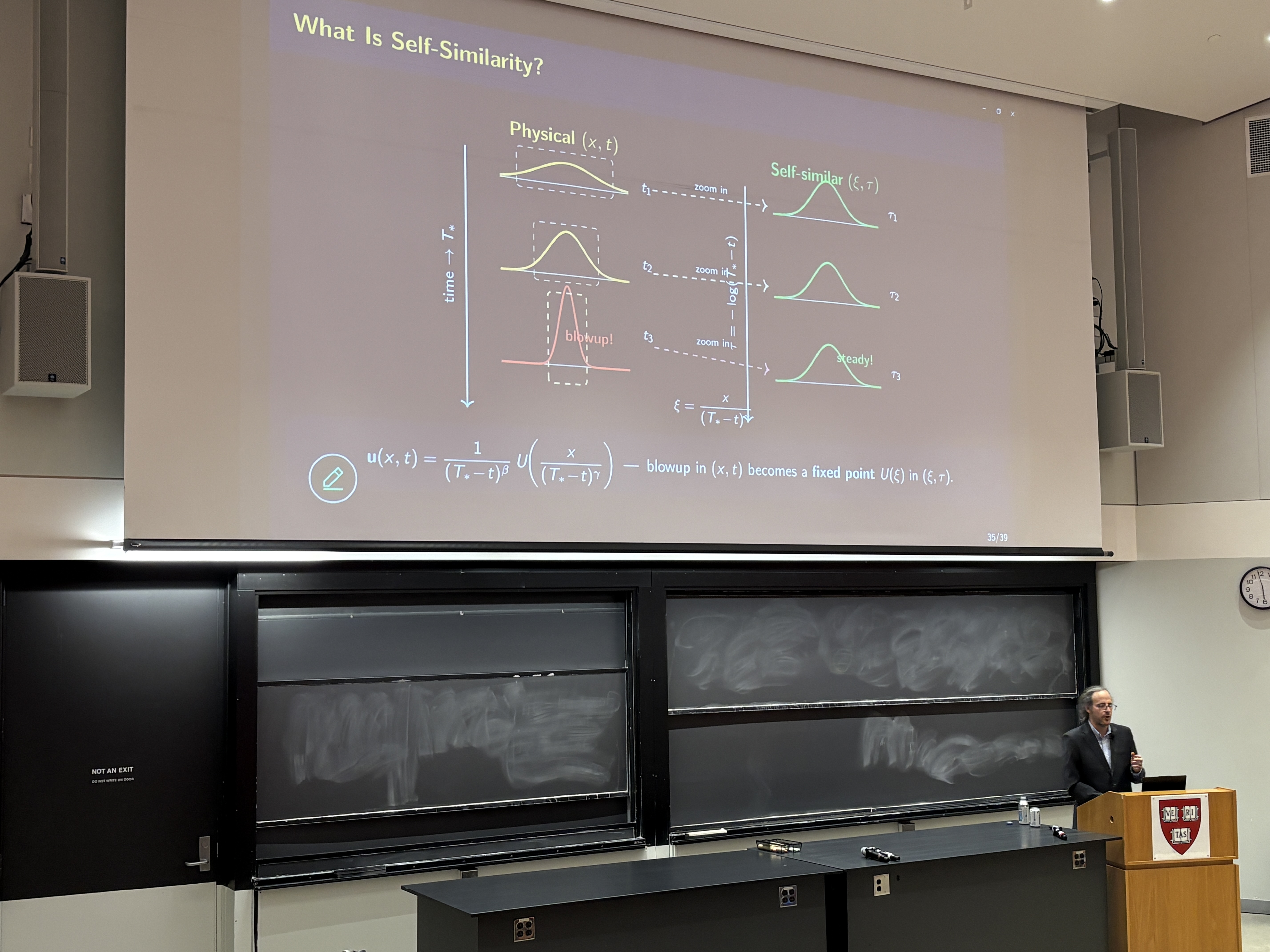
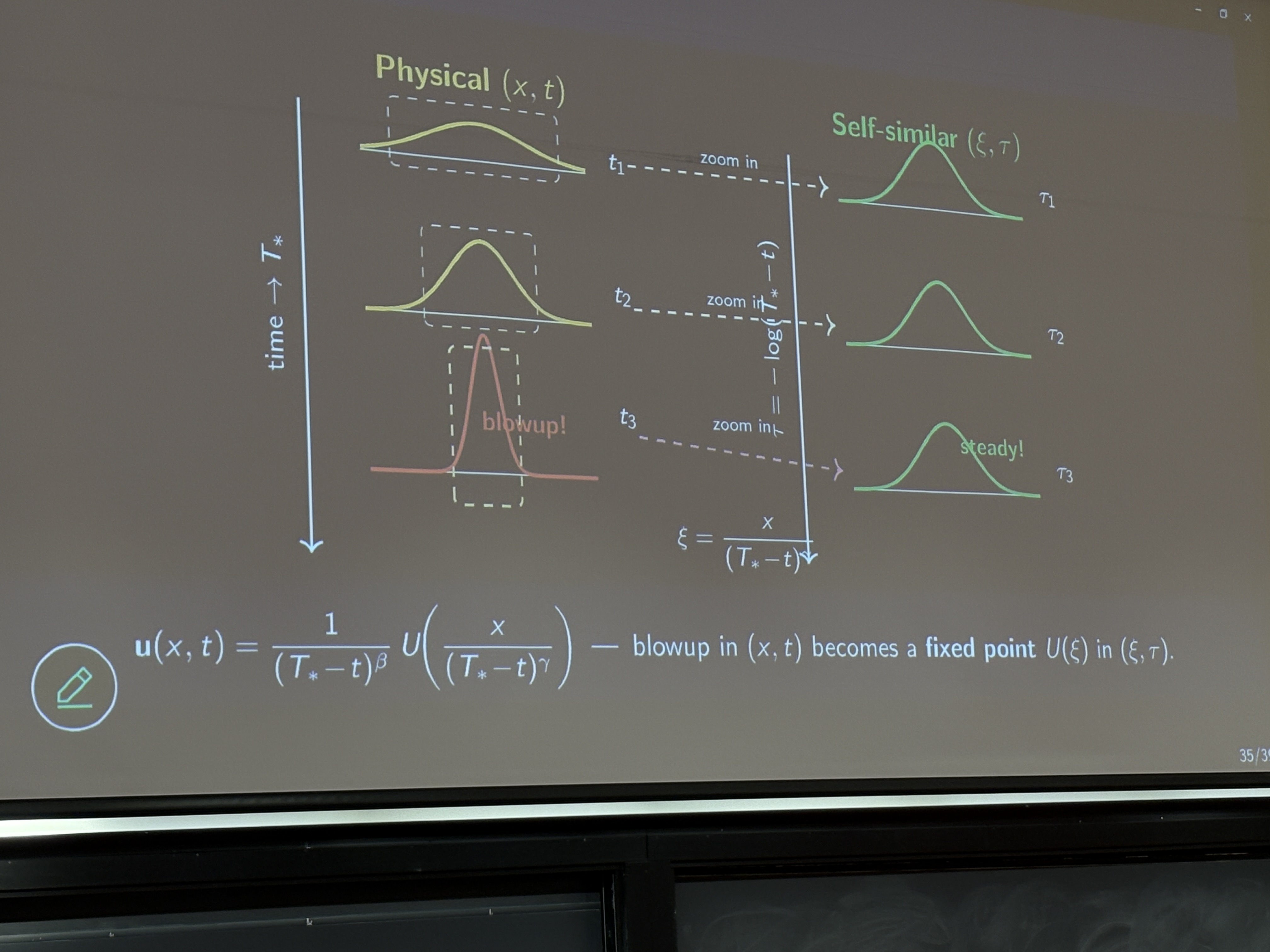
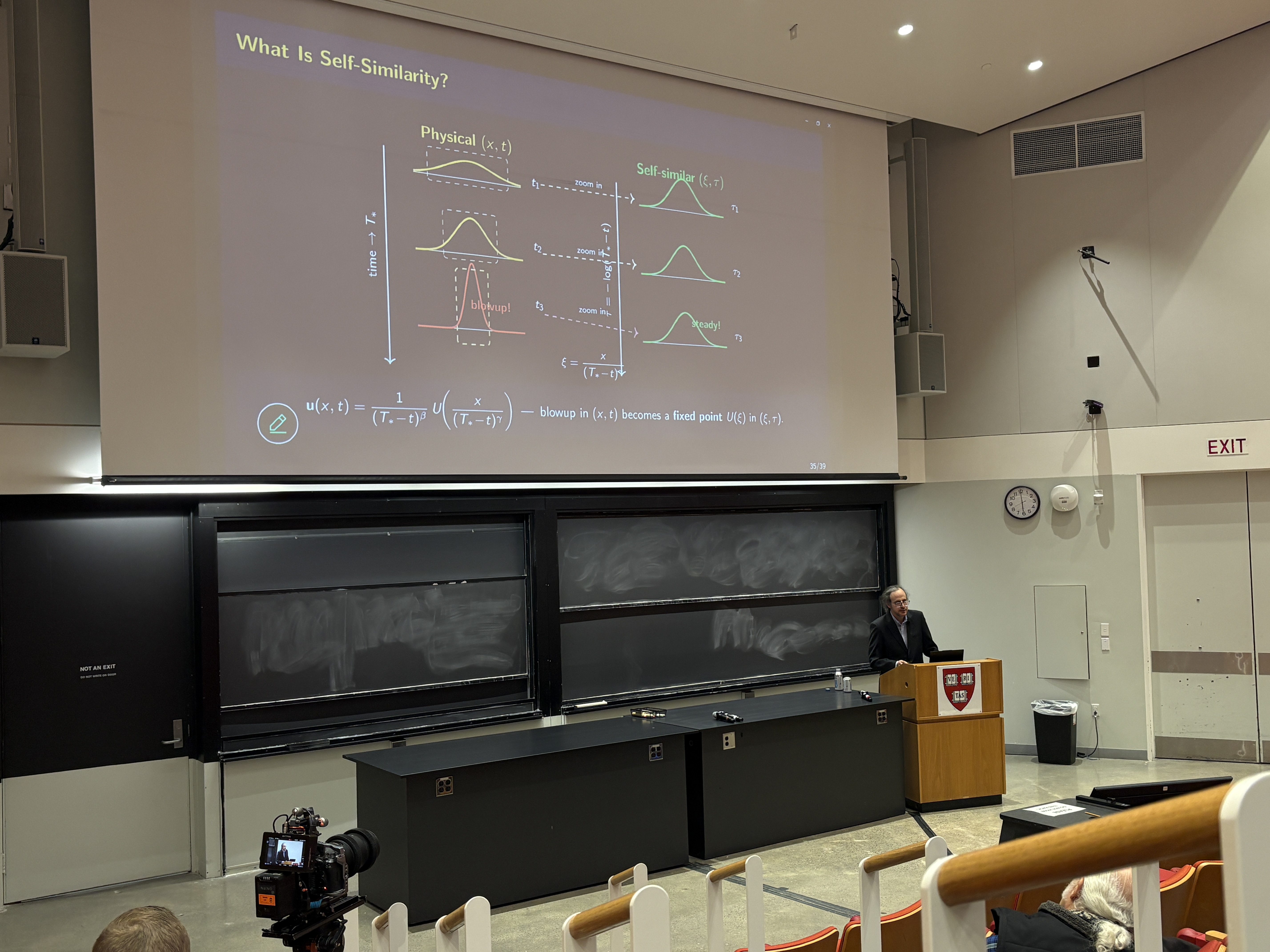
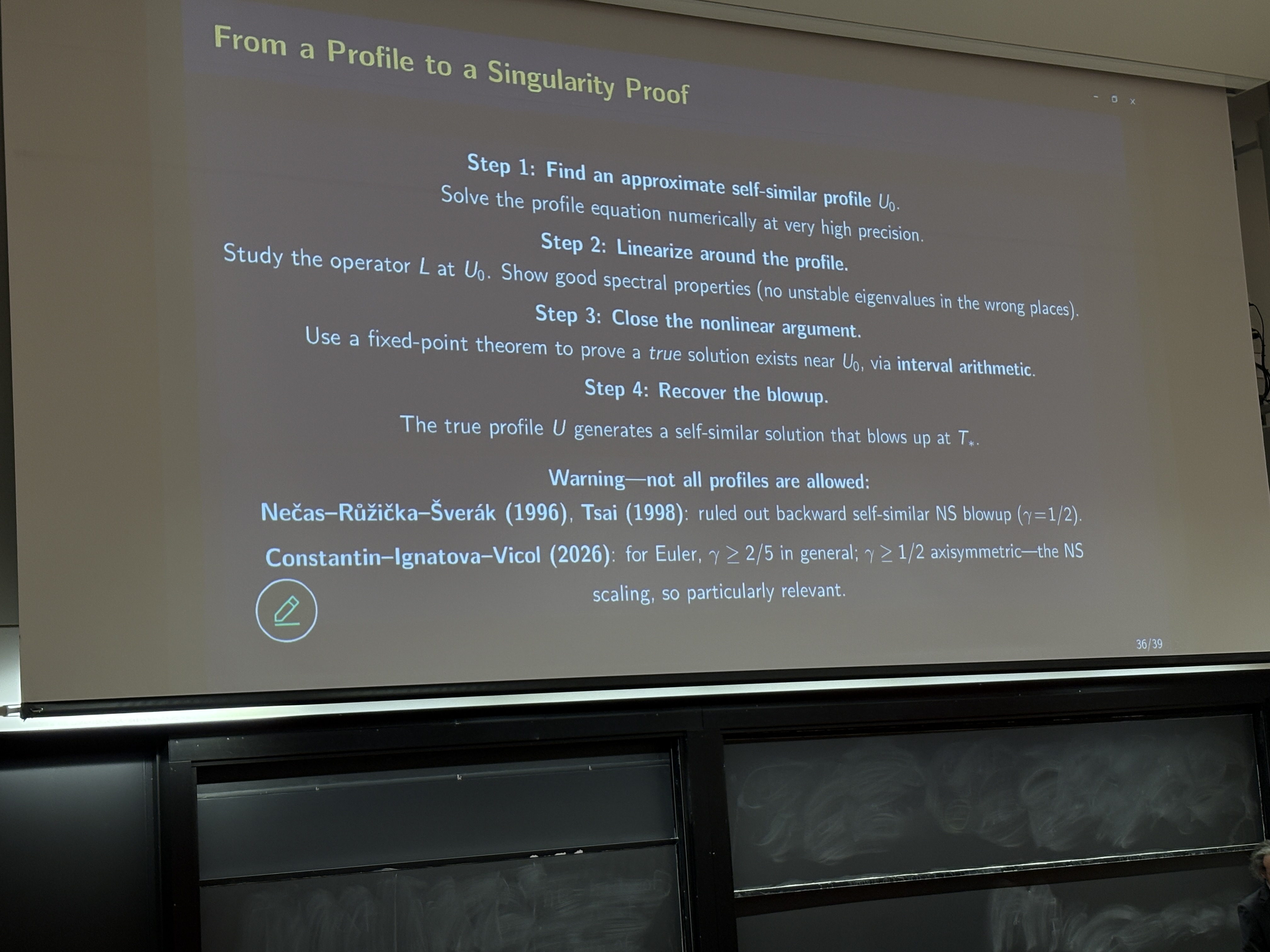
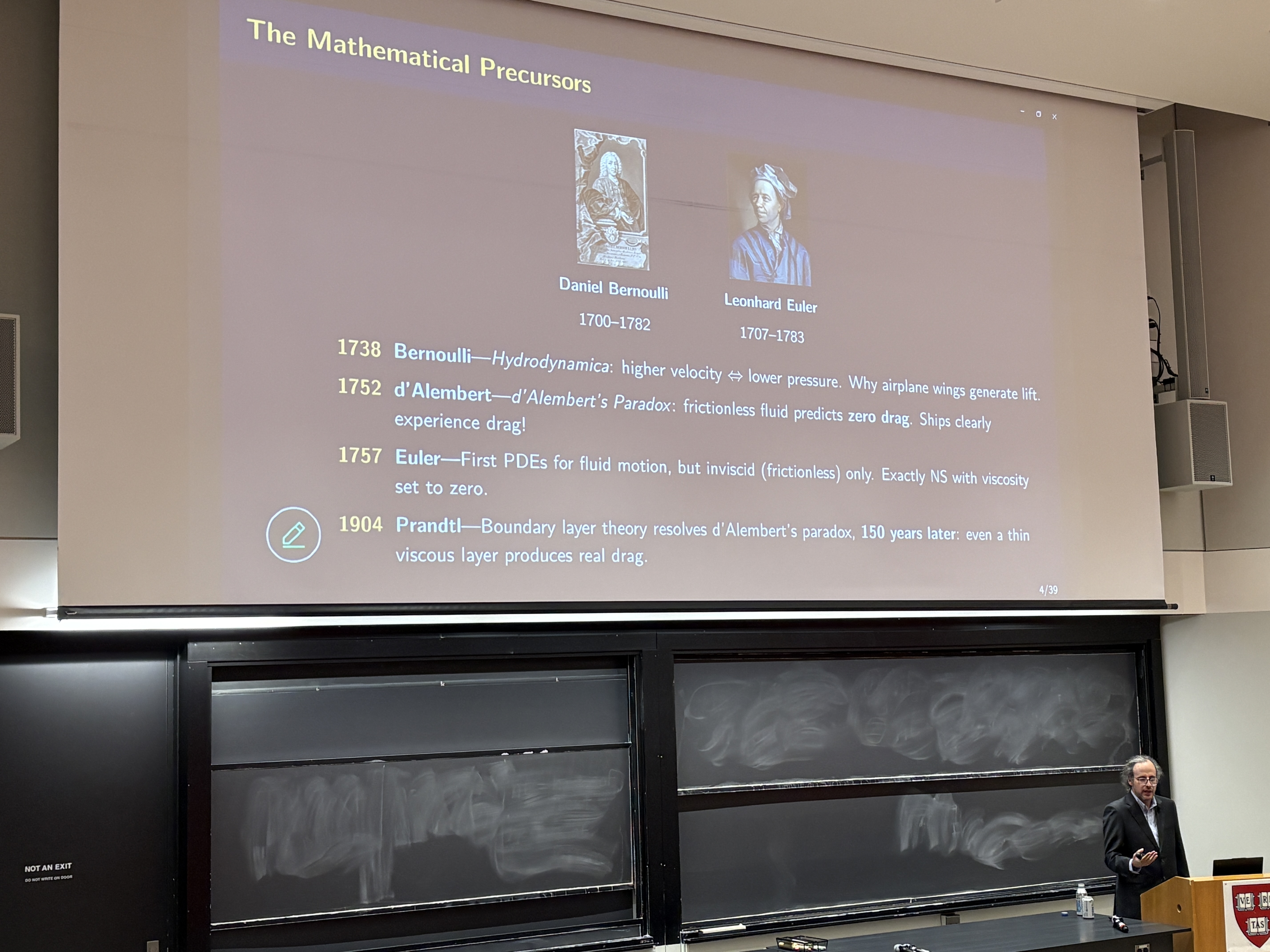
| This was the second last talk in the series. It was an excellent talk. Very clear, not too technical, comprehensive, historical, shining light on all aspects and illustrating how huge the subject has become. Surprising to see how few people have shown up. Mostly grad students and a few faculty (but Hall C was also a bit too large for that event. PDE's are a tough sell. We have since a few years no PDE course any more. I myself had a second course on functional analysis in my junior year which focussed on PDE's. But I must say, even so Moser had been a stellar teacher, that PDE's were not my favorite. I preferred other courses then, like Banach algebras, model theory, theoretical computer science. With PDE's you always feel like "missing something". Why do we take this model? Why the choice of function spaces? Why not only weak solutions? Why these boundary conditions? It all feels a bit "human", less "divine". | Other slides: (I went in person to all the talks) |
| If we wanted to rank the 7 millenium problems according to Pop culture status, the Navier Stokes problem is high up too. (When I put the prompt for the cartoon to the right, I ordered the problems so that my personal preferences would come up in the middle of the podest). "Navier Stokes" appeared in Gifted and so is close to Kitsch now. Despite its very, very technical nature, it is actually quite approachable: it is related to fluid dynamics and weather. We get involved into Navier Stokes when we swim, when we fly, when we look at the weather. What also helps of course if famous mathematicians like Terry Tao work on it. And he is the "Mozart of math" after all. So, it must be "important". It is almost comic to see in general what people think is "important". Value is a contagent, it is not absolute. People are sheeps. If everybody else thinks something is important, it must be so, even if it is not. I wrote once in 2004 about "fashion in mathematics". It is interesting for me to see that 22 years ago I had placed "AI" as as "Fashion fad" of the 20th century, and would never have predicted that 20 years later, there would be an explosive revival. I always thought about fashion when teaching "catastrophes" in calculus. It had been once one of the most fancy subject in science, I do not think there is a single PhD student these days working on this subject. Fashion is brutal! Chunky sneaker shoes like Nike Shox are out, slim low profile minimal shoes are in today. And in a few years, one will again have high heel insanities. Its the same with mathematics. We think a subject is important because others do think so, not because it is beautiful. |
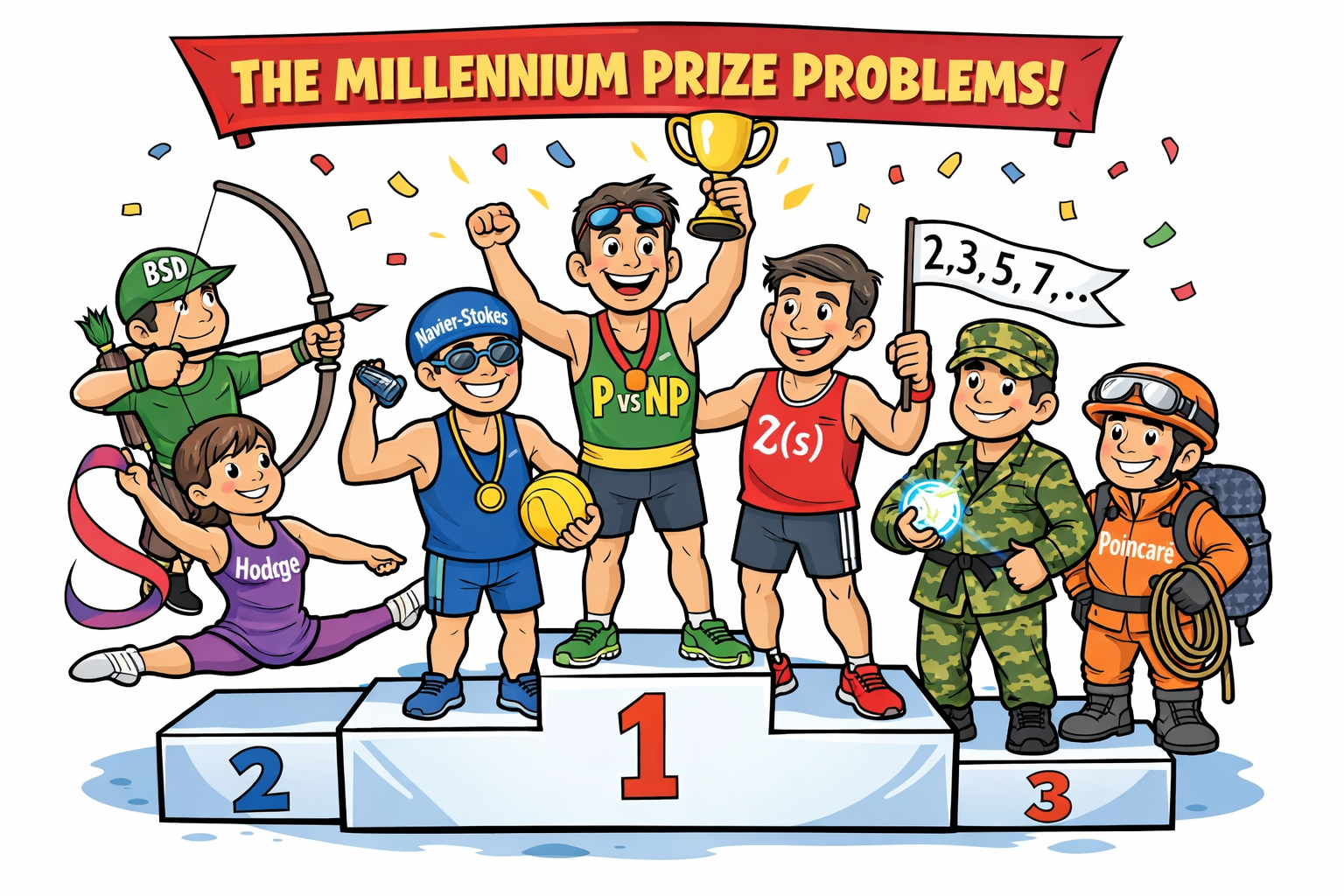 I asked AI to have "BSD, Hodge, Navier Stokes, P-NP, Riemann ,Yang-Mills and Poincare drawn as athletes".
Click to see it larger.
I asked AI to have "BSD, Hodge, Navier Stokes, P-NP, Riemann ,Yang-Mills and Poincare drawn as athletes".
Click to see it larger.
|
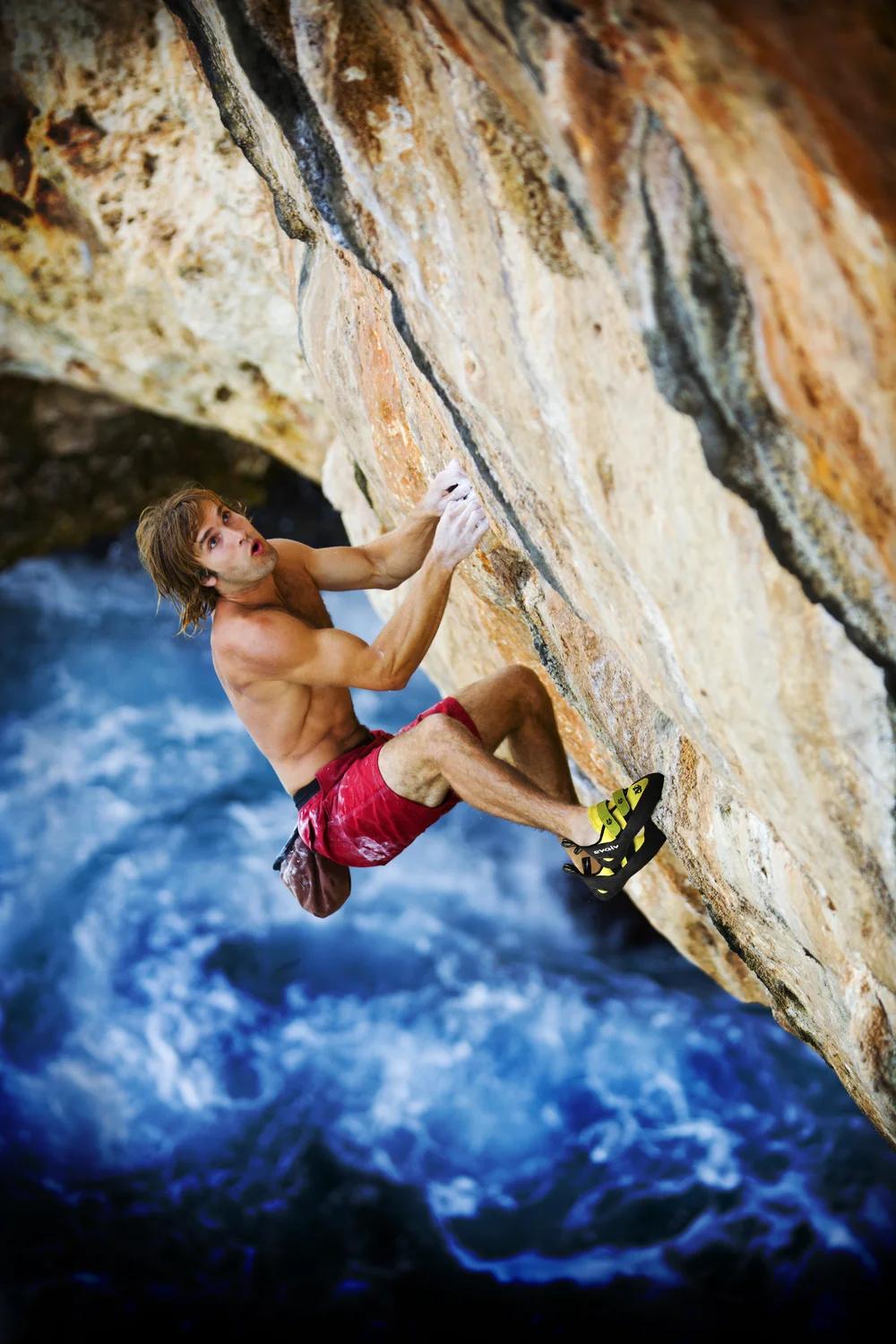
| PdE's are in general very, very technical. By accident, I myself work at the moment on PdE's but only baby stuff. I wrote about the topic of PDE's once in the context of teaching and understanding, where I lamented (in a polite way of course) about the fact that it had been fancy for very successful mathematicians to complain about fact and procedural driven pedagogy ("Drill baby Drill!" ) they experienced in their schools. Never mind that they were able, of course thanks to this "poor" school experience, to conquer the pinnacle of academia and understand the most difficult things there are. It is so funny: it is as if Chris Sharma (who was for some time number 1 climber in the world) would lament and complain that he had to to do pull-ups to get strong. One can get an idea by watching Sharma and Ondra on Dura-Dura. I wrote about this paradoxon once in "Adventure of teaching algebra" piece: School these days has to be all fun and game, while free time and leisure has become packed with ambitious competitive extra curricular activities, like music, tutoring, debating, sport. A month ago, on February 14th, we have seen for example the competitors of the Harvard debate turnament. It was almost unreal: seeing these high school kids in tuxedos practicing their speeches, of course by heart. You can not win a debate tournament without learning thousands of facts and practicing every aspect of it. But these pedagogical trivialities (practice, practice, practice ...) are only applied in competitions and not in schools, where policies are implemented driven by ivory-tower-elite-paper-writers, who seem to be content that the US is on place 26 of 81 countries and continue to preach that "memorization" is bad. A climb like Dura Dura requires from the athlete that every little detail, is firmly entrenched in memory. That is the minimum, only then creativity, and determination can thrive. |
|
 |
 |
 |
 |
 |
 |
 |
 |
 |
 |
 |
 |
 |
 |
 |
 |
 |
 |
 |
 |
 |
 |
 |
 |
 |
 |
 |
 |
 |
 |
 |
 |
 |
 |
 |
 |
 |
 |
 |
 |
 |
 |
 |
 |
 |
 |
 |
 |