Math 21a Summer 2021
Multivariable Calculus

Science direct reports something non-surprising:
Early spatial reasoning may play a crucial role for learning mathematics..
The article is here: (June 30, 2021 University of Basel)
Spatial reasoning ability in small children
rEflects how well they will perform in mathematics later. Researchers
recently came to this conclusion, making the case for better cultivation
of spatial reasoning.
Good math skills open career doors in the natural sciences as well as technical and engineering fields. However, a nationwide study on basic skills conducted in Switzerland in 2019 found that schoolchildren achieved only modest results in mathematics. But it seems possible to begin promoting math skills from a young age, as Dr. Wenke Möhring's team of researchers from the University of Basel reported after studying nearly 600 children. The team found a correlation between children's spatial sense at the age of three and their mathematical abilities in primary school. "We know from past studies that adults think spatially when working with numbers -- for example, represent small numbers to the left and large ones to the right," explains Möhring. "But little research has been done on how spatial reasoning at an early age affects children's learning and comprehension of mathematics later." < a href="https://www.sciencedirect.com/science/article/pii/S0959475221000748?via%3Dihub"> The article in ``Learning and Instruction", Volume 75, October 2021,
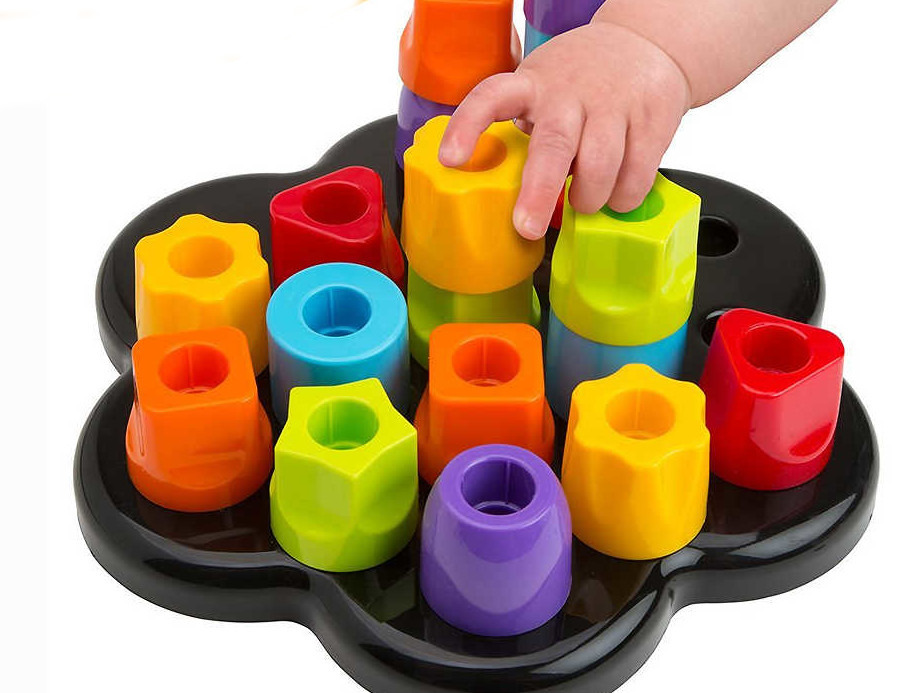
Good math skills open career doors in the natural sciences as well as technical and engineering fields. However, a nationwide study on basic skills conducted in Switzerland in 2019 found that schoolchildren achieved only modest results in mathematics. But it seems possible to begin promoting math skills from a young age, as Dr. Wenke Möhring's team of researchers from the University of Basel reported after studying nearly 600 children. The team found a correlation between children's spatial sense at the age of three and their mathematical abilities in primary school. "We know from past studies that adults think spatially when working with numbers -- for example, represent small numbers to the left and large ones to the right," explains Möhring. "But little research has been done on how spatial reasoning at an early age affects children's learning and comprehension of mathematics later." < a href="https://www.sciencedirect.com/science/article/pii/S0959475221000748?via%3Dihub"> The article in ``Learning and Instruction", Volume 75, October 2021,