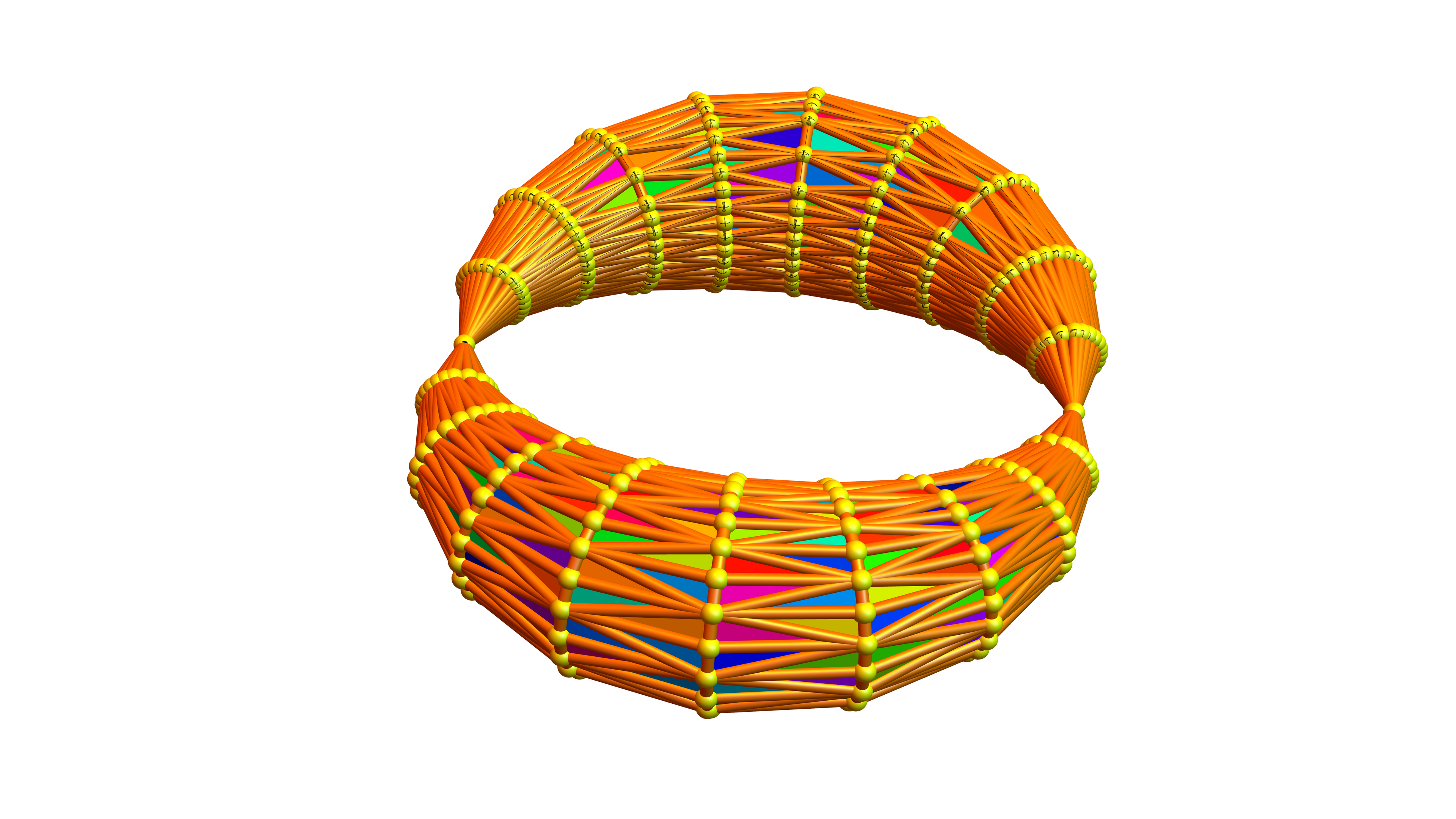
Below is some Mathematica code to plot the surfaces.
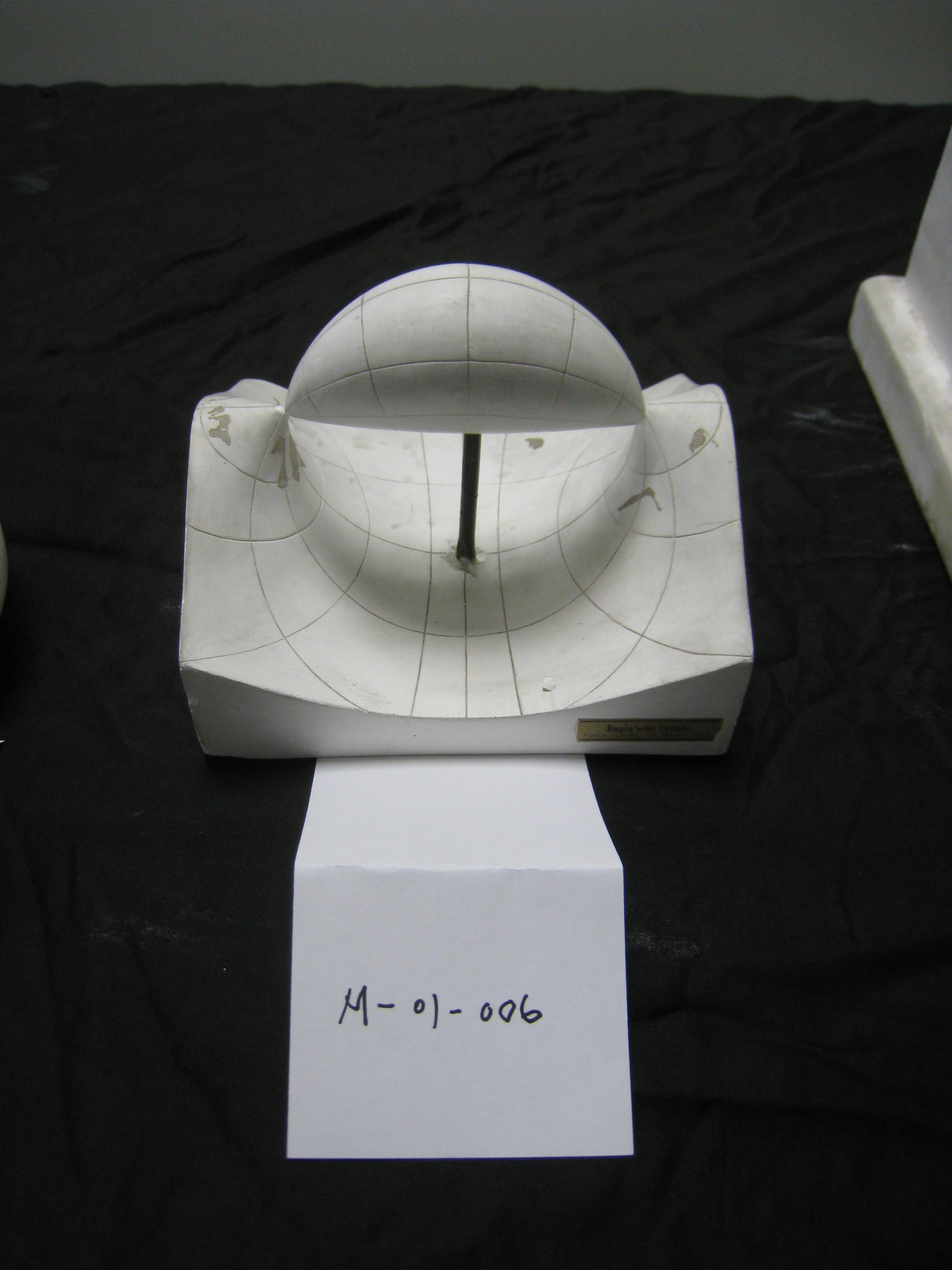
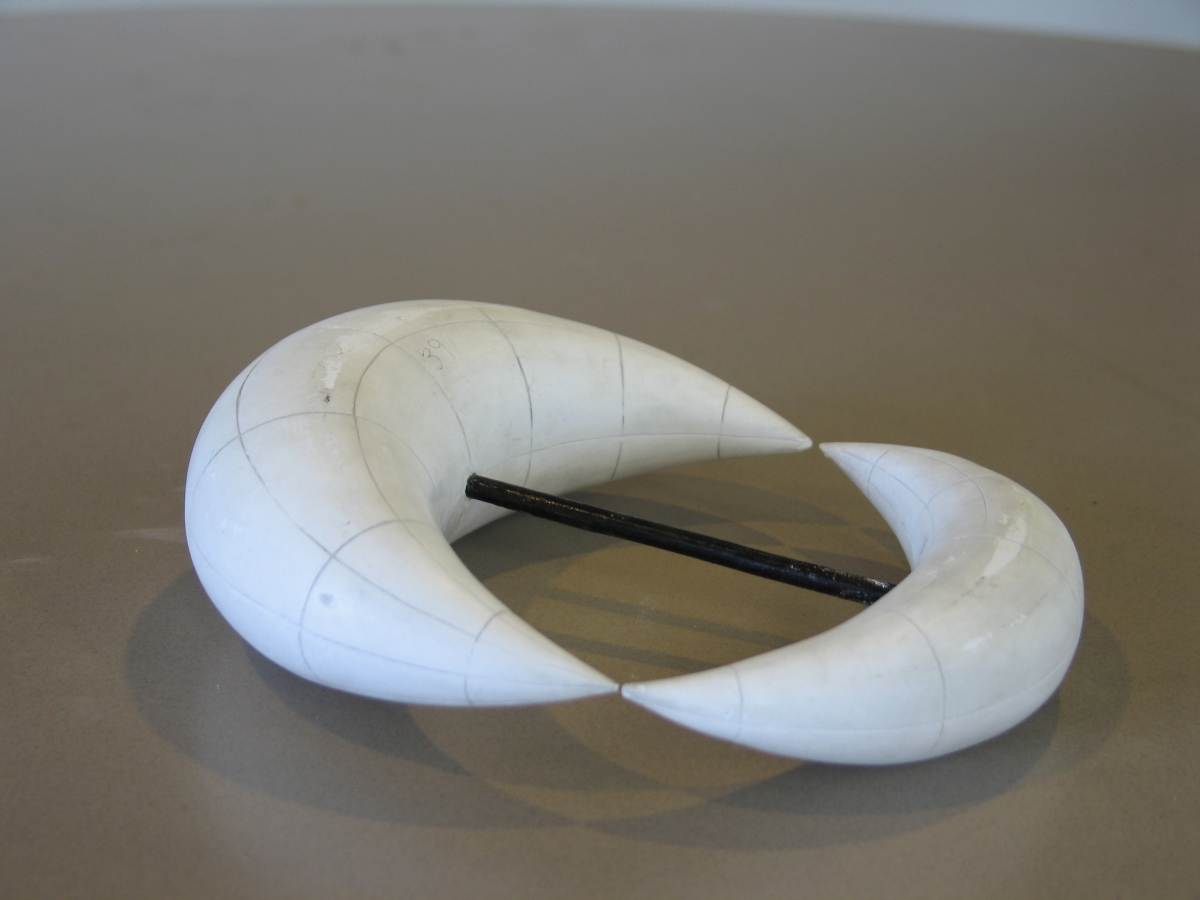
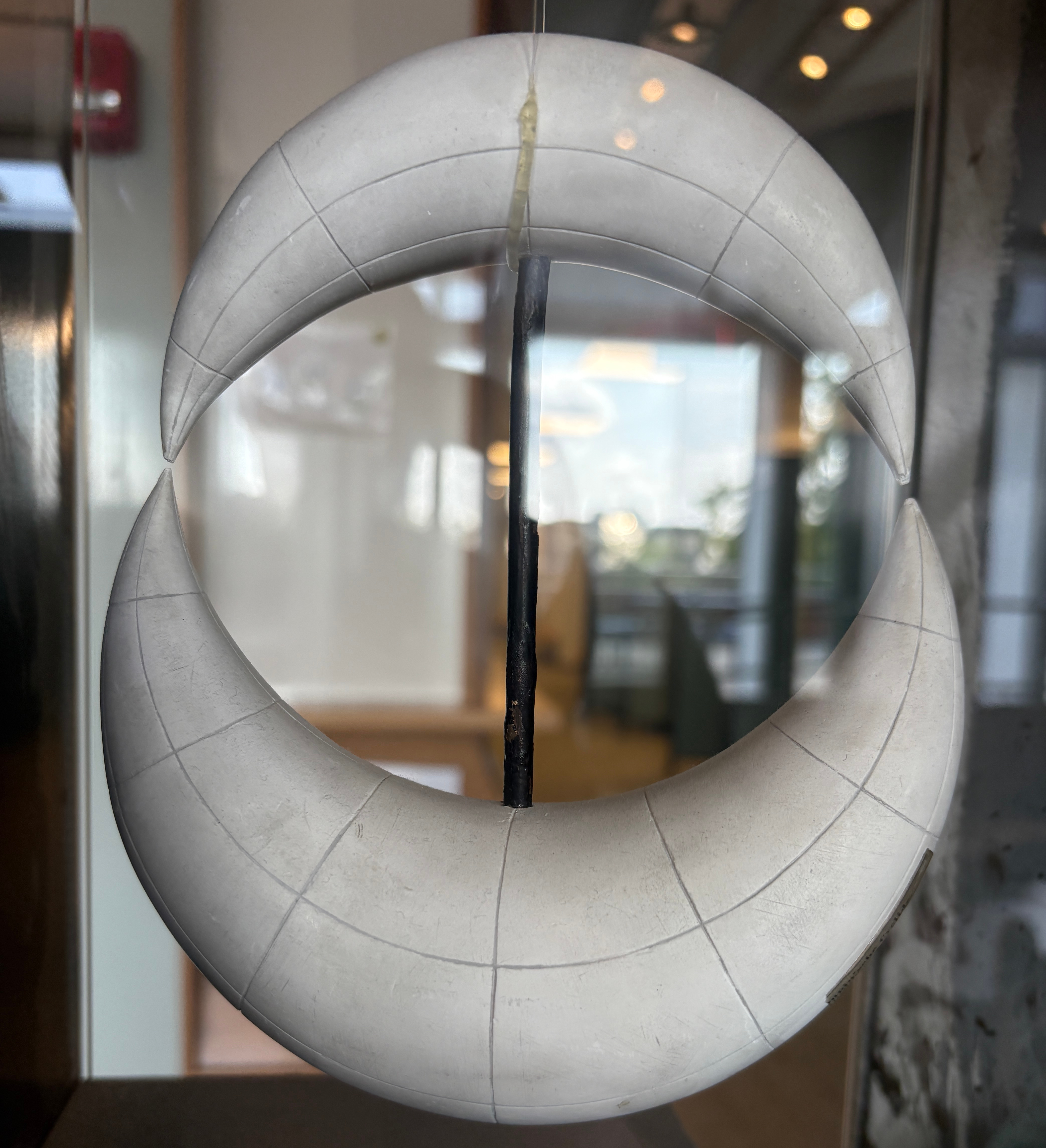
To the right is a picture of the cyclide in the math common room
a few feet from Oliver's office in the 4th floor. There used to be
a large collection of mathematical surfaces before the renovation.
I photographed them in 2006.
The Harvard graduate school of design photographed them again in
2012. You can
find here an example of a
Dupin Cyclide. And here a
photo of the cycloid I made in 2006. God knows where most of these surfaces are now.
But it is like in the "riders of the lost arc":
"Harvard has top men working on it
right now! Top men!"
a=3; c=1; d=1; b=Sqrt[a^2-c^2]; R=1/(a-c Cos[u]*Cos[v]);
x=R(d(c - a*Cos[u]*Cos[v]) + b^2*Cos[u]);
y=R(b*Sin[u]*(a - d*Cos[v]));
z=R(b*Sin[v]*(c*Cos[u] - d));
ParametricPlot3D[{x,y,z},{u,0,2Pi},{v,0,2Pi}]
|
|